






TL;DR
- This blog is designed for engineering students, energy researchers, educators, clean energy professionals, and industry engineers who want to understand how hydrogen education labs prepare future experts in green hydrogen and hydrogen renewable energy technologies.
- Hydrogen is a powerful energy carrier that supports decarbonization, especially when produced as green hydrogen using renewable electricity.
- Universities are establishing hydrogen labs to provide hands-on training with technologies such as hydrogen generator systems, electrolyzers, fuel cells, and hydrogen storage solutions.
- Students gain practical experience with green hydrogen production, hydrogen generators, fuel cells, hydrogen storage methods, and renewable energy integration.
- Hydrogen education labs bridge the gap between theory and industry needs, helping train engineers capable of designing and managing future hydrogen renewable energy
The global energy landscape is changing rapidly. Governments, industries, and research organizations around the world are working to reduce reliance on fossil fuels while ensuring secure and scalable energy systems.Hydrogen is one of the most promising energy carriers among the various options being considered for a sustainable energy future.
Hydrogen is a versatile, energy-dense carrier that can support multiple energy applications and can drive industries, transportation, and power production. When produced using renewable energy, it becomes green hydrogen and can result in near-zero carbon emissions during production. This renders hydrogen a crucial element in the international initiative in curbing climate change.
However, the rapid growth of hydrogen technology has created a new challenge: the lack of engineers trained to design, operate, and maintain hydrogen systems. The industries currently demand people with knowledge of hydrogen production techniques, hydrogen generators, fuel cells, storage systems, and renewable energy integration.
To resolve this increasing skills shortfall, universities and technical institutes are setting up Hydrogen Education Labs. These laboratories provide hands-on training environments where students can experiment with real hydrogen technologies.
Related Articles
- Choosing the Right Power Supply for Your Lab: A Beginner’s Guide to Bench, Programmable & Variable Units
- How Practical Labs Make Technical Education and Skilling Industry-Driven
- Why Your Electrical Training Lab Needs Safety Earthing Training Work Bench Today
Understanding Hydrogen as a Renewable Energy Carrier
Hydrogen is not the source of energy but the carrier of energy that stores and transports other sources of energy like solar energy, wind energy, or hydropower. Hydrogen is considered a clean energy solution because, when used in fuel cells, it produces energy with water as the only byproduct. This makes it suitable for hard-to-electrify sectors such as heavy industry and transportation.
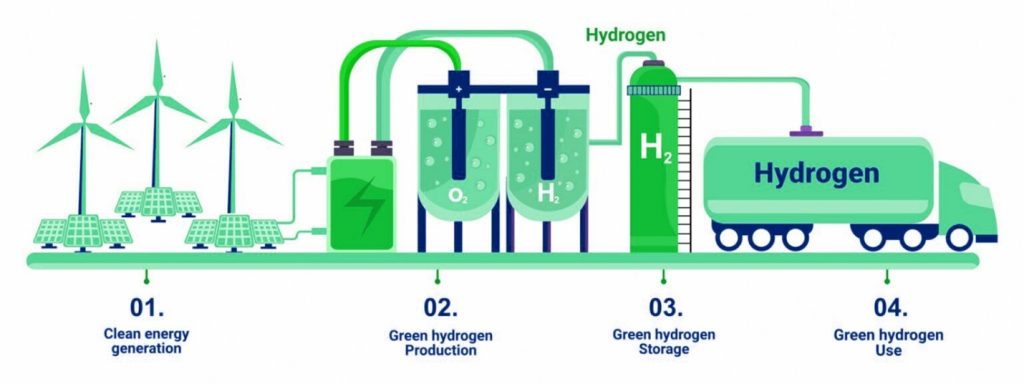
There are several ways of generating hydrogen. Natural gas produces grey hydrogen which emits carbon. Blue hydrogen also consumes natural gas but some carbon dioxide is collected. Green hydrogen is produced by splitting water into hydrogen and oxygen using renewable electricity through electrolysis and has no carbon emissions.
Among such approaches, green hydrogen is viewed as the most sustainable, and it has a significant role in the future of the hydrogen renewable energy systems.
What Are Hydrogen Education Labs?
Hydrogen education laboratories are specialized facilities designed to educate students on the science and engineering of hydrogen technologies, as well as their practical uses. These labs offer a controlled environment where students can experiment with hydrogen production systems, fuel cells, hydrogen storage techniques and hydrogen safety protocols.
Hydrogen education labs are based on practical learning as opposed to traditional classroom education where the theory is a major priority. Students will be directly engaged with equipment, analyze system performance and understand engineering challenges of hydrogen technologies.
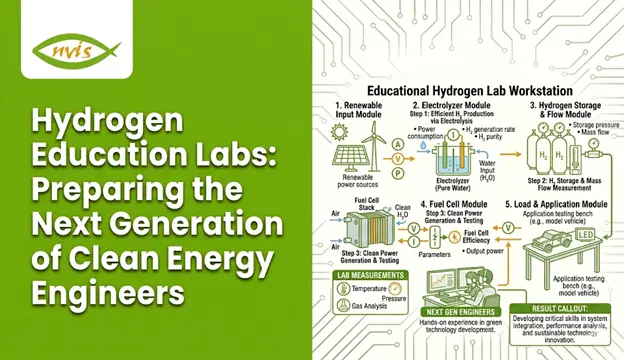
A typical hydrogen education lab may include:
- Water electrolysis systems for green hydrogen production
- Small-scale hydrogen generator units
- Hydrogen storage systems
- Fuel cell power systems
- Sensors and monitoring devices
- Renewable energy integration modules
Through laboratory work and real-world simulations, students gain valuable experience, which will equip them with working in the fields of renewable energy involving hydrogen.
People also use these labs to conduct research and innovation where the students and faculty can come up with more advancements to enhance efficiency in hydrogen production, storage systems and energy conversion.
Why Hydrogen Education Is Critical for Future Engineers?
Hydrogen economy in the world is growing at a great pace. The governments in different parts of the world are spending billions of dollars in hydrogen infrastructure, research initiatives and infrastructures on the industrial level.
With this rising use of hydrogen, the industries need engineers who have specialized knowledge in the design of hydrogen systems, integration of renewable energy, and safety of hydrogen management.
Hydrogen education laboratories are important in equipping the engineers with this new industry.
First, they give us practical knowledge that transcends what one learns in the textbooks. Learners are provided with the practical understanding of hydrogen generator systems, fuel cells, and renewable energy systems.
Second, they contribute to the alignment between the industry needs and academic learning. Most of the engineering graduates are well versed in theory but have never been exposed to practical experience. One of the ways through which Hydrogen laboratories solve this problem is by subjecting learners to the actual equipment and the real-life engineering problems.
Third, the hydrogen labs facilitate interdisciplinary education. The hydrogen technology employs various fields of engineering such as mechanical engineering, chemical engineering, electrical engineering, and materials science.
Those students who have an opportunity to work in hydrogen laboratories get to know how these fields interrelate in a hydrogen renewable energy system.
Core Technologies Students Learn in Hydrogen Education Labs
The Hydrogen education labs expose students to a number of impactful technologies that are bedrock of the hydrogen renewable energy system.
Green Hydrogen Production
Production of green hydrogen by electrolyzing water is one of the most significant technologies that are studied in hydrogen laboratories.
Electrolysis is a process whereby water is separated into hydrogen and oxygen through electricity. In cases where the electricity employed in this process is renewable e.g. solar or wind power, the hydrogen generated is said to be green hydrogen.
Hydrogen labs frequently use small-scale electrolyzers that show how systems of water electrolysis work. These systems enable the students to see the conversion of electrical energy into chemical energy that is stored in hydrogen.
Through laboratory experiments, students learn about:
- Electrolyzer efficiency
- Electrolyte materials
- Energy consumption during hydrogen production
- System optimization techniques
The concepts are vital to engineers who will design and operate large-scale green hydrogen production plants in the future.
Hydrogen Generator Systems
A hydrogen generator is a machine that can generate hydrogen gas using different chemical or electrochemical means. Hydrogen generator systems are present in hydrogen education laboratory systems where users can demonstrate the rules of hydrogen production and system control.
The generators can enable the students to learn the key parameters of operation like temperature, pressure, purity of gas, and efficiency of the energy.
The experiments with hydrogen generators assist the students in gaining knowledge about the design and management of a hydrogen production system in the industrial setting.
Students are also taught how the hydrogen generators can be incorporated in renewable energy systems to generate hydrogen renewable energy solutions.
Hydrogen Storage Technologies
After production, hydrogen must be stored safely until it is needed for energy use or industrial applications to produce energy or to be used in industry.
Examples of the types of storage technologies students can be exposed to by attending hydrogen education labs include:
- Compressed hydrogen gas storage
- Liquid hydrogen storage
- Metal hydride storage systems
- Chemical hydrogen carriers
All the storage options have their strengths and weaknesses concerning their safety, price, energy density, and infrastructure needs.
Students study the performance of these storage systems through laboratory experiments and simulations and learn how to make safe hydrogen storage solutions.
Fuel Cell Systems
Fuel cells refer to the machines that transform hydrogen into electricity as a result of an electrochemical reaction between hydrogen and oxygen.
Fuel cells produce electricity without fuel burning as opposed to the traditional combustion engines. Fuel cells are also an environmentally friendly energy conversion technology, since it only has water as byproduct.
Hydrogen educational laboratories are usually equipped with miniature fuel cell systems which enable students to learn how hydrogen may be transformed into electrical power.
Students learn about:
- Fuel cell operating principles
- Fuel cell efficiency
- Power output characteristics
- Integration with renewable energy systems
These experiments demonstrate how hydrogen renewable energy systems can provide clean electricity for transportation, buildings, and industrial operations.
Equipment Found in Hydrogen Education Labs
Hydrogen education laboratories have specialized equipment dedicated to the learning of the hydrogen production, storage, and conversion of energy. These labs assist students in getting insight into the functionality of green hydrogen systems and the incorporation of hydrogen technologies into the current hydrogen renewable energy systems.
Some of the most common equipment found in these labs includes:
Water Electrolyzers- These systems are employed in generating green hydrogen by the electrolysis of water with the help of which electricity breaks down water into hydrogen and oxygen.
Hydrogen Generator Units – A hydrogen generator is a device that is used in order to produce hydrogen gas in measured amounts to be used in laboratory experiments and demonstrations of hydrogen production processes.
Fuel Cell Stacks- Fuel cell systems transform hydrogen into an electric system by undergoing an electrochemical reaction and they enable students to learn how to transform clean energy.
Hydrogen Sensors are used to detect the leakage of hydrogen gases and to maintain the safety of the laboratories by monitoring the concentration level of hydrogen always.
Compressed gas cylinders are cylinders that are utilised to store hydrogen generated in experiments.
Data Acquisition Systems- These recorder vital parameters like temperature, pressure, voltage and flow of gas and assist students in examining system performance.
Renewable Energy Integration Modules – Modules to illustrate the operation of hydrogen renewable energy systems will connect a hydrogen system with a renewable energy source, like solar panels or wind turbines.
Integrating Hydrogen Renewable Energy into Engineering Education
Engineering education needs to evolve to meet the requirements of the present day energy industry.
Hydrogen renewable energy technologies are gaining more significance in the power engineering field, chemical engineering, environmental engineering and mechanical engineering.
Hydrogen education is now being applied in universities by incorporating specialized courses into the curriculum, research work, and lab work.
These programs cover topics such as:
- Hydrogen production technologies
- Hydrogen fuel cells
- Hydrogen storage systems
- Hydrogen safety engineering
- Renewable energy integration
By combining classroom education with laboratory experimentation, universities can prepare students to work in the rapidly growing hydrogen industry.
Safety Training in Hydrogen Education Labs
Hydrogen is highly flammable and requires careful handling. For this reason, hydrogen education labs place strong emphasis on safety training.
Students learn how to identify potential hazards and follow strict safety procedures when working with hydrogen systems.
Safety training typically includes:
- Hydrogen leak detection techniques
- Proper ventilation and gas monitoring
- Emergency shutdown procedure
- Safe handling of compressed gas cylinder
- Personal protective equipment usage
Understanding hydrogen safety is essential for engineers who will work in hydrogen production plants, fuel cell facilities, or hydrogen transportation infrastructure.
Conclusion
The use of hydrogen is quickly emerging as one of the key technologies in the international shift to clean energy. With the use of hydrogen solutions as renewable energy in industries, there will be a need to have qualified engineers with knowledge on how to operate the hydrogen systems.
Hydrogen education laboratories are the training labs where students can have hands-on education on this nascent discipline. These labs can bridge the gap between the demands of the industry and the academic knowledge of green hydrogen production, hydrogen generator systems, fuel cells, and hydrogen storage technologies by providing practical knowledge about these technologies.
An investment in hydrogen education now will be a guarantee that future engineers have the capabilities to design, construct and operate the hydrogen fuel cells in the future that will make the world sustainable.
The hydrogen education laboratories are not only instructional aids, but it is the basis of developing the next generation of clean energy engineers who will spearhead the hydrogen renewable energy revolution.
FAQs
Hydrogen education labs are specialized training laboratories, where students and researchers learn on the job about hydrogen technologies. These labs are equipped with electrolyzers, fuel cells and hydrogen generator systems, to show how green hydrogen and hydrogen renewable energy systems work.
Green hydrogen is produced from renewable electricity by water electrolysis, which produces hydrogen without any carbon emissions. It is instrumental in curbing greenhouse gases and fostering sustainable hydrogen renewable energy for industries, transportation, and power generation.
Students learn about a number of hydrogen technologies such as green hydrogen production, hydrogen generator system, hydrogen storage, fuel cell power systems, and renewable energy integration.
A hydrogen generator produces hydrogen gas through electrochemical processes such as water electrolysis. In education labs, these systems help students understand hydrogen production, system control, and how hydrogen can be used in renewable energy applications.
Hydrogen education labs are dedicated to offer hands-on training that will help engineers in training get real-world experience with hydrogen technologies. This hands-on learning prepares our future engineers to design, operate and improve hydrogen renewable energy systems used in modern clean energy industries.