






TL;DR
- This blog is designed for students, educators, academic institutions, and researchers interested in green hydrogen and hydrogen energy systems education
- Green hydrogen is a clean, sustainable fuel produced using renewable energy, playing a key role in reducing carbon emissions
- Traditional education lacks practical exposure, making hands-on learning essential for understanding modern energy systems
- Green hydrogen labs bridge the gap between theory and real-world applications through practical training and research
- These labs help develop future-ready skills, support innovation, and prepare learners for careers in the growing hydrogen renewable energy sector
The world is rapidly shifting toward green and sustainable energy, with nations investing heavily in clean sources like solar and wind power. Alongside these, green hydrogen is emerging as a key catalyst in the clean energy transition. It is one of several promising methods to cut carbon emissions, particularly in areas where electrification is difficult, as a part of the overall hydrogen energy ecosystem. To keep pace with these developments, education systems must move beyond theory and focus on practical learning. The green hydrogen laboratories are significant because they allow students to gain practical exposure to real-world technologies. They close the divide between theoretical knowledge and the industrial requirements; they assist learners to develop green hydrogen skills and comprehend the future of hydrogen energy systems.
Related Blogs:
- The Role of CAN Bus Training in Automotive and Electric Vehicle Education
- Why Electric Vehicle Labs are Essential for Modern Engineering Education
- Load Flow and Voltage Regulation in Radial and Ring Distribution Systems
What Is Green Hydrogen?
Green hydrogen is a clean fuel that is produced by separating water into hydrogen and oxygen using renewable electricity. This process has near-zero direct emissions when powered by renewable electricity, unlike conventional hydrogen production methods that rely on fossil fuels. As a result, green hydrogen is considered a viable solution for enhancing energy security and reducing carbon emissions.
As a key component of modern hydrogen energy systems, it enables the storage of excess renewable energy and its efficient use across various applications such as transportation, industrial processes, and power generation.
Hydrogen is commonly classified as grey, blue and green depending on the method of production. The grey hydrogen uses fossil fuels and generates high emissions, whereas the blue hydrogen traps some of these emissions but continues to use non renewable sources. Conversely, green hydrogen is considered environmentally sustainable when produced using renewable energy and has a significant role to play in minimizing carbon emission, which will help industries and transport systems shift to green hydrogen technologies.
Why Renewable Energy Education Needs Practical Learning
The rapid growth of clean energy technologies requires a shift in how students are trained. The main issue with traditional classroom-based learning is that it focuses mostly on theory, which can limit a student’s ability to understand real-world applications of green hydrogen and other green hydrogen systems. With the development of industries, the need to find professionals who not only understand concepts but can also apply them in real-life situations emerges.
Hands-on training is essential to bridge this gap. Through practical work with actual equipment and technologies, students gain deeper understanding and acquire problem-solving skills, which cannot be offered in a classroom. This field experience can assist in matching the academic experience with the industry requirements, as well as making sure that a learner is more equipped to work in the growing green hydrogen and hydrogen energy industry.
What Are Green Hydrogen Labs?
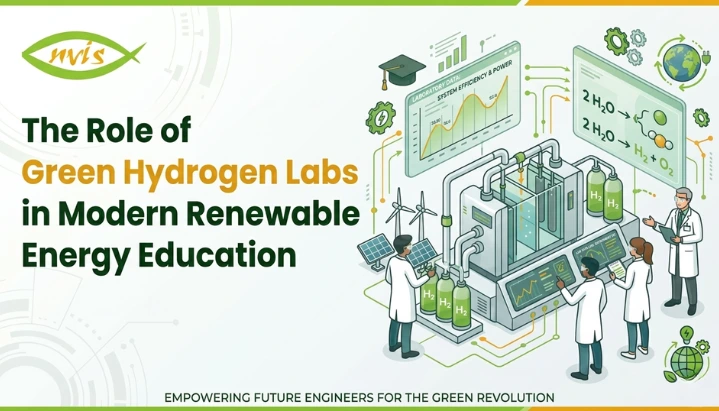
Green hydrogen laboratories are special purpose laboratories used to help students and researchers understand how hydrogen can be produced, stored and utilized in real-world applications.
The most common features of such labs are electrolyzers to produce hydrogen, fuel cells to convert energy, hydrogen storage systems, pressure regulators, flow sensors, safety systems, and monitoring/control units to follow performance. Green hydrogen labs are included in academic programs, allowing them to foster practical training, research, and skills development to equip students with the workforce in the hydrogen energy sector.
Why Choose a Green Hydrogen Lab
With the increasing demand in clean energy skills, the institutions require high tech infrastructure that will assist in learning and research. A green hydrogen lab will be a future oriented laboratory where students will be able to obtain hands-on experience of hydrogen renewable energy systems and meet the requirements of the industry.
1. Complete Hydrogen Learning Ecosystem
A green hydrogen laboratory is a complete representation of the value chain, which includes the production of hydrogen by AEM, PEM, or alkaline electrolysis, storage, and fuel cells or microgrid systems. This end-to-end system can assist the learners to knowledge of hydrogen energy systems in real-world applications.
2. Scalable and Future Ready Setup
Institutions may begin with a simple setup and progress over time by incorporating microgrid systems or more advanced characterization units. This will allow this lab to expand along with the changing needs of academics and research in the field of green hydrogen.
3. Hands on Learning with Real Technologies
Students and researchers have access to industrial grade levels of electrolyzers, hydrogen storage, and fuel cell systems. This converts the arrangement into an effective hydrogen fuel cell laboratory, which surpasses the theoretical education on hydrogen technologies.
4. Trusted by Leading Institutions
The use of green hydrogen laboratories has been already adopted in leading institutions, such as IITs and training establishments, such as Tata Power Skill Development Institute (TPSDI). This indicates their dependability and significance when promoting the education of green hydrogen.
5. Designed for Education and Research
From undergraduate experiments to advanced M.Tech and PhD level research, the lab supports a wide academic spectrum. It is a full-fledged platform of competence building and innovative hydrogen renewable energy.
Key Roles of Green Hydrogen Labs in Education
Green hydrogen laboratories are also important in the development of contemporary energy education as they provide a mixture of theoretical and practical experience. They also allow students to learn the role of green hydrogen systems in the real world and acquire the necessary skills to be employed in an expanding field of hydrogen renewable energy.
1. Bridging Theory and Practice
Green hydrogen labs allow students to apply classroom concepts to real systems, such as hydrogen production through electrolysis and its practical use. This experiment-based learning approach makes complex topics in hydrogen energy systems easier to understand and more relevant.
2. Skill Development for Future Energy Careers
These labs train students to work with hydrogen technologies, including electrolyzers, fuel cells, and storage systems. By gaining hands-on experience, learners are better prepared for careers in the expanding green hydrogen and hydrogen energy industries.
3. Promoting Innovation and Research
Green hydrogen labs encourage students to take part in research projects and develop innovative solutions. They provide a platform to explore new ideas and contribute to advancements in green hydrogen technologies.
4. Enhancing Interdisciplinary Learning
The labs bring together multiple disciplines such as chemistry, engineering, and environmental science. This interdisciplinary approach helps students solve real-world problems and gain a broader understanding of hydrogen renewable energy systems.
Benefits of Hydrogen Renewable Energy Labs for Institutions
- Improves institutional reputation
Positions the institution as a leader in green hydrogen and advanced hydrogen energy education. It helps attract quality students, faculty, and recognition in the clean energy domain. - Attracts research funding and collaborations
Opens opportunities for grants, sponsored projects, and partnerships with industry and research bodies. This boosts innovation and growth in green hydrogen - Aligns with sustainability goals
Supports institutional commitments toward clean energy and net zero targets. It also promotes awareness and adoption of clean hydrogen practices on campus. - Supports industry partnerships
Strengthens connections with companies working in green hydrogen and renewable sectors. This creates better internship, training, and placement opportunities for students.
Applications of Learning from Green Hydrogen Labs
Green hydrogen laboratories assist students to learn how green hydrogen can be used in practice, particularly in clean transportation and industrial energy consumption. By studying fuel cell vehicles, learners gain practical insights on how green hydrogen can significantly contribute in cutting down carbon emissions in industries such as steel, chemicals, etc.
In these labs, the students are also exposed to the high level applications like grid energy storage and smart energy systems. Students will learn how to store excess renewable energy and reuse it with the help of hydrogen and gain a better insight into the proper management of energy resources. This hands on experience equips them to work on future hydrogen energy systems.
Conclusion
Green hydrogen is expected to play a transformative role in the future of hydrogen energy systems as the world moves at a faster pace towards cleaner and more sustainable energy systems. But to create this future, we must do more than merely technological developments, we must have a skilled workforce, which knows not only the theory, but the real practice of such systems. This is where green hydrogen labs are needed.
Green hydrogen laboratories fill the education and industry gap by combining practical learning with academic programs. They not only provide students with practical skills, but also encourage innovation and equip them to work effectively in the new dynamic energy environment. Investing in such a lab is not only a matter of infrastructure to institutions but also the future proofing of professionals and being a public contributor to the global shift to clean hydrogen technologies.
FAQS
Green hydrogen is produced by splitting water into hydrogen and oxygen through electrolysis using renewable electricity such as solar or wind. This process results in near-zero direct carbon emissions, making it a clean and sustainable fuel.
Green hydrogen labs provide hands-on experience that enables students to understand real-world hydrogen energy systems, bridging the gap between theoretical knowledge and practical application.
A typical green hydrogen lab includes electrolyzers (PEM, alkaline, or AEM), fuel cells, hydrogen storage systems, pressure regulators, sensors, safety units, and monitoring/control systems for studying hydrogen production, storage, and utilization.
They help students develop practical skills, improve problem-solving abilities, and prepare them for careers in the growing hydrogen energy and clean technology sector.
Green hydrogen is used in clean transportation (fuel cell vehicles), industrial processes (such as steel and chemical production), grid energy storage, and smart energy systems to reduce carbon emissions.