






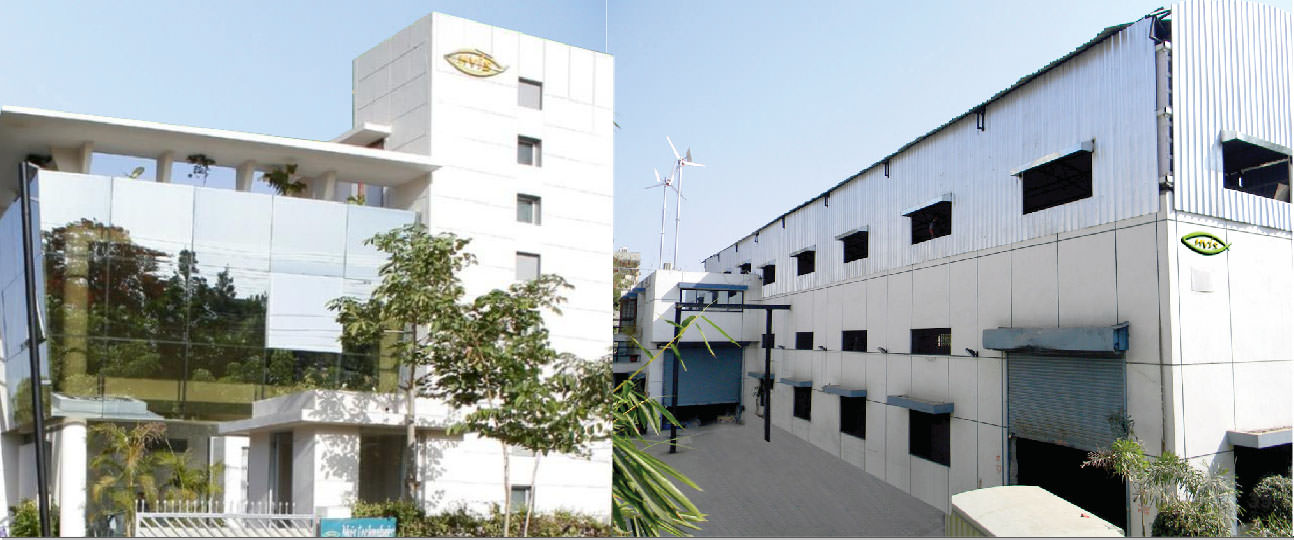
Head Office
141-A, Electronic complex, Pardesipura,Indore - 452010 India
Phone: +91 73899 00887 , +91 98932 70303
Email:info@nvistech.com
Toll Free
+91 73899 00887
Working Hours
We are happy to meet you during our working hours. Please make an appointment.
- Monday-Saturday: 9:00 AM - 5:30 PM (IST)
- Sunday: Closed
Head Office
141-A, Electronic complex, Pardesipura,Indore - 452010 India
Phone: +91 73899 00887 , +91 98932 70303
Email:info@nvistech.com
Toll Free
+91 73899 00887
We are happy to meet you during our working hours. Please make an appointment.
- Monday-Saturday: 9:00 AM - 5:30 PM (IST)
- Sunday: Closed
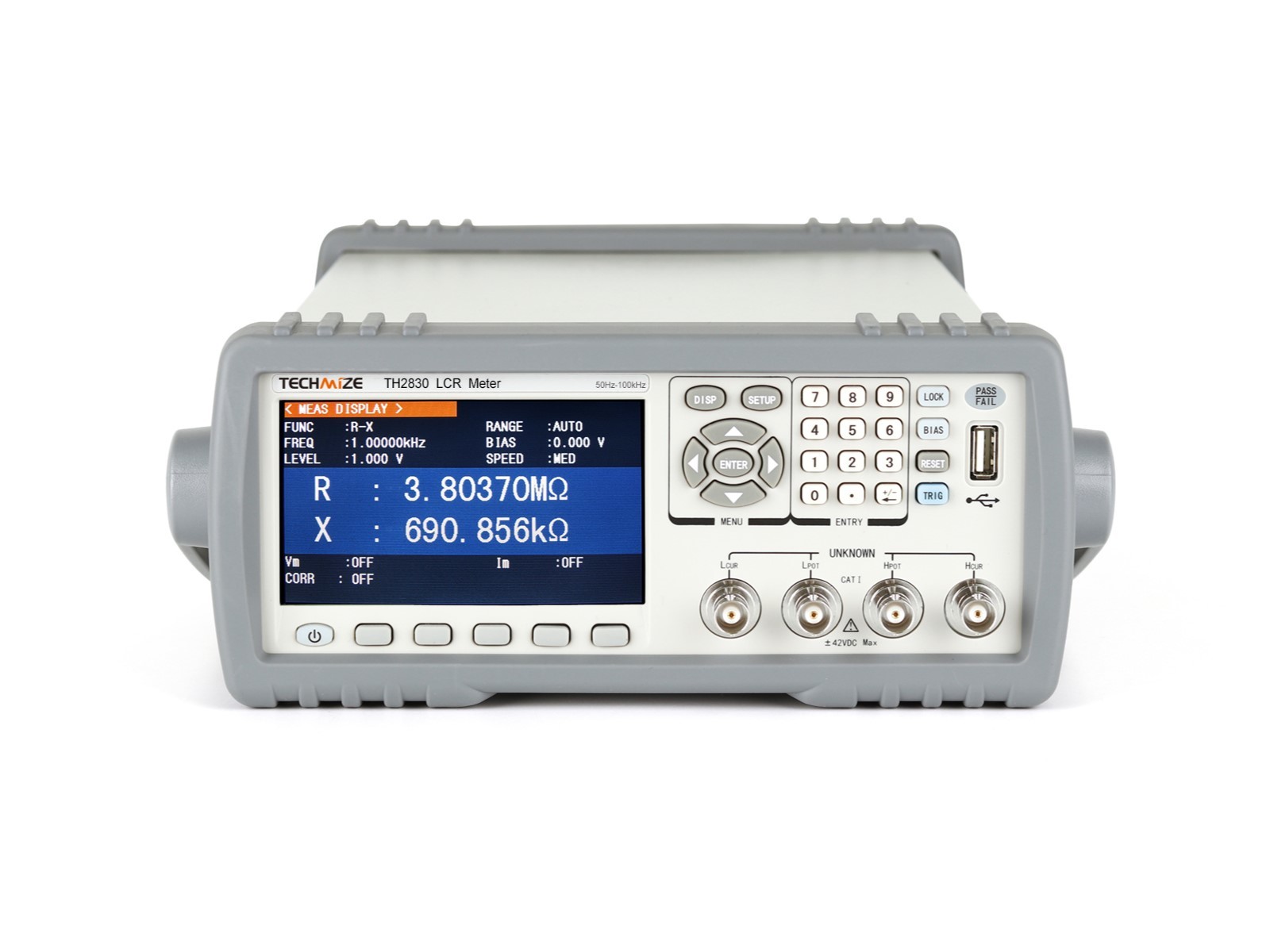
Compact LCR Meter
TH2823X Series
Product Description
The TH283X Series Compact LCR Meter is a high-performance and cost-effective instrument designed for precise measurement of inductance, capacitance, resistance, impedance, DCR, and related parameters. Featuring up to 0.05% basic accuracy, a 4.3-inch TFT display, programmable test signals, and high-speed measurement capability, it is ideal for component testing, quality control, production lines, research laboratories, and educational applications. Its compact design, multiple communication interfaces, and advanced sorting functions make it a versatile solution for modern electronic testing requirements.
An LCR meter is an electronic test instrument used to measure inductance (L), capacitance (C), and resistance (R), along with impedance and other related parameters. Understanding what LCR meter technology is helps engineers and technicians select the right instrument for testing electronic components. The LCR meter working principle is based on applying a controlled AC test signal to a component and measuring its electrical response to determine its characteristics. This LCR meter working method enables accurate testing of components under different test conditions.
Product Features
- Compact size with high performance
- Up to 200kHz test frequency
- 4.3-inch TFT LCD display
- 6-digit measurement resolution
- Programmable AC test signal (10mV–2V)
- Built-in DC bias source (0 to ±5V)
- High-speed measurement up to 13ms
- DCR measurement with 10μΩ resolution
- 10-bin sorting and counting function
- RS232, RS485, USB, GPIB, and HANDLER interfaces
- USB file storage and firmware upgrade support
- Chinese and English operation languages
- Suitable for laboratory, R&D, production, and quality control applications.
LCR Meter Working Principle
The LCR meter working principle involves applying an AC test signal to the component under test and measuring the resulting voltage and current response. The instrument uses these measurements to calculate parameters such as inductance, capacitance, resistance, impedance, and DCR. Programmable test frequencies and signal levels allow users to evaluate components under different operating conditions.
Application of LCR Meter
The application of LCR meter technology extends across laboratories, electronics manufacturing, research, and educational environments. An LCR meter is widely used to measure the electrical characteristics of inductors, capacitors, and resistors, helping engineers verify component performance, accuracy, and quality.
- Component Testing: Measure inductance, capacitance, resistance, impedance, and DCR of electronic components.
- Quality Control: Verify component specifications and identify variations or defective components during inspection.
- Production-Line Testing: Perform fast and reliable measurements for automated component testing and sorting.
- Research and Development: Analyze component behavior under different test frequencies and AC signal conditions.
- Laboratory Measurements: Support detailed testing and characterization of passive components in electronics laboratories.
- Educational Applications: Help students understand component characteristics and the LCR meter working principle through practical measurements.
- Circuit Design and Troubleshooting: Check component values and identify potential issues affecting circuit performance.
Frequently Asked Questions
What Is an LCR Meter?
An LCR meter is an electronic testing instrument used to measure inductance, capacitance, and resistance. It can also measure impedance, DCR, and other related parameters for accurate component testing.
What Is the LCR Meter Working Principle?
The LCR meter working principle involves applying an AC test signal to a component and measuring its voltage and current response. The instrument uses these values to calculate parameters such as L, C, R, and impedance.
What Is an LCR Meter Used For?
An LCR meter is used for testing resistors, capacitors, inductors, and other passive components. Common applications include quality control, production testing, R&D, laboratory measurements, circuit design, and education.
What Are the Applications of an LCR Meter?
The application of LCR meter technology includes component testing, quality inspection, production-line testing, research and development, laboratory analysis, and educational experiments.
What Can the TH2823X Series LCR Meter Measure?
The TH2823X Series can measure inductance, capacitance, resistance, impedance, and DCR. It offers programmable AC test signals, up to 200kHz test frequency, 6-digit resolution, and high-speed measurements for electronic testing.
- Request Quote
- Technical Specification