




• Nvis Technology
  • Nvis Technology
  • Nvis Technology
  • Nvis Technology
  • Nvis Technology
  • Nvis Technology
Nvis Technology

Head Office

141-A, Electronic complex, Pardesipura,Indore - 452010 India

Phone: +91 73899 00887 , +91 98932 70303

Email:info@nvistech.com

Request a Quote

Looking for a quality and affordable builder for your next project?


    Nvis Technology

    Toll Free

    +91 73899 00887

    We are happy to meet you during our working hours. Please make an appointment.

    • Monday-Saturday: 9:00 AM - 5:30 PM (IST)
    • Sunday: Closed

    How a Digital LCR Meter Works: Step-by-Step Measurement Process

    TL;DR –

    • This blog is written for electronics engineers, technicians, students, educators, and R&D professionals who want a clear, practical understanding of how a digital LCR meter works.
    • The blog explains what a digital LCR meter is and why it is essential for accurate measurement of inductance, capacitance, and resistance.
    • It breaks down the digital LCR meter working principle, showing how AC signals, phase measurement, and impedance calculation are used.
    • The blog covers measurement modes, test frequency importance, and common mistakes to ensure accurate results.
    • It highlights real-world applications and advantages of using an LCR meter digital instrument in labs, manufacturing, and education.


    Related Blogs

    In modern electronics, precision in component measurement is critical. The reliability and performance of a final product is dependent upon the correct knowledge of the precise electrical properties of components, whether you are designing a power supply, debugging a circuit, validating a prototype, or performing quality control on a production line. A digital LCR meter becomes a very crucial tool in this.

    In contrast to simple types of multimeters, which simply give approximate values of the resistance, an LCR meter digital instrument is intended to accurately measure the inductance (L), capacitance (C), and resistance (R) under controlled test circumstances. To fully appreciate its value, it is important to understand the digital LCR meter working principle and its step-by-step measurement process.

    This article explains the detailed operation of a digital LCR meter. including the signal formation inside a meter and the display of the measurement values in digital form in the end.


    What Is a Digital LCR Meter?

    A digital LCR meter is a special electronic measuring device used to measure the electrical properties of passive electronic components, like resistors, capacitors and inductors, with high precision. Contrary to the simple multimeters which usually impose DC voltage and can provide only a limited amount of information, digital LCR meter applies a carefully regulated AC test signal and measures how a component behaves under real operating conditions and frequency dependent factors.

    The instrument is capable of measuring the electrical properties of a component by measuring the voltage, current, and phase relationship of the current applied as an AC signal. This is particularly handy in a digital LCR meter when accurate and repeatable measurements are important e.g. circuit design, component verification, quality control and research and development.

    The three basic parameters that are measured using the instrument are called LCR:

    • L – Inductance: The ability of a component, typically a coil, to store energy in a magnetic field when current flows through it.
    • C – Capacitance: The ability of a component to store electrical energy in an electric field between conductors separated by an insulating material.
    • R – Resistance: The opposition offered by a material or component to the flow of electric current, resulting in energy dissipation as heat.

    An LCR meter can give an accurate and understandable reading of the electronic components by digitally processing these values to help engineers, technicians and students of electronic components understand and assess the electronic component.


    Why Are Digital LCR Meters Important in Electronics?

    Digital LCR meters play a vital role in electronics since they ensure accurate and repeatable measurements of passive components including resistors, capacitors as well as inductors. A digital LCR meter, in comparison to basic multimeters, applies an AC test signal to the component under measurement, providing measurements of component behavior in realistic operating conditions, and leads to more meaningful and accurate values.

    Even minor changes in the values of components in circuit design and development can impact on performance, efficiency and stability. A digital instrument of an LCR meter assists the engineer in checking the real component parameters and tolerance and to comprehend parasitic effects which might affect high-frequency or delicate circuits. The accuracy is needed especially in research, prototyping and validation phases.

    Digital LCR meters have also found a wide range of applications in manufacturing and quality control. They enable rapid and reproducible testing to assure component uniformity, screen defects and preserve quality of products. The vivid digital display and multi-parameter readings are more advantageous in education and troubleshooting: it is simpler to examine elements and identify problems related to the circuit. All in all, the worth of digital LCR meter working is that it provides reliable data which can be relied upon in order to design and test electronically.

    • Test components at specific frequencies
    • Detect faulty or degraded parts
    • Compare measured values with design specifications
    • Ensure consistency in manufacturing

    Because of this, digital LCR meters are widely used in R&D laboratories, educational institutions, service centers, and electronics manufacturing facilities.


    How a Digital LCR Meter Works?

    A digital LCR meter is a meter which measures the impedance of a component with a controlled AC test signal instead of a simple DC voltage. This method can give the instrument the chance to test the behavior of a component in the actual operating environment that is important in measuring inductance, capacitance, and resistance accurately.

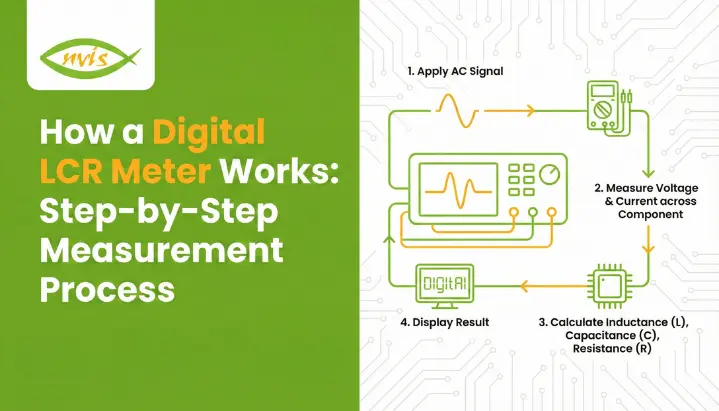
    During operation, the meter sends a given AC signal through a component under test at a given frequency with a given amplitude. It then measures the voltage across the component and the current through the component. The LCR meter digital instrument measures the magnitude and phase difference of a voltage and current to establish the type of response of the component, which is resistive, capacitive, or inductive.

    Digital signal processing is used to change the measured values into impedance values and mathematically decompose them into resistance (R), inductance (L), or capacitance (C). The resulting calculated values are then presented precisely on the screen, and in many cases with other values like impedance, phase angle, quality factor or the dissipation factor. This is what makes this digital LCR meter a reliable instrument to test electronics, test a design, or ensure quality control because of a specific and repeatable working process.

    Here is a clear, step-by-step explanation of how an LCR meter digital instrument works:


    1. Application of AC Test Signal

    The digital LCR meter creates an accurate AC signal at a desired frequency and passes it to the component under test. This frequency can also be modified regularly to suit real circuit conditions.


    2. Measurement of Voltage and Current

    The meter measures the current and voltage across the component in which the signal is passing through as the signal moves through the component. These two values are imperative in calculation of impedance.


    3. Phase Angle Detection

    The meter identifies the voltage and current phase difference. It is the phase relationship that defines the component as a resistor, capacitor or inductive.


    4. Impedance Calculation

    Based on the measured value of the voltage, current, and the phase angle, the digital LCR meter then calculates the impedance of the component. Impedance consists of resistive components and reactive components.


    5. Extraction of L, C, or R Values

    Depending on the impedance measurements and the mode of measurement chosen, the instrument determines values of inductance, capacitance or resistance in a high precision manner.


    Step-by-Step Measurement Process of a Digital LCR Meter

    Let us now walk through the step-by-step digital LCR meter working process, from component connection to result display.

    Step 1: Connecting the Component Under Test (DUT)

    The initial one is to couple the component with the LCR meter terminals. Simple measurements can be done with simple test leads. In high precision work with typically low resistance or low inductance parts, Kelvin connections are made to avoid lead resistance errors.

    Open-circuit and short-circuit compensation can be carried out before measurement in order to increase accuracy.


    Step 2: Applying the AC Test Signal

    After connecting the component, a known AC test signal is applied with the help of the digital LCR meter. This signal has:

    • A constant frequency or frequency that can be chosen.
    • Certain voltage or current level.

    Frequency: This is an important decision since different components respond differently to dissimilar frequencies. As a case example, capacitors are frequently tested at 1 kHz, whereas inductors can be tested at lower frequencies.


    Step 3: Measuring Voltage and Current

    As the AC signal passes through the component, the meter simultaneously measures:

    • The voltage across the DUT
    • The current flowing through it

    These two values form the foundation of impedance calculation.


    Step 4: Detecting Phase Difference

    One of the most important steps in digital LCR meter working is phase detection. The meter determines the phase angle between voltage and current:

    • 0° phase difference: Pure resistance
    • Current leads voltage: Capacitive behavior
    • Current lags voltage: Inductive behavior

    This phase information allows the meter to separate resistance from reactance.

    Step 5: Calculating Impedance (Z)

    Using the measured voltage (V), current (I), and phase angle (θ), the meter calculates impedance:

    Z=VIZ = \frac{V}{I}Z=IV​

    It then mathematically resolves impedance into its resistive and reactive components.

    Measurement Modes in an LCR Meter Digital Instrument

    An LCR meter digital meter provides various measurement modes so as to properly represent the electrical characteristics of various components. To get accurate results the mode must be chosen, since real world components have either series or parallel loss characteristics depending upon their value and construction.

    Series Mode

    A series mode is applied when a component acts as a series combination of both resistance and inductance (R L) or capacitance (R C). This mode is conventionally favored when the losses in series are more important, e.g. small resistors, low-capacitance capacitors, low-inductance coils, etc.

    Parallel Mode

    Parallel mode can be used when the leakage or dielectric loss characteristics of a device can be modeled in parallel, such as with capacitors and high-value inductances. The component in this mode is modelled to act as a parallel network, which gives more precise results when the component is of high impedance

    Auto Mode

    At auto mode, the digital LCR meter automatically checks the impedance of the component and automatically chooses either the series mode or parallel mode. This makes measurements easier, besides allowing maximum accuracy without the manual selection of mode.

    Importance of Test Frequency in Digital LCR Meter Working

    The test frequency is also a key factor in the digital LCR meter functioning, since it directly influences the measurement accuracy and relevance. Passive components do not act perfectly at all frequencies, but rather the electrical behaviour of a passive component varies with frequency of the AC signal applied to it.

    • Dielectric losses and parasitic effects usually cause different values of the capacitance of the capacitors at low and high frequencies.
    • At lower frequencies, inductors can become core-saturated and at higher frequencies may exhibit resonance effects and change their apparent inductance.

    A digital LCR meter provides an option to users to choose the right frequency of the test, which ensures that components are tested under the conditions that are close to their real-life applications. The possibility renders LCR meter digital instrument a necessity to characterize components accurately, design circuits reliably and to be able to control quality.

    Applications of Digital LCR Meters

    Digital LCR meters have been critical instruments in a broad spectrum of industries since they are precise and flexible in measuring passive components. It is commonly used in:

    • Electronics labs Component testing to confirm inductance, capacitance and resistance in circuit design and prototyping.
    • During manufacturing, quality assurance whereby the components used are of particular tolerances prior to assembly.
    • Failure analysis and repair operations, assisting technicians to locate faulty or damaged parts within a short time.
    • Experiments and training in education: students are taught effective methods of measurement and component behavior.
    • Development of new circuits, to facilitate accurate testing of the components in controlled test work.

    They are critical in the working world because of their capacity to deliver consistent and precise outcomes.

    Advantages of Using a Digital LCR Meter

    A digital LCR meter has a number of benefits compared to the older component measurement techniques, and it is an essential tool in the electronics testing and analysis of the present day.

    • High accuracy and resolution, ensuring reliable measurements in measuring inductance, capacitance and resistance.
    • Quick and repeatable measurements, which enhance productivity in the laboratory and manufacturing setup.
    • Several parameters in one test, e.g. impedance, ESR, quality factor, and dissipation factor.
    • Digital display, with user friendly results that are easy to read with minimum set up requirements.
    • Automation and data logging enabled so as to integrate with test systems to allow analysis and record keeping.

    These advantages make them better than basic multimeters in testing the components.

    Conclusion

    The knowledge of the functionality of a digital LCR meter can help in enlightening the reasons as to why it is considered a very imperative tool in testing electronics. With the use of a controlled AC signal, the measurement of voltage, current, and phase difference and the digital processing of the findings, an LCR meter digital meter can provide accurate values of resistance, capacitance, and inductance.

    Since the digital LCR meter working process comprises step-by-step signal application up to advanced digital computation, the correctness, repeatability, and application-relevant measurement is ensured. Regardless of whether you are an engineer or a student or a technician, it is imperative to know how to operate a digital LCR meter to build reliable and high-performance electronic systems

    FAQs

     A digital LCR meter is used to measure inductance, capacitance, and resistance of electronic components with high accuracy. It applies an AC test signal to analyze real operating behavior, making it ideal for labs, manufacturing, R&D, and educational testing.

     Unlike a multimeter that mainly uses DC measurement, a digital LCR meter uses AC signals and phase analysis. This allows it to measure L, C, and R accurately at different frequencies, giving more realistic and reliable component values.

     Components behave differently at different frequencies. Capacitors change value with frequency, and inductors may resonate or saturate. A digital LCR meter allows frequency selection to ensure measurements match real application conditions.

     Series mode is used for low-value components where series losses dominate, while parallel mode suits high-value components with leakage losses. Auto mode selects the best option automatically based on impedance for accurate results.

     No, components should be tested outside the circuit. In-circuit measurements can give incorrect readings due to parallel paths and other components affecting impedance, leading to inaccurate LCR values.

    Power Meter in Microwave Systems: Why Accurate Power Measurement Matters

    • A power meter in microwave systems is essential for accurate, reliable power measurement at high frequencies.
    • Microwave power meters directly measure RF and microwave power, making them more reliable than voltage-based methods.
    • Accuracy affects system performance, safety, efficiency, and regulatory compliance.
    • Different sensor types (thermal, diode, peak) suit different applications.
    • Proper setup, calibration, and handling are critical to avoid measurement errors.

    In high-frequency applications, accurate measurements are essential to every successful engineering system. In microwave and RF design, even minor measurement errors can lead to degraded performance, safety risks, and costly design mistakes. It is due to this reason that the power meter used in the microwave systems is such a critical factor in the laboratories, production floors, and field installations.

    The microwave power meter is among the most reliable tools in the measurement of microwave activities, whether it is in validating the transmitter output or in terms of regulatory compliance. This article provides a professional explanation of the working mechanism of a  power meter microwave system, the importance of accuracy, and how one of the engineers can get reliable results when using a power meter in the real world.

    Understanding Power Measurement in Microwave Systems

    Microwave systems typically operate at frequencies above 300 MHz and extend into the gigahertz (GHz) range. At such frequencies, low-frequency methods of measurement are no longer adequate. Changes in signal behavior, growth in losses and parasitic effects gain relevance.

    A microwave power meter has been made to cope with these challenges. It quantifies the actual power of a microwave source, amplifier or transmitter and gives the engineer one straightforward and reliable parameter with which to assess the performance of the system.

    Contrary to the measurement of voltages or currents, power is one of the most stable and repeatable quantities in high-frequency microwave systems, and the microwave power meter is a staple of RF test systems.

    What Is a Microwave Power Meter?

    A microwave power meter is an instrument used to measure the average or peak power of microwave signals. It typically consists of two main parts:

    • A power sensor, which interacts directly with the microwave signal
    • A display or processing unit, which converts the sensor output into a readable power value

    Depending on the design of the sensor, a power meter microwave system has the potential to measure power over a wide range of frequencies extending between a few megahertz and tens of gigahertz.

    Since the measurement of power is independent of the shape of the waveform or complexity of the modulation of digital signals, the power meter of microwave systems is highly applicable both to simple continuous-wave (CW) signals and more complex digitally modulated signals.

    Why Accurate Power Measurement Matters?

    1. System Performance and Efficiency

    In the microwave systems, coverage, signal quality, and efficiency are directly proportional to the output power. A faulty result of a microwave power meter can make engineers think that a system is working when it is not.

    A power underestimation may lead to inadequate performance of the system whereas overestimation can cause system overheating, distortion or breaking of components. The correct power meter microwave system is important for accurate power measurements to ensure that amplifiers, transmitters and antennas are working according to their specifications.

    2. Safety in High-Power Microwave Applications

    High-power microwave systems are widely used in radar, satellite communication, and industrial heating applications. The wrong power values can be life-threatening to the equipment and human life.

    A trustworthy power meter in a microwave system will assist avoid unnecessary overexposure, destruction of components and unsafe operation environments, as it will give assurance of measured power.

    3. Compliance with Standards and Regulations

    Several wireless and microwave networks are required to meet stringent regulatory restrictions on the power radiated. The government defines the maximum allowable power to prevent interference and allow safe operation.

    It is necessary to show compliance by using a calibrated microwave power meter. Certification and approval processes can be considered to be unreliable and dangerous without proper power measurements.

    Working Principle of a Power Meter in Microwave Systems

    The working principle of a power meter within the microwave systems is grounded in the fact that the conversion of the high frequency microwave power energy into something that is measurable and traceable is done accurately. Microwave signals cannot be accurately measured using conventional voltmeters or ammeters, making direct power measurement essential at high frequencies.Rather, a microwave power meter is used to measure the actual power picked up by the microwave signal, and thus it is one of the most reliable measurements in RF and microwave engineering.

    In this effort, a basic power meter microwave system will be composed of a power sensor and a display unit or a processing unit. They combine to convert the microwave energy to useful power readings, usually in the form of watts or dBm.

    Basic Measurement Concept

    1. The microwave signal is applied to a power sensor
    2. The sensor absorbs part or all of the microwave energy
    3. This energy is converted into heat or an electrical signal
    4. The meter processes this signal and displays power in watts or dBm

    Because the power meter in microwave systems measures actual energy rather than inferred values, it provides high accuracy across wide frequency ranges.

    Types of Microwave Power Meters

    Microwave systems are used with a high level of frequencies, power and signal formats. Different kinds of microwave power meter have been developed in order to cover these diverse needs. None of the types is universal, as each of them relies on a different principle of measurement and is designed to be applied in a particular application. Knowledge of these kinds can assist engineers to choose the appropriate power meter in the microwave systems so as to make precise and dependable measurements.

    Thermal Power Meters

    • Measure power by detecting heat generated by microwave energy
    • Known for excellent accuracy and stability
    • Ideal for calibration and reference measurements

    Thermal sensors make the power meter microwave extremely reliable for average power measurements.

    Diode Detector Power Meters

    • Use semiconductor diodes to detect microwave signals
    • Faster response time than thermal sensors
    • Suitable for low-power and modulated signals

    These sensors are widely used in modern power meters in microwave instruments due to their versatility.

    Peak Power Meters

    • Designed to capture fast, high-power pulses
    • Essential for radar and pulsed microwave systems
    • Measure peak, average, and pulse parameters


    Components of a Microwave Power Measurement Setup

    The power meter alone does not guarantee reliable microwave power measurement.Proper connection of the components and their selection are the keys to the right results. Every component of the system has a direct effect on the quality and consistency of measurements as well as their safety. To make good use of a power meter in microwave systems, it is important to understand these components.

    A complete power meter microwave setup typically includes:

    • Power sensor: The most critical component determining accuracy
    • Meter or display unit: Processes and displays measured power
    • Interconnects: Coaxial cables or waveguides for signal delivery

    Every component affects the overall accuracy of the microwave power meter, making careful selection and handling essential.

    Factors Affecting Accuracy in Microwave Power Measurement

    Measurement of microwave power is very critical to assure proper performance, safety, and compliance with regulations of a system. Although a power meter of high quality appears in the microwave systems, there are a number of external and internal factors that may affect the accuracy of measurements. The knowledge of these considerations assists the engineers to reduce mistakes and to get reliable results of a microwave power meter.

    Even the most precise microwave power meter can produce inaccurate results if key influencing factors are ignored.

    a) Frequency Response

    Sensors have specified frequency ranges. Using a sensor outside its rated band can introduce significant errors.

    b) Mismatch and VSWR

    Impedance mismatches between the source and sensor cause reflected power, reducing measurement accuracy. High-quality sensors are designed to minimize these effects.

    c) Temperature Effects

    Thermal drift can affect readings, especially in long-duration measurements. This is why stable environments and warm-up times are important for microwave power meter accuracy.

    D) Calibration Uncertainty

    Every power meter microwave system must be calibrated against traceable standards. Skipping calibration leads to unreliable data.

    Applications of Microwave Power Meters

    Microwave power meters are important tools where microwave and RF energy is produced, transmitted or measured. The power meter has become very common in microwave systems due to the repeatability and reliability of power which is one of the most reliable parameters at high frequencies. The following are the critical areas of application of a microwave power meter.

    The power meter microwave is used across a wide range of industries:

    Communication Systems

    • Cellular base stations
    • Satellite uplinks and downlinks
    • Microwave backhaul systems

    Radar and Defense

    • Transmitter power validation
    • Pulse power measurement
    • System diagnostics

    Research and Education

    • University laboratories
    • Microwave component characterization
    • Experimental RF systems

    Manufacturing and Production Testing

    • Quality assurance
    • End-of-line testing
    • Compliance verification

    In all these cases, the power meter in microwave systems ensures repeatability, reliability, and confidence in results.

    Common Mistakes to Avoid When Using a Microwave Power Meter

    A high-quality instrument may not give the correct result despite the instrument being of high quality unless the appropriate measurement practices are applied. The microwave power meter is not the cause of many of the errors in microwave testing, but improper setup, poor handling, or lack of understanding of the measurement limits. To a great extent, preventing the following widespread errors will help to enhance the accuracy, safety, and reliability of any power meter in microwave systems.

    Even experienced engineers can encounter errors when using a microwave power meter:

    • Selecting the wrong sensor for frequency or power level
    • Ignoring cable and connector losses
    • Overloading the sensor
    • Skipping warm-up and zeroing procedures

    Avoiding these mistakes significantly improves the reliability of power meter microwave measurements.

    Conclusion

    Precision in power measurement is not only a technical specification, but a base of performance in microwave engineering, safety and compliance.Microwave systems rely on power meters to provide a direct, reliable, and trusted method for gauging microwave signal power. in industries and applications.

    With the knowledge on how a microwave power meter operates, the factors influencing its precision and the proper use of the meter, engineers are able to know that their systems are functioning as they expected. The power meter microwave has also been one of the most critical equipment in the modern RF and microwave measurement, in a field where precision is a critical factor.

    Frequently Asked Questions (FAQs)

    1. What is a power meter in microwave systems?
      A power meter in microwave systems is an instrument used to measure the actual power of microwave and RF signals accurately, typically in watts or dBm.
    2. Why is a microwave power meter preferred over voltage measurements?
      At microwave frequencies, voltage and current are difficult to measure directly. A microwave power meter provides stable, direct, and repeatable power measurements independent of waveform shape.
    3. What types of microwave power meters are commonly used?
      Common types include thermal power meters, diode detector power meters, and peak power meters, each designed for specific power levels and signal types.
    4. What affects the accuracy of a power meter microwave measurement?
      Accuracy is influenced by sensor frequency range, calibration, mismatch (VSWR), cable losses, temperature, and proper sensor selection.
    5. Where are microwave power meters used?
      Microwave power meters are widely used in wireless communication, radar, satellite systems, R&D labs, manufacturing, aerospace, and educational institutions.

    Related Blogs:

    How Analog and Digital Multimeters Work: Basic Working Principles


    • This blog targets students, technicians, and engineers learning electrical measurements.
    • A multimeter measures voltage, current, and resistance in electrical circuits.
    • Analog multimeters work on the PMMC principle using needle deflection.
    • Digital multimeters use ADCs and digital processing for high accuracy.
    • Digital multimeters dominate modern applications, while analog meters remain useful for learning and trend observation.

    The foundation of electrical and electronics engineering is the ability to measure electrical quantities accurately. The analog and digital multimeter is one of the tools you will always find in your toolbox, whether you are a student learning basic circuit principles, a technician troubleshooting a system, or an engineer verifying system performance.

    Despite the extensive use of digital technologies in the modern laboratories and field settings, the knowledge of the principles of work of an analog multimeter and a digital multimeter helps to gain a better idea of the working principles of electrical measurements and how they are measured, interpreted, and believed in.

    This paper describes the working principle of analog and digital multimeters, their internal mechanisms, main distinctions, and the conditions under which each of them is most appropriate.

    What Is a Multimeter?

    A multimeter is a flexible electrical measuring device that is utilized to measure various electrical parameters in a single device. It is among the most important tools in electrical and electronics work that is commonly used among students, technicians, engineers, and maintenance workers.

    At a basic level, a multimeter combines the functions of three instruments:

    • Voltmeter – measures electrical voltage (AC and DC)
    • Ammeter – measures electrical current
    • Ohmmeter – measures electrical resistance

    Modern multimeters can also measure additional parameters such as continuity, capacitance, frequency, temperature, and diode characteristics, depending on the model.

    Multimeters are available in two main types:

    • Analog multimeters, which use a moving needle and scale to display readings
    • Digital multimeters, which display measurements as precise numerical values on a screen

    Whether analog or digital, the primary purpose of a multimeter is to help users test, diagnose, and verify electrical circuits safely and accurately, making it a fundamental instrument in both learning environments and real-world applications.

    Basic Working Principle of an Analog Multimeter

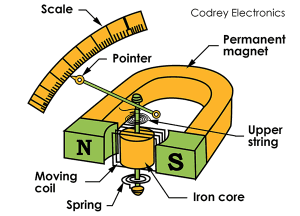
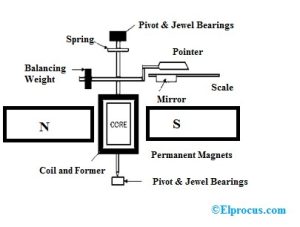
    The fundamental mechanism of working of an analog multimeter is the Permanent Magnet Moving Coil (PMMC) mechanism. This principle transforms electrical quantity into mechanical movement which can be observed graphically on a scale.

    An analog multimeter operates on the Permanent Magnet Moving Coil (PMMC) principle. A force is created by passing electric current through a coil in a magnetic field which causes the coil and pointer attached to it to move.

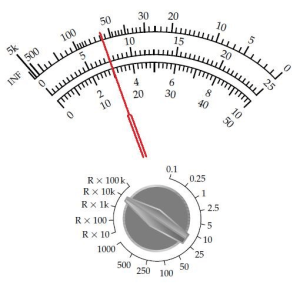
    Electrical quantities can be measured because the deflection of the pointer is proportional to the current. The same mechanism is used to measure voltage using a series resistor, current using a shunt resistor, and resistance using an internal battery.

    A calibrated scale is used to read the reading and the reading gives a real-time and continuous reading of the value being measured.

    Basic Working Principle of a Digital Multimeter

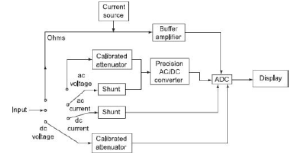
    The principle of operation of a digital multimeter (DMM) is rooted in electronic signal processing and analog-to-digital conversion and analog-to-digital conversion. A digital multimeter, unlike an analog multimeter, does not need the movement of a mechanical aspect; this is because it measures the electrical activity and converts it to digital data which can be properly read on a screen.

    1. Input Signal Conditioning

    • The measured voltage, current, or resistance is first conditioned using resistors and protection circuits.
    • This ensures the signal is within a safe and measurable range.

    2. Analog-to-Digital Conversion (ADC)

    • The conditioned analog signal is converted into a digital value using an ADC.
    • This is the heart of the digital multimeter.

    3. Digital Processing

    • A microcontroller processes the digital data.
    • Mathematical calculations are performed to display the final measurement.

    4. Digital Display

    • The processed value is shown on an LCD or LED display as a precise numerical reading.

    How an Analog Multimeter Measures Different Quantities

    An analog multimeter operates on the Permanent Magnet Moving Coil (PMMC) principle to measure different electrical quantities but in measuring various electrical quantities. The instrument is able to measure voltage, current and resistance with the help of the change of internal circuit configuration using range selectors and resistors.

    Voltage Measurement

    • A high-value series resistor is added to limit current.
    • The voltage applied causes a proportional current through the coil, resulting in pointer deflection.

    Current Measurement

    • A low-resistance shunt is connected in parallel to handle higher currents safely.
    • Only a small fraction of the current flows through the moving coil.

    <h3class=”margin_top_10px”>Resistance Measurement

    • An internal battery supplies current.
    • Resistance is calculated based on how much current flows through the unknown resistor.
    • The scale is nonlinear, requiring careful reading.

    How a Digital Multimeter Measures Different Quantities?

    A digital multimeter (DMM) measures electrical quantities using electronic circuits, signal conditioning, and an Analog-to-Digital Converter (ADC). Unlike an analog multimeter, a digital multimeter converts electrical signals into numerical values and displays them on an LCD or LED screen. By changing the internal circuitry through a rotary switch or buttons, the same instrument can accurately measure voltage, current, and resistance.

    Voltage Measurement

    • The input voltage is first applied to a high-input-impedance voltage divider to reduce it to a safe level.
    • This scaled-down voltage is fed into the ADC.
    • The ADC converts the analog voltage into a digital number.
    • The microcontroller processes this value and displays the voltage directly on the screen.
    • High input impedance (typically 10 MΩ or more) ensures minimal loading on the circuit under test.

    Current Measurement

    • Current is measured by allowing it to pass through a precision low-value shunt resistor.
    • The voltage drop across the shunt resistor is proportional to the current flowing through it (Ohm’s Law).
    • This small voltage drop is amplified, sent to the ADC, and converted into a digital value.
    • The multimeter displays the calculated current in amperes, milliamperes, or microamperes.
    • Separate input terminals are often used for high and low current ranges for safety.

    Resistance Measurement

    • An internal battery supplies a known, small current through the unknown resistor.
    • The DMM measures the resulting voltage drop across the resistor.
    • Using Ohm’s Law, the microcontroller calculates the resistance value.
    • The result is displayed on a linear digital scale, making it easier to read than analog resistance scales.
    • Accuracy is high, but the circuit under test must be powered off during resistance measurement.

    Accuracy and Precision in Digital Multimeters

    Two of the most significant performance attributes of a digital multimeter (DMM) would be accuracy and precision. They identify the extent to which the measurements that have been shown can be relied upon and repeated in the real world.

    Digital multimeters provide:

    • Higher resolution
    • Minimal human reading error
    • Stable and repeatable results

    This makes digital multimeters more suitable than analog multimeters in most professional environments.

    Key Differences Between Analog and Digital Multimeter

    AspectAnalog MultimeterDigital Multimeter
    Display TypeNeedle and scaleNumeric digital display (LCD/LED)
    Working PrincipleBased on PMMC (Permanent Magnet Moving Coil) principleUses electronic circuits and Analog-to-Digital Converter (ADC)
    AccuracyModerate accuracyHigh accuracy and precision
    Reading ErrorProne to parallax errorNo parallax error
    ScaleNonlinear (especially for resistance)Linear and easy to read
    Input ImpedanceLow to moderateVery high (typically 10 MΩ or more)
    SensitivityLower sensitivityHigh sensitivity
    Power RequirementRequired only for resistance measurementRequired for all measurements
    Response to FluctuationsGood for observing signal variations and trendsLess effective for fast fluctuations
    Ease of UseRequires careful interpretationSimple and user-friendly
    Extra FunctionsLimited to basic measurementsSupports continuity, diode test, frequency, capacitance, etc.
    Modern UsageMainly for learning and trend observationWidely used in labs, industry, and fieldwork


    Advantages of Analog Multimeter

    • Real-time response: The moving needle shows continuous changes, making it easy to observe fluctuations and trends in signals.
    • Better for tuning: Ideal for adjustment, alignment, and balancing tasks where gradual changes must be monitored.
    • No sampling delay: Instant pointer movement reflects actual signal behavior without digital sampling lag.
    • Simple operation: Easy to understand working principle, useful for learning basic electrical concepts.
    • Low power requirement: Does not rely heavily on batteries, except for resistance measurement.

    Advantages of Digital Multimeter

    • High accuracy: Provides precise and reliable measurements with minimal error.
    • Easy readability: Clear numeric display eliminates parallax and reading errors.
    • High resolution: Detects very small changes in voltage, current, and resistance.
    • Auto-ranging feature: Automatically selects the correct measurement range, improving convenience and safety.
    • Advanced functions: Supports features like data hold, continuity test, diode test, and sometimes frequency and temperature measurement.

    Safety Considerations When Using Multimeters

    Safety should always be kept in mind when working with a multimeter to avoid electric shock or equipment damage. Before connecting the probes, always select the correct measurement function and range and when you do not know what the value is then always start with the highest range. Make sure that the test leads are correctly attached to the appropriate terminals (particularly in determining current). Do not measure resistance and continuity on an active circuit because this may harm the meter and is dangerous. The correct safety rating of multimeters employed with insulated probes also provides safe and reliable measurements.

    Safety is critical regardless of whether you use an analog and digital multimeter.

    Applications of Analog and Digital Multimeters


    In educational laboratories, one can learn fundamental electric principles with analog and digital multimeters, in electronics debugging to measure circuits and components, and in electrical maintenance to measure wiring, voltage, and continuity. They are also typically applied in automotive testing to test batteries and sensors and in industry to test, calibrate, and perform routine maintenance.

    Conclusion

    Learning the principles of work of analog and digital multimeter instruments is not just reading the numbers on a display. The analog multimeter is used to learn the basics of electromagnetism by its moving coil system, whereas the digital multimeter is used to learn the latest digital signal processing and digital conversion methods.

    Although digital multimeters are the modern standard due to their accuracy and convenience in the workplace, analog multimeters still have a place in learning and practical observation. Whether to use an analog multimeter or a digital multimeter is always a matter of choice based on what one wants to measure and how precise he or she wants the reading to be as well as the type of signal that he or she intends to measure.

    Learning the operating principles of each, the engineers and technicians will have a better understanding of the electrical measurement and be more confident and informed in making decisions in a real-life testing situation.

    FAQs

    1. What is the main difference between an analog and a digital multimeter?
      An analog multimeter uses a moving needle and scale, while a digital multimeter displays readings numerically on a digital screen.
    2. Which multimeter is more accurate?
      Digital multimeters are generally more accurate and precise than analog multimeters.
    3. Can an analog multimeter measure AC and DC?
      Yes, analog multimeters can measure both AC and DC voltage and current with proper settings.
    4. Why are digital multimeters more popular today?
      They offer higher accuracy, easy readability, auto-ranging, and additional measurement features.
    5. Are analog multimeters still useful?
      Yes, they are useful for learning fundamentals and observing rapid signal fluctuations.

    Related Blogs:

    Renewable Energy labs for a global workforce: Aligning education with industry standards

    The world is at a decisive moment as we make rapid strides in adopting clean energy as a part of global climate action. From powering homes and industries with solar to harnessing wind and hydro for large-scale projects, renewable energy is shaping the way nations secure a sustainable future. But as technology evolves rapidly, the real challenge is not just in generating clean power; it’s in preparing a workforce skilled enough to drive and maintain this transformation. Hence, it’s imperative to explore efficient ways of capacity building in renewable energy.

    As countries set ambitious renewable energy targets, the demand for professionals trained in solar, wind, and hydro technologies continues to grow. LinkedIn’s Economic Graph – Global Green Skills Report 2023 highlights a widening gap between the pace of green job creation and the availability of workers with the right skills. For educators and training providers, this signals the urgent need to rethink how renewable energy is taught, practiced, and aligned with global industry expectations.

    One of the most significant shifts in recent years has been the introduction of global training standards for renewable energy. The Global Wind Organisation (GWO) and the Global Solar Council (GSC) have developed frameworks that define the competencies, safety protocols, and technical expertise expected from professionals entering the renewable energy workforce. These standards are shaping how universities, vocational institutions, and training centers worldwide design their programs and labs.

    Transforming Renewable Energy learning into practice


    Traditionally, education in Renewable Energy has been heavily theory-driven. While students learn the fundamentals of solar PV, wind mechanics, or hydropower systems in classrooms, they often lack access to the hands-on, practice-oriented training environments that industry demands.

    Here’s a global perspective what is expected from renewable energy education:


    • Solar Energy: Beyond theory, students must engage with photovoltaic modules, inverters, and energy storage systems to develop skills in installation, diagnostics, and maintenance.
    • Wind Energy: Training mandates not only technical knowledge of turbines and control systems but also rigorous safety drills that prepare learners for the risks of working at height and in dynamic environments.
    • Hydro Energy: As a backbone for grid stability, hydro training must cover turbine operation, flow management, and integration with other energy sources through simulation-based modules.


    These learning outcomes equip students with the knowledge and skills needed to succeed in renewable energy careers worldwide.

    The role of global standards in shaping training infrastructure


    The new Global Solar Training Standards emphasize a structured approach to solar PV education; covering everything from safe installation practices to emergency response. Similarly, GWO’s safety training modules for wind energy stress first aid, rescue procedures, and safe handling of equipment.


    For institutions, this means labs cannot remain basic or demonstration-only. To truly prepare students, they must provide:


    • Fully functional setups replicating real-world solar, wind, and hybrid systems.
    • Safety infrastructure for practicing emergency protocols in controlled environments.
    • Integrated monitoring and data acquisition systems for diagnostics and performance tracking.
    • Hybrid energy modules combining solar, wind, and storage for training on modern grid solutions.


    This alignment with international expectations strengthens the institution’s credibility and ensures students are ready for careers both nationally and internationally. To address these global challenges, practical lab-based solutions are essential; this is where Nvis Renewable Energy Labs play a critical role.

    How Renewable Energy Labs bridge this gap


    At Nvis Technologies, we recognize that the future of renewable energy lies in creating training environments that reflect the demands of the industry. Our Renewable Energy Lab solutions are designed to help institutions align with global standards while also addressing local training needs.


    With Nvis labs, institutions can:


    • Equip students with hands-on experience in solar PV, wind, and hybrid systems.
    • Replicate safety practices and protocols expected by global training organizations.
    • Bridge the gap between classroom learning and industry requirements, ensuring students graduate with practical skills.
    • Strengthen institutional reputation by offering training programs that meet international benchmarks.


    By integrating Nvis lab solutions, universities and training providers position themselves as leaders in renewable energy education, ensuring graduates are fully prepared for careers in the renewable energy sector.

    The road ahead: Preparing a global-ready workforce


    The renewable energy sector is one of the fastest-growing fields globally, but without a workforce trained to international standards, its growth risks being constrained. Institutions that invest in modern, compliant lab infrastructure will not only enhance student employability but also contribute to building a sustainable, skilled workforce for the future.


    With the right training ecosystems in place, educators can ensure that students are not just learning about renewable energy, but learning to power it.


    Is your institution ready to meet global renewable energy training standards? Explore how Nvis Renewable Energy Labs can help you build a workforce prepared for tomorrow’s clean energy challenges.

    Tags: Global Training Standards, Green Skills, Hydro Energy, Nvis Labs, Renewable Energy, Solar Energy, Technical Education, Wind Energy, Workforce Development

    Why Embedded Systems Labs are essential for future-ready engineers

    In today’s technology-driven world, Electronics power almost every device; from the refrigerator in your kitchen to the automated production lines in modern factories. What makes these machines “smart” is the Embedded Systems, a specialized combination of hardware and software designed to perform dedicated functions efficiently.

    Far from being niche, Embedded Systems are everywhere; running the firmware in household appliances, enabling real-time control in industrial automation, and powering IoT devices that connect our homes, workplaces, and cities. As industries continue to evolve towards smarter, more connected solutions, engineers with Embedded Systems expertise are becoming one of the most sought-after talent pools in the job market.

    Where Embedded Systems show their power: Industry applications


    Embedded Systems are the invisible engines that drive countless technologies, including:

    • Domestic appliances like washing machines, refrigerators, and microwave ovens
    • Industrial automation systems for manufacturing, process control, and energy management
    • Smart meters and sensors in infrastructure and utilities
    • Connected devices in IoT networks, from wearable gadgets to autonomous equipment


    In each case, Embedded Systems work silently in the background by controlling operations through programmed firmware while delivering functionality through user-facing software. 


    Yet despite their widespread presence, many students encounter Embedded Systems only in theory during their academic years.

    The missing link in technical education: Practical skills


    Many Electronics and Computer Science students learn the theory of microcontrollers, sensors, and firmware, but succeeding in the industry requires more than classroom lectures. Companies seek graduates who can confidently move from concept to prototype who can debug, optimize, and innovate in real-world scenarios. Without hands-on learning, students can struggle to meet these expectations.

    Companies need professionals who are confident in:

    • Programming devices for specific applications
    • Working with development platforms and firmware
    • Interfacing hardware and software effectively


    Practical training allows students to move from simply knowing about Embedded Systems to actually
    using them by coding, testing, and getting familiar with real devices such as microcontroller boards, and development tools. This hands-on training is critical to bridge the gap between academic knowledge and job readiness.


    How an Embedded Systems lab bridges the gap


    An Embedded Systems lab offers students the opportunity to experiment, test, and build projects that mimic industry challenges. It transforms passive learning into active problem-solving, enabling them to:

    • Gain experience in coding and programming hardware
    • Understand firmware and how it connects with application software
    • Explore real-world applications in smart devices, industrial IoT, and automation
    • Practice troubleshooting and optimizing embedded solutions


    Students trained in such labs have a distinct advantage. They combine
    digital electronics skills with practical programming skills, making them versatile and industry-ready. In contrast, graduates with only theoretical Electronics or standalone programming knowledge often lack the integration skills employers need.

    Government push for Electronics 


    The Government of India is actively promoting initiatives such as the Production Linked Incentive (PLI) scheme for large-scale Electronics, such as the Electronics Component Manufacturing Scheme. These initiatives aim to boost domestic production, encourage investments, and strengthen India’s position as a global hub for Electronics Design and Manufacturing.

    Empowering institutions to build future-ready talent


    Technology is evolving rapidly, with smart and connected devices becoming an integral part of our daily lives. For students, this means learning how to make devices intelligent, not just understanding the circuits but also knowing how to program them to perform specific tasks.


    For students in
    Electronics, Instrumentation, and Electrical Engineering, as well as those pursuing ITI, polytechnic and skill development programs, Embedded Systems are already part of the curriculum. Even Computer Science graduates can benefit from understanding Embedded Systems especially in emerging areas like IoT, where programming knowledge combined with device-level expertise is highly valued by employers.


    India’s vocational training landscape is responding to this need. Electronics is gaining prominence in ITI curriculum, particularly under the Electronics Mechanic trade, where students receive both theory and practical training in Hardware, Semiconductors, Basic Microcontrollers, Soldering and more.


    By integrating an
    Embedded Systems lab, colleges and training institutions establish themselves as hubs for industry-ready talent. Nvis Technologies supports this transformation with its Embedded Systems Solutions for education. Arduino-compatible development boards feature USB bootloaders and onboard ADCs. Similarly, STM32 and Espressif chips such as the ESP32 support OTA updates and integrate NRF ICs for BLE functionality. ARM7-based modular platforms are also available, offering LCD displays, joysticks, and RTOS support. These tools are designed for interactive, project-based learning, ensuring that students do not just learn the “what” of Embedded Systems, but they also master the “how.”


    For educational leaders, the choice is clear: preparing students for tomorrow’s jobs starts with giving them the tools to create, innovate, and lead today. An Embedded Systems Solutions is more than just a facility; it is an investment in your institution and your students’ success in a rapidly evolving tech world.

    Tags: Electronics Education, Embedded Systems, Hands-on Labs, Industry-ready Engineers, IoT Training, Skill Development

    How practical labs make technical education and skilling industry-driven

    School education in India is rapidly changing, and for the better. With the National Education Policy (NEP) 2020 encouraging the integration of vocational education from Class 6 onwards, there’s a growing push to make learning more relevant, experiential, and aligned with real-world careers.

    This shift becomes especially significant at the secondary and higher secondary levels (Classes 9 to 12), where students begin to consolidate their learning and explore future career paths.

    Among the many enablers of this transition, practical labs stand out as a critical tool to bridge the gap between classroom knowledge and industry application.

    The need for industry participation in school education

    While curriculum reforms have laid the foundation, implementation requires strong industry-academia collaboration. Without industry support, it becomes challenging for schools to:

    • Keep up with rapidly evolving technologies
    • Provide access to modern training tools
    • Deliver relevant and experiential learning


    As students’ progress into higher grades, vocational learning evolves from basic exposure to
    specialization and application. The National Curriculum Framework for School Education (NCF 2023) reinforces this, stating that in the secondary stage, learners should gain competencies through:

    • Work with machines and materials
    • Work in human services
    • Work with life forms


    “In the Secondary Stage, the first two years would work towards consolidating capacities to develop transferable skills that serve students well in any vocation. In the last two years, students will be given opportunities to specialize in specific vocations of their choice.” –
    National Curriculum Framework for School education (2023)


    Clearly,
    vocational education cannot be limited to textbooks or classroom lectures. To deliver what the policy envisions, schools need labs, tools, trained teachers, and real-life exposure, all of which require close collaboration with industry partners.

    Why do schools need practical labs now more than ever?


    The NEP 2020 envisions a system where every student is introduced to at least one skill during middle school. This early exposure aims to:

    • Build awareness about various career options
    • Sensitize students to the world of work
    • Promote dignity of labour and appreciation for hands-on skills


    Subjects like
    Electronics, Robotics, Artificial Intelligence, IT/ITeS, Healthcare, and Beauty and Wellness, as offered by CBSE, demand not just theoretical knowledge but practical exposure that simulates real-world scenarios.


    Explore the full list of CBSE skill subjects here: CBSE Skill Education Curriculum

    But to make these subjects effective, practical exposure, a key element is still missing in many schools.


    The need for practical labs


    As vocational education becomes an integral part of school curriculum, especially in subjects like Electronics, Robotics, AI, and IT/ITeS; schools face a critical challenge: How do we move from theory to application?


    The answer lies in setting up well-equipped practical labs that bring concepts to life and create real-world learning experiences. Such labs:


    • Enable students to interact with devices, sensors, and systems
    • Provide space to experiment, build, and test
    • Cultivate problem-solving, creativity, and hands-on skills
    • Align learning with the expectations of modern industry


    Without this practical exposure, even the most thoughtfully designed curriculum falls short of its potential.


    To address this, Composite Skill Labs, mandated by CBSE offer a powerful and scalable solution for schools aiming to implement skill-based education effectively. These integrated labs combine multi-skill training setups with curriculum alignment, teacher training, and modular infrastructure.


    Also read: Is your school ready for Composite Skill Labs? Here’s how we can help

    How industry can help with practical labs


    To bring vocational education to life, schools need more than curriculum, they need support from industry to create hands-on, future-ready learning environments.


    Here’s how the industry can make a difference:

    • Provide modular lab infrastructure that aligns with school-level vocational subjects
    • Support teacher training for operating and maintaining technical labs
    • Enable workshops and mentoring to expose students to real-world practices
    • Ensure relevance by keeping labs aligned with current and emerging technologies
    • Facilitate exposure through projects, demos, or guided activities linked to careers


    Practical training solutions from Nvis Technologies reflect this approach by offering integrated, plug-and-play lab setups that support multiple skill domains with ease of implementation. With the right partnerships, schools can bridge the gap between theoretical learning and industry-driven training.

    How Nvis brings future technologies into today’s school ecosystem


    To take this vision forward, Nvis School Labs Solutions brings future technologies into today’s school experience through tailored lab solutions.


    Nvis School Labs Solutions provides cutting-edge laboratory equipment and educational training platforms to enhance hands-on learning in science and technology. These solutions cater to a wide range of subjects, including Physics, Mathematics, Electronics, Electrical, IoT, AI & ML, Coding, Drone, Robotics, 3D Printing, AR-VR, TLM and FLN. Each product is crafted to align with curriculum standards and foster a deeper understanding of scientific principles.


    Focusing on innovation and quality, the labs supports schools in creating interactive and effective learning environments. Nvis’s comprehensive support and training ensure that educators and students maximize the potential of each lab setup.

    Building future-ready schools through practical learning


    By implementing such solutions, schools can transform from traditional institutions to centres of applied learning that prepare students not only for higher education but also for entrepreneurship and employment.


    As schools move towards implementing the vision of NEP 2020 and adopting the recommendations of NCF, practical labs are no longer optional. They are essential to ensure that technical education is not just about content but about competence. By setting up industry-aligned labs and embracing hands-on learning, schools empower their students with real skills for real futures.

    Tags: 21st Century Skills, Composite Skill Labs, Future-Ready Classrooms, NEP 2020 Implementation, Nvis Skill Labs, Practical Labs for Schools, School-Industry Collaboration, Skill Education in CBSE Schools, Vocational Training in Schools

    Preparing Students for In-Demand Jobs in EV and Green Hydrogen Sectors


    As India accelerates its shift toward clean mobility and sustainable energy, Electric Vehicles (EVs) and Green Hydrogen are becoming essential drivers of this transformation. With policies like the National Electric Mobility Mission and the National Green Hydrogen Mission gaining traction, there’s an urgent need to build a skilled workforce that can cater to emerging roles in these sectors.

    Recognizing this, Higher Education Institutions (HEIs), training institutes, and skill development organizations have started offering focused courses and certifications that go beyond traditional engineering education. These programs are designed to make students industry-ready from day one.

    Job role–based EV courses in Higher Education Institutions (HEIs)

    Many colleges and universities have introduced specialized EV degree and diploma programs that align with the requirements of industry-specific job roles. These include:

    EV Design Engineer: Learn vehicle architecture, powertrain design, and simulation using Simulation Software
    Battery Management System (BMS) Engineer: Focus on battery architecture, thermal management, and embedded systems
    Charging Infrastructure Engineer: Learn the deployment and management of EV charging solutions
    EV Testing Engineer: Understand regulatory compliance, homologation, and test procedures

    These programs aim to bridge the skills gap by integrating practical learning with theoretical concepts, ensuring graduates are ready to contribute immediately in a professional setting.

    Diploma and certification courses in EVs

    In addition to full-time degree programs, diploma and certification courses are being offered for fresh graduates and working professionals to build domain-specific expertise in EVs. Key focus areas include:
    ● EV Powertrain and Battery Design
    ● Power Electronics and Electric Motors
    ● Charging Infrastructure and Systems
    Simulation and Testing using industry tools
    Courses such as the Post Graduate Diploma in Electric Vehicle Technology offer flexibility and industry-relevant modules. Many of these are available online through AICTE’s NEAT platform, widening access across geographies.

    Green Hydrogen: Creating a skilled workforce for the future

    India’s push for Green Hydrogen through the National Green Hydrogen Mission has unlocked several new job roles. The Hydrogen Sector Skill Council (HSSC), along with industry bodies, has developed Qualification Packs (QPs) at different NSQF levels:
    ● Level 4.5: Green Hydrogen Plant Operator V1.0
    ● Level 5: Green Hydrogen Plant Entrepreneur
    ● Level 5: Emergency Communication Practices (Energy Sector)
    ● Level 6: Green Hydrogen Refueling Station Design
    These roles focus on critical technical areas such as hydrogen production via electrolysis, compression and storage, safety protocols, and infrastructure development.

    Certificate and training programs in Green Hydrogen

    To support these job roles, specialized certificate courses are being offered by academic and industry partners. These include:
    ● Certification Course on Green Hydrogen as an Energy Alternative
    ● Advanced Green Hydrogen Courses
    These short-term courses provide an excellent entry point into green hydrogen careers and encourage professionals and students to upskill as the sector evolves.

    The need for practical training and industry support

    Theoretical knowledge alone is not enough to meet the challenges of modern energy systems. Hands-on training is crucial for both EV and Green Hydrogen sectors. Institutions must invest in practical learning environments where students can:
    ● Assemble and troubleshoot EV powertrains
    ● Test and calibrate BMS systems
    ● Operate hydrogen production units safely
    ● Understand real-world safety compliance and emergency procedures
    This highlights the need for deeper industry-academia collaboration and the creation of applied learning ecosystems.

    Enabling industry-ready labs with Nvis Technologies

    Institutions looking to strengthen their technical training infrastructure can partner with organizations like Nvis Technologies, which specializes in educational lab solutions. Their offerings include:
    ● Functional EV systems and charging simulators
    ● BMS modules and testing stations
    ● Green Hydrogen training kits for production, storage, and safety
    ● Interactive platforms for applied STEM learning
    These labs support hands-on learning aligned with real job roles and are critical for bridging the gap between education and industry.
    Electric Vehicles and Green Hydrogen are redefining the landscape of energy and mobility. HEIs and training providers are playing a crucial role in preparing a future-ready workforce through job-aligned, hands-on, and flexible learning pathways.

    By focusing on emerging roles, integrating practical training, and fostering collaboration with industry, these education models not only improve employability but also support India’s larger goals of sustainability and innovation.

    Tags: Careers in EV, Clean energy jobs, Electric vehicles jobs, Green hydrogen courses, Green hydrogen jobs, Industry-academia collaboration, Practical training, STEM Labs, Vocational education

    Getting Started with Introducing Skill Education in CBSE Schools

    The National Education Policy (NEP) has ushered in a pivotal shift in how we view education—away from rote learning and towards applied, holistic, and future-ready learning. Among its boldest mandates is the integration of skill-based subjects in CBSE schools, right from the middle school.

    This policy decision could soon become a turning point in the evolution of schools in India! As CBSE pushes for concrete compliance, schools find themselves racing against time—to choose the right skill subjects, to prepare the right infrastructure, and to deliver outcomes that matter.

    The question is no longer if you should introduce skill subjects. It’s how soon and how well.

    Why skill subjects can no longer wait

    Skill subjects are not just electives or value-adds, they could anchor a future-ready curriculum. They promote 21st-century competencies like critical thinking, problem-solving, communication, and collaboration. But most importantly, they map directly to emerging career pathways.

    With industries becoming skill-driven and digital creating new jobs every year, students need exposure, not just theoretical information. By introducing skill subjects early, schools give students a head start in aligning education with employability.

    Understanding the CBSE landscape: What’s on the table?

    CBSE currently offers 18 skill subjects at the Secondary level and 38 skill subjects at the Senior Secondary level, ranging from IT and Artificial Intelligence to Beauty & Wellness, Financial Literacy, Marketing, Data Science, and Electronics & Hardware.

    For school leaders, the decision-making process can feel overwhelming:

    • Which subject fits our context?
    • What’s feasible to implement?
    • Will we find the right faculty?
    • What infrastructure is needed?
    • What are students truly interested in?

    This is where a structured, consultative approach becomes vital.

    How to strategically introduce skill subjects in CBSE classrooms


    Introducing skill subjects in your curriculum is not merely a policy compliance exercise—it’s a strategic investment in your institution’s future relevance. Here’s a leadership-aligned framework to approach this transformation deliberately and sustainably:


    1. Start with institutional readiness


    Before shortlisting subjects, few critical points can be considered:


    • Does your current infrastructure support technical or hands-on learning?
    • Are your labs adaptable or upgradeable?
    • More importantly, do you have—or can you source—faculty who are not just qualified, but industry-aligned?


    This self-audit forms the foundation for responsible subject selection.

    2. Align with emerging career pathways

    Skill education should anticipate trends by closely following the industry and job markets.

    Look at where industries are headed: AI, Automation, Electronics, Robotics, Data Handling, Renewable Energy. Choose subjects that connect learners to the jobs of tomorrow, not yesterday.

    For instance, introducing Artificial Intelligence, Electronics & Hardware, or IT at the school level opens early exposure to fast-growing sectors, preparing students to be not just eligible—but employable.

    3. Prioritize student interest and engagement

    Besides, policy and infrastructure, true success of introducing skill courses depends on the students’ interest and how it aligns with their career dreams.

    Hence, it’s meaningful to engage learners early—through surveys, orientation sessions, career talks, or introductory modules. Let them explore. Their curiosity will often reveal which skills resonate most deeply.


    It’s often observed, subjects selected by choice, not by force, will yield the most meaningful outcomes.

    4. Plan for a phased, adaptive rollout


    There’s no one-size-fits-all formula. Start small—perhaps with one subject across a couple of grades. Measure response, assess outcomes, and adjust accordingly.


    Think of it as a journey to be mapped. A staggered rollout allows for curriculum refinement, staff training, and infrastructure upgrades—without overwhelming your ecosystem.

    How schools can de-risk the transition


    Many schools face barriers like lack of awareness, hesitation about technical subjects, or perceived cost of implementation. The truth is, with the right guidance and ecosystem partnerships, skill education can be made accessible, scalable, and impactful.


    This is where solution providers like Nvis Technologies bring real value as partners in readiness. From advisory support in subject selection to setting up modular labs and faculty training, Nvis helps schools navigate the change with years of industry expertise.

    Partnering for implementation: The role of ecosystem enablers


    For many schools, one of the greatest barriers in implementing skill subject isn’t the intent—it’s execution. How do you translate strategic vision into hands-on implementation? This is where partners like Nvis Technologies become critical collaborators.


    With two decades of expertise in education technology and skill development infrastructure, Nvis supports CBSE schools in bridging the readiness gap—offering

    advisory support for subject selection, customized lab setups, and faculty enablement programs. Their role is not just as a provider, but as a strategic partner helping schools unlock the full potential of NEP’s vision—practically, sustainably, and affordably.

    Going beyond compliance: Building a skill-forward culture


    Introducing a skill subject is about fostering a mindset shift—from textbook learning to hands-on exploration. Schools that lead in this space don’t just implement—they inspire.


    Creating a “skill-forward culture” involves:


    • Embedding project-based learning
    • Partnering with local industries or start-ups for exposure
    • Hosting skill exhibitions and competitions
    • Encouraging student-led initiatives or entrepreneurship clubs


    The question before school leaders today isn’t whether to adapt, effectively implement and achieve the desired outcomes.


    Those who move early and strategically will do more than meet compliance—they will redefine the learning experience, close the gap between education and employability, and equip students with skills that are relevant for the future.


    With trusted partners, a phased roadmap, and a clear vision, this transition can become a launchpad for academic excellence, innovation, and long-term impact.

    Start the conversation with us


    At Nvis, we believe that meaningful change begins with dialogue. If you’re a school leader, educator, or curriculum planner exploring the integration of skill subjects—we invite you to share your thoughts, questions, or specific requirements with us. Whether you’re seeking clarity, exploring options, or ready to take the next step, our team is here to support you.


    Let’s shape future-ready learning together. Connect with us today.

    Tags: 21st Century Skills, CBSE Skill Subjects, Curriculum Innovation, Education Policy India, Future-Ready Classrooms, NEP 2020 Implementation, Nvis for Skill Labs, School Leadership Strategy, Skill Education in CBSE Schools, Vocational Training in Schools

    Why Practical STEM Education Is Essential for Future-Ready Schools

    As India reimagines its school education ecosystem under the NEP 2020, there’s a growing call to move beyond rote learning and bring STEM subjects—Science, Technology, Engineering, and Mathematics—to life through hands-on, real-world experiences. For students in secondary and higher secondary levels, practical training is no longer a “good-to-have”—it’s a necessity. These formative years demand more than textbooks and theory; they require dynamic environments that foster problem-solving, critical thinking, and applied curiosity.

    With the CBSE’s mandate to set up Composite Skill Labs, schools are at a pivotal juncture. The opportunity? To build immersive, future-ready STEM labs that not only align with academic goals but also equip students for the rapidly evolving tech-driven landscape. But how does a school go about setting up such a lab? What goes into making it sustainable, effective, and relevant to industry needs?

    Let’s explore the why and how of building impactful STEM labs in schools—along with expert insights on what truly makes them work.

    What makes STEM training truly effective

    Practical STEM training isn’t optional—it’s mandatory. It helps students connect classroom theory with real-world applications by programming microcontrollers,

    building robots, simulating sensor data, or experimenting with AI. This hands-on learning nurtures deep understanding, not just recall.

    But it’s not just about the tools. A STEM lab becomes truly effective when it transforms into a space of exploration and innovation. The focus must shift from showcasing equipment to embedding it meaningfully in everyday learning. The most impactful labs act as makerspaces—dynamic environments where students are encouraged to think, experiment, and build with purpose.

    CBSE’s Composite Skill Labs andate: Why It matters for STEM education

    The Central Board of Secondary Education (CBSE), in alignment with the National Education Policy (NEP) 2020, has made a significant move by mandating Composite Skill Labs across schools. This is a powerful acknowledgement of the need for applied learning in the K-12 space.

    But the question remains—how can schools implement this vision meaningfully?

    It starts with strategic planning. Schools must assess their current curriculum, identify relevant technologies, and build a phased roadmap for lab development. Teacher training is pivotal; educators must be equipped not just to operate new tools, but to integrate them into lesson plans effectively. Furthermore, safety protocols, assessment methodologies, and documentation systems must all be established from day one.

    Also read: Is your school ready for Composite Skill Labs? Here’s how we can help

    How industry partnerships are transforming school STEM labs

    Many schools struggle with post-installation inertia. Equipment lies unused, teachers feel underprepared, and the lab—initially envisioned as a hub of innovation—slowly gathers dust. This is often the result of a transactional vendor relationship, where once the equipment is delivered, support ends.

    The solution lies in knowledge partnerships. Schools must collaborate with industry leaders who offer more than products—partners who provide a complete ecosystem: from lab design and installation to teacher training, mentorship programs, and even student internships.

    Such partnerships ensure continuity and relevance. They help educators stay aligned with emerging trends like IoT, Artificial Intelligence, Drones, and Industrial Automation. They also open up exposure pathways for students—connecting classroom learning with industry realities.

    Get deeper insights into the importance of practical STEM education, how to set up future-ready composite labs, and the role of long-term industry collaboration. Watch the video here – [Video link ]

    The cost of underutilization

    • Low usage, high investment: Many institutions invest heavily in lab infrastructure but fail to use it effectively due to a lack of operational know-how.
    • Missed learning opportunities: When tools sit idle, students miss out on hands-on experiences that make STEM subjects real and relevant.
    • The solution:
      • Post-installation support is crucial.
      • Regular refresher trainings, curriculum-aligned activities, and usage audits can bridge this gap.
      • Educators must also embrace continuous learning and actively integrate lab tools into classroom practice.

    A transformative learning environment

    When implemented thoughtfully, STEM labs can be transformative. Students begin to see themselves not just as learners, but as creators, thinkers, and problem-solvers. They learn to engage with the world as it is—and imagine it as it could be.

    Imagine a classroom where a student builds a weather station from scratch, monitors data on an IoT dashboard, and then writes a paper on climate patterns. Or a student who designs a drone for agricultural surveillance and iterates on it after testing in real conditions. This is not fiction—it is already happening in well-equipped, future-forward schools across India.

    Investing in the future, one lab at a time

    In the final analysis, practical STEM education is not just about career readiness; it is about nation building. It is about nurturing a generation that is not afraid to ask questions, challenge norms, and design solutions. A generation that is agile, innovative, and deeply rooted in scientific thinking.

    Schools that embrace this shift are not just keeping up with the times—they are defining them.

    The future is not in the pages of a textbook. It’s in the hands of a student holding a soldering iron, coding a sensor, or assembling a robot. It’s time we recognize that—and invest accordingly.

    Tags: CBSE Mandate, Composite Skill Labs, Experiential Learning, India Education, Industry Partnerships, NEP 2020, Practical Learning, School Education, Skill Development, STEM education

    Coupled Oscillators in Advanced Physics Education: From Conceptual Mastery to Industrial Readiness

    In the future of education—especially at the postgraduate level in Physics and Electronics—the paradigm is shifting. Classrooms will demand more than rote memorization of theory; learners must actively engage with concepts, manipulate experimental systems, and witness dynamic behaviors firsthand. At this intersection of theoretical insight and practical application lies the phenomenon of coupled oscillations.

    Coupled Oscillator

    Coupled oscillators are not merely another chapter in an advanced Physics textbook—they are a living, breathing demonstration of how energy travels, how systems synchronize, and how resonance can both amplify and destabilize depending on environmental and design factors. Their significance is echoed in diverse industrial applications, ranging from robotic motion control to wireless energy transmission, from mechanical load distribution to RF signal behavior modeling.

    Yet, despite their immense practical relevance, coupled oscillations are often taught in a fragmented, abstract manner. The disconnect between mathematical derivation and physical experience hinders deep understanding. This is where high-fidelity academic equipment becomes not just beneficial—but essential.

    Why coupled oscillators matter in the postgraduate classroom

    For PG students preparing to enter research labs and innovation-driven roles, a clear grasp of wave mechanics, resonance, and coupling is essential. These concepts underpin technologies like synchronized systems, RF communication, and sensor networks.

    Coupled oscillator systems provide a vital bridge from theory to application. By observing real-time energy transfer, phase shifts, and resonance modes, students gain insights that go beyond simulations. Key learnings include:

    • Resonance modes – Understanding amplification through synchronization
    • 180° phase shifts – Exploring anti-phase behavior for system control
    • Beat frequencies – Visualizing dynamic oscillatory patterns
    • RF waveform responses – Connecting theory with waveform observation

    This isn’t just academic knowledge—it’s preparation for real-world problem-solving.

    From oscillations to applications: The industry perspective

    The behaviors studied through coupled oscillators mirror what industries deal with in complex real-time systems. In robotics, for instance, controlling and predicting oscillatory behavior helps in load balancing, feedback loop control, and precision motion management. In power systems, coupled oscillations explain energy transfer across systems and resonance mitigation—key for smart grid stabilization. In telecommunications, RF behavior modeling often relies on understanding coupled resonators for filtering and signal propagation.

    When institutions equip students with the tools to not only understand these systems but to experiment with them, they elevate their curriculum from textbook-driven to industry-aligned. This is the differentiator that sets apart traditional programs from future-ready ones.

    The role of specialized equipment in conceptual mastery

    To enable this level of experiential learning, institutions need lab equipment that bridges pedagogy with real-world complexity. A purpose-built coupled oscillator system—designed for postgraduate education—does just that.

    Using two identical pendulums linked by a compression spring, this setup allows learners to explore oscillatory behavior with precision. Magnetic field sensors capture time periods and frequencies, while a data acquisition unit and PC interface support real-time analysis of resonance, beat patterns, and phase shifts.

    With this tool, students can:

    • Examine normal and resonance modes
    • Calculate and compare coupling constants
    • Measure beat frequencies and spring constants
    • Connect theoretical principles with physical behavior


    This isn’t just observation—it’s applied physics in action, preparing students to model, control, and innovate with complex oscillatory systems.

    Introducing the Nvis 6112 Coupled Oscillator: Bridging the gap between theory and industry

    In response to the growing demand for immersive, application-driven learning in postgraduate Physics, the Nvis 6112 Coupled Oscillator emerges not just as an apparatus—but as a powerful enabler of conceptual mastery. Purpose-built for advanced learners, it transforms abstract wave theories into tangible, real-time experiences.

    Rather than merely illustrating resonance or coupling on paper, the system brings these principles to life—allowing students to observe, manipulate, and analyze behaviors like normal and resonance modes, 180° phase shifts, beat phenomena, and energy transfer patterns with clarity and precision.

    Key Features at a Glance:


    • High-sensitivity magnetic field sensors for real-time, accurate waveform detection
    • Identical pendulums with spring coupling to ensure consistent energy transfer observations
    • Dual data capture options—manual logging and PC-based visualization
    • RS232 PC interface for seamless graphing, export, and analysis
    • Adjustable coupling lengths and spring constants to explore varying system dynamics


    Exclusively designed for postgraduate experimentation, the Nvis 6112 supports advanced coursework, research projects, and labs that aim to bridge the academic-industry divide. Its true value lies in the mindset it cultivates—one of inquiry, experimentation, and system-level thinking.

    More than just a lab tool, the Nvis 6112 prepares learners to interpret, model, and apply complex oscillatory systems in contexts ranging from robotics to RF technologies. For institutions dedicated to producing forward-thinking researchers and innovators, this platform delivers not just functionality—but transformation.

    Elevating Physics labs into innovation incubators

    In the pursuit of education that prepares students for the challenges and opportunities of tomorrow, conceptual tools like coupled oscillator systems are not optional—they are essential. They serve as the intellectual gymnasiums where future scientists, engineers, and innovators build the muscles of reasoning, analysis, and design thinking.

    For academic institutions striving to stay relevant, competitive, and research-oriented, investing in such equipment is more than a purchase—it’s a commitment to academic excellence and industrial relevance. The Nvis 6112 Coupled Oscillator is one such commitment—a beacon for conceptual learning and a catalyst for innovation.

    Tags: Coupled Oscillators in Physics, Future of Work, Oscillatory Motion, Physics Education Technology, Physics Lab Equipment, Postgraduate Physics, Practical Learning, Practical Learning Tools, Resonance and Coupling