







TL;DR:
- This blog is ideal for engineering students, diploma learners, educators, and institutions looking to build expertise in green hydrogen systems and renewable energy applications.
- Green hydrogen is a clean fuel produced using renewable energy, making it essential for a sustainable energy future.
- Setting up a lab with hydrogen generation, storage, and fuel cell systems enables hands on learning and industry relevant skills.
- A green hydrogen lab supports research, innovation, and aligns with modern renewable energy and EV focused curricula
- Such labs enhance student employability by preparing them for careers in the rapidly growing hydrogen renewable energy sector
The increasing need for clean and sustainable energy has put green hydrogen in the limelight as a strong substitute to fossil fuels. It is manufactured with renewable energy sources such as solar and wind, which is important in minimizing carbon emissions and aiding the energy transition in India. With the continued growth of hydrogen renewable energy, it is also creating new career opportunities in the clean energy industry.
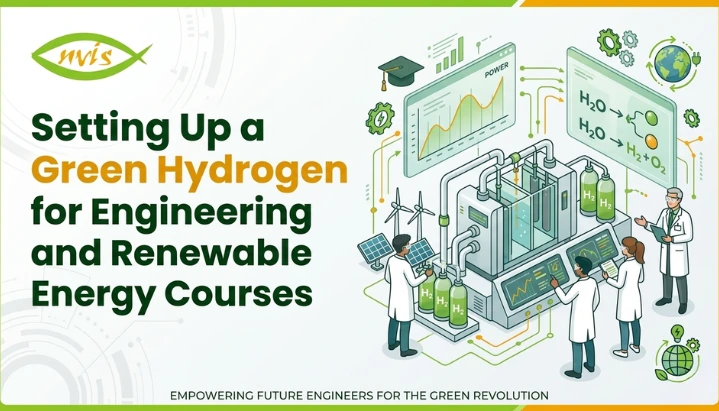
Hands on learning has become essential in engineering education to prepare students for this transition. A green hydrogen laboratory usually consists of a hydrogen generator, renewable energy integration systems, storage units, and fuel cells, which enable students to learn the entire hydrogen cycle, i.e., production to utilisation. This kind of practical exposure can fill the gap between theory and practice, and prepare students to work in the industry in the dynamic area of hydrogen energy systems.
Related Blogs:
- Renewable Energy and EV Labs – Preparing Students for the Future of Clean Mobility
- The Role of CAN Bus Training in Automotive and Electric Vehicle Education
- Why Electric Vehicle Labs are Essential for Modern Engineering Education
What is Green Hydrogen?
Green hydrogen is hydrogen that is generated by renewable energy sources like solar or wind energy, thus it is a clean and sustainable fuel that has zero carbon emissions. It is produced by a process known as electrolysis, in which a hydrogen generator divides water into hydrogen and oxygen using electricity. When this electricity is renewable, the whole process is environmentally friendly and the basis of hydrogen renewable energy systems.
Hydrogen is usually categorized into three types depending on the way it is produced green, blue, and grey. Although grey hydrogen is made with the help of fossil fuels and releases carbon dioxide, and blue hydrogen captures carbon to minimize emissions, green hydrogen is the cleanest. It is based on renewable sources and thus is a major part of developing hydrogen renewable energy and creating a sustainable energy future.
Why Engineering Colleges Need a Green Hydrogen Lab
The fast development of green hydrogen technologies has resulted in a high demand for professionals in the clean energy industry. Engineers with knowledge of hydrogen production, storage, and utilisation are in demand by industries. Colleges can prepare students with practical skills of systems such as a hydrogen generator by establishing a green hydrogen lab, which will better prepare them to work in the real world in hydrogen renewable energy.
These labs also assist in closing the gap between theory and practice. They are also consistent with current renewable energy and EV oriented curricula, enabling students to learn about the integration of hydrogen into sustainable systems. Moreover, a green hydrogen laboratory opens up research and innovation opportunities, allowing institutions to play a role in the development of hydrogen renewable energy and create a culture of experimentation and problem solving.
What Can Students Learn?
A green hydrogen lab is not merely an equipment display, but a complete scale, hands-on learning experience. By working with systems such as a hydrogen generator, students and researchers can have hands on experience of how hydrogen renewable energy can be applied in real life situations.
Through structured experiments and training, students can:
- Understand key concepts such as electrolysis efficiency, fuel cell behaviour, and hydrogen storage in green hydrogen systems
- Gain hands on experience operating a hydrogen generator and related equipment
- Perform data analysis and compare performance across different hydrogen renewable energy setups
- Learn essential safety protocols and emergency handling while working with green hydrogen
Such labs are also a great place to conduct academic projects, such as undergraduate and postgraduate research, dissertations, and advanced studies on green hydrogen technologies
Importance of a Green Hydrogen Lab
Education on hydrogen is quickly leaving textbooks behind. The need to develop expertise in green hydrogen and hydrogen renewable energy is growing in industries, startups, and research organisations with initiatives such as the National Green Hydrogen Mission in India. Today, employers are looking for candidates who are familiar with the entire hydrogen ecosystem, including a hydrogen generator.
A dedicated green hydrogen lab enables institutions to:
- Provide hands on training in electrolysis using a hydrogen generator, along with storage and fuel cell systems
- Encourage research and innovation in hydrogen renewable energy technologies
- Align courses with future focused sustainable energy programs centered on green hydrogen
- Build stronger collaborations with government and industry working in hydrogen renewable energy
- Offer practical exposure to real world applications of hydrogen generator systems
- Prepare students with industry relevant skills in the growing green hydrogen sector
In general, a green hydrogen laboratory will enable students to transition between theoretical knowledge and practical skills, becoming the active participants in the future of hydrogen renewable energy in India.
Step by Step Guide to Setting Up the Lab
The establishment of a green hydrogen lab is a complex process that needs proper planning and the appropriate mix of equipment and systems. Every step, including setup and testing, is important in the safe and effective operation. The entire process is described in the following steps:-
Planning and Space Requirements
The establishment of a green hydrogen lab starts with the appropriate planning of space, layout, and infrastructure. The lab should have adequate room for installing a hydrogen generator, storage systems, and renewable energy units. Safe and efficient hydrogen renewable energy operations require proper power supply and ventilation.
Equipment Selection
Selecting the right equipment is essential for a functional green hydrogen laboratory. The hydrogen generator and renewable energy sources such as solar panels should be compatible to ensure smooth operation. The appropriate mix of elements assists in developing a dependable hydrogen renewable energy system to learn in practice.
Installation and Integration
In this stage, all components of the green hydrogen lab are connected and integrated. The hydrogen generator is connected to renewable energy sources, and storage tanks and fuel cell systems are installed accordingly. This integration enables the students to see the entire hydrogen renewable energy cycle in action.
Safety Setup
In any green hydrogen lab, safety is a priority. Sensors, leak detectors, and emergency shutdown systems installed around the hydrogen generator will guarantee safe operation. Staff and students also need to be trained properly to manage hydrogen renewable energy systems in a responsible manner.
Testing and Commissioning
After the green hydrogen lab is installed, preliminary testing and calibration are performed. The performance and efficiency of the hydrogen generator and other parts are verified. This will be done to make sure that the hydrogen renewable energy system is operational and is prepared to be used in academics.
Experiments and Practical Applications
A green hydrogen laboratory allows students to conduct numerous practical experiments that develop practical knowledge of hydrogen systems. Among the most important experiments is the analysis of the efficiency of a hydrogen generator in the process of electrolysis, which will allow students to comprehend the efficiency of converting electrical energy into hydrogen. They are also able to research the rate of hydrogen production under various operating conditions which is critical in optimising hydrogen renewable energy systems.
Moreover, students will be able to test the performance of fuel cells by utilizing hydrogen generated by the hydrogen generator to produce electricity. Demonstrations of converting renewable energy sources into hydrogen further highlight the real world applications of green hydrogen. These experiments give a full picture of hydrogen renewable energy, both in production and utilisation, and learning becomes more practical and industry relevant.
Conclusion
The creation of a green hydrogen lab is not just a modernization of infrastructure but a step towards preparing the next generation of engineers for a sustainable future. With the incorporation of systems such as a hydrogen generator and renewable energy sources, institutions will be able to provide students with a comprehensive knowledge of hydrogen renewable energy, including production and practical use.
With the ever-increasing need for clean energy solutions, these labs are important in closing the gap between the academic knowledge and the industry needs. They not only enhance technical skills and research capabilities but also position students at the forefront of the green energy transition. In the long run, the investment in green hydrogen laboratories will allow institutions to contribute greatly to innovation, sustainability, and development of hydrogen renewable energy in India.
FAQs
A green hydrogen laboratory is a realistic learning environment where students can operate systems such as a hydrogen generator to generate and use green hydrogen with renewable energy. It is important because it provides hands on experience in hydrogen renewable energy, preparing students for future careers.
A hydrogen generator uses an electrolysis process that separates water into hydrogen and oxygen with the help of electricity. It generates green hydrogen when fed with renewable sources, and thus it is a major element of hydrogen renewable energy systems.
A typical green hydrogen lab includes a hydrogen generator (electrolyser), renewable energy sources like solar panels, hydrogen storage systems, fuel cells, and monitoring units to study hydrogen renewable energy processes.
Yes, it is safe to work with green hydrogen provided that the necessary precautions are taken. The hydrogen generator and storage units are combined with safety systems like sensors, ventilation, and emergency shutdown systems to guarantee safe operation.
As hydrogen renewable energy increases, career opportunities are expanding in such fields as clean energy engineering, fuel cell technology, hydrogen production, and research. Students with knowledge of green hydrogen and systems such as a hydrogen generator have a great edge in this area.