






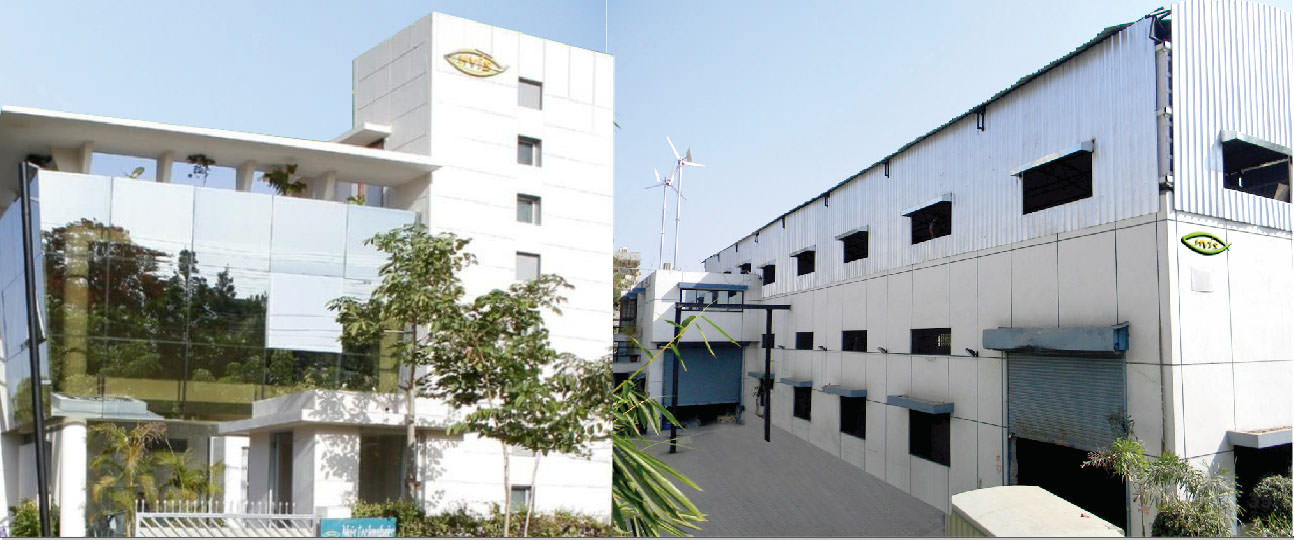
Head Office
141-A, Electronic complex, Pardesipura,Indore - 452010 India
Phone: +91 73899 00887 , +91 98932 70303
Email:info@nvistech.com
Toll Free
+91 73899 00887
Working Hours
We are happy to meet you during our working hours. Please make an appointment.
- Monday-Saturday: 9:00 AM - 5:30 PM (IST)
- Sunday: Closed
Head Office
141-A, Electronic complex, Pardesipura,Indore - 452010 India
Phone: +91 73899 00887 , +91 98932 70303
Email:info@nvistech.com
Toll Free
+91 73899 00887
We are happy to meet you during our working hours. Please make an appointment.
- Monday-Saturday: 9:00 AM - 5:30 PM (IST)
- Sunday: Closed

LCR Meter
TH2810B+
Product Description
The TH2810B+ is a bench-top LCR Meter designed for measuring the electrical characteristics of passive components such as capacitors, inductors, resistors, transformers, ferrites, relays, cables, and PCB assemblies. This LCR meter is widely used in laboratories, production testing, quality control, and educational institutions. The TH2810B+ LCR meter provides accurate and reliable measurements for different passive components, making it a suitable choice for professional and educational testing requirements. For users searching for the best LCR meter, the TH2810B+ offers multiple measurement functions, test frequencies, and convenient data management features.
Product Features
- Test frequencies: 100 Hz, 120 Hz, 1 kHz, and 10 kHz
- Basic measurement accuracy: 0.1%
- 4.3-inch TFT color display with English/Chinese interface
- 6-digit measurement resolution
- Supports L, C, R, Impedance (Z), D, Q, X, Phase Angle (θ), Vm, Im, Δ%
- AC test signal levels: 0.1 Vrms, 0.3 Vrms, 1 Vrms
- 10-point list sweep function for multi-frequency testing
- 10-bin comparator sorting for component grading
- Internal resistance selection: 10 Ω / 100 Ω
- Open, Short, and Load correction functions
- Data logging and CSV export through USB
- External trigger and handler interface support for automation
- Supports both 110 V and 220 V AC power supplies
LCR Meter Uses
The LCR meter uses include measuring and analyzing the electrical characteristics of passive components. An LCR meter can measure inductance, capacitance, resistance, impedance, dissipation factor, quality factor, and phase angle. Common LCR meter uses include laboratory testing, production testing, quality control, research, and educational applications.
The TH2810B+ LCR meter can be used for:
- Testing capacitors, inductors, and resistors
- Measuring impedance and phase angle of passive components
- Quality control and component grading
- Production-line component testing
- Laboratory experiments and research
- Testing transformers, ferrites, relays, cables, and PCB assemblies
- Educational demonstrations of passive component characteristics
- Automated testing using external trigger and handler interfaces
Why Choose TH2810B+ LCR Meter?
The TH2810B+ LCR meter combines 0.1% basic measurement accuracy, multiple test frequencies, high measurement resolution, correction functions, comparator sorting, and USB data logging in a bench-top design. These features make this LCR meter a practical choice for laboratories, production environments, quality control, and educational applications.
For users looking for the best LCR meter for versatile passive component testing, the TH2810B+ provides a comprehensive set of measurement and automation features. Its multiple test functions and flexible testing options make the LCR meter suitable for measuring different electrical parameters of passive components. Understanding the LCR meter uses can help laboratories, engineers, technicians, and students select the right LCR meter for their measurement requirements.
FAQs
1. What Is an LCR Meter?
An LCR meter is an electronic test instrument used to measure inductance (L), capacitance (C), and resistance (R). Advanced LCR meters can also measure impedance, phase angle, Q, D, and other electrical parameters.
2. What Are the Main LCR Meter Uses?
The main LCR meter uses include testing capacitors, inductors, resistors, transformers, ferrites, relays, cables, and PCB assemblies. An LCR meter is also useful for laboratory testing, production testing, quality control, research, and education.
3. How Does an LCR Meter Work?
An LCR meter applies a known AC test signal to a component and measures its electrical response. It then calculates parameters such as inductance, capacitance, resistance, impedance, phase angle, Q, and D.
4. What Makes the TH2810B+ a Good LCR Meter?
The TH2810B+ offers 0.1% basic measurement accuracy, multiple test frequencies, 6-digit measurement resolution, comparator sorting, correction functions, USB data logging, and several measurement parameters, making it a strong choice for users seeking the best LCR meter.
5. Which Components Can Be Tested Using an LCR Meter?
An LCR meter can be used to test capacitors, inductors, resistors, transformers, ferrites, relays, cables, and PCB assemblies. Other LCR meter uses include component grading and automated production testing.
- Request Quote
- Technical Specification