







TL;DR
- This blog is designed for engineering students, electrical and mechanical engineering faculty, academic institutions, and professionals interested in electric vehicles and sustainable transportation technologies.
- The rapid growth of electric vehicles is transforming the automotive and energy sectors worldwide.
- Engineering education must evolve to prepare students with practical knowledge of EV systems and electric vehicle charging station infrastructure.
- Electric Vehicle (EV) labs provide hands-on training in battery systems, motor control, power electronics, and charging technologies.
- By integrating EV laboratories into engineering programs, institutions can produce industry-ready graduates capable of contributing to the global EV transition.
The transportation sector is undergoing a major technological transformation. Governments, industries, and researchers around the world are striving to minimize carbon emissions and reduce reliance on fossil fuels. Electric cars are one of the best solutions that can be adopted to ensure this is achieved.
EV technology has rapidly evolved from a niche concept to a mainstream transportation solution. Large automobile companies are spending billions of dollars in the development of electric vehicles. Governments are providing incentives to accelerate EV adoption, and cities are developing infrastructure, including networks of electric vehicle charging stations, to serve the increasing population of EV users.
Due to the growing electric vehicle ecosystem, the demand for engineers with expertise in EV technology is growing exponentially. Electric vehicles include complex systems such as battery management, power electronics, electric motors, control systems, and intelligent charging infrastructure. These technologies require specialized knowledge which is not limited to traditional automotive engineering.
Related Blogs
- How Practical Labs Make Technical Education and Skilling Industry-Driven
- How a Modular Electrical Workbench Prepares Students for Industry
- Preparing Future Technicians and Engineers for Smart Energy Management
Understanding Electric Vehicle Labs
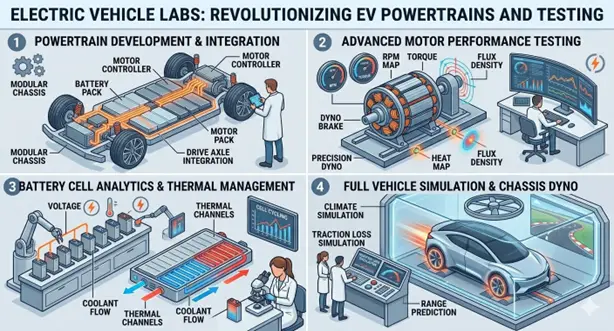
Electric Vehicle Labs are specialized training laboratories, designed to help students analyze and experiment with electric mobility-related technologies. These laboratories combine theoretical knowledge with practical experience and students are able to work directly with actual EV components and systems.
EV laboratories also specialize in electrical propulsion systems, energy storage technologies, and charging infrastructure unlike traditional automotive labs, which primarily focus on internal combustion engines.
An EV laboratory with the right equipment usually has a number of training modules and even experimental equipment that can be used to showcase the fundamental technologies involved in the electric vehicles.
Key Components of an Electric Vehicle Lab
Electric Motor Training Systems
Electric vehicles depend on electric motors. EV laboratories offer facilities to enable students to learn about the various types of motors including brushless DC motors, permanent magnet synchronous motors, and induction motors. Students get to know about motor control methods, torque-speed profile and efficiency optimization.
Battery Management Systems
Electric vehicles rely mostly on batteries as their power source. EV laboratories have battery modules and Battery Management System (BMS) training packages that aid the students to learn about battery monitoring, battery safety, charge balancing and thermal management.
Power Electronics Modules
Power electronics are important in the functioning of EV. Inverters, converters and motor controllers control the flow of energy between the battery and the motor. Students can study the application of power electronics in enhancing performance and efficiency of the vehicle using laboratory experiments.
Electric Vehicle Charging Station Trainers
The electric vehicle charging station is one of the most significant components of the EV infrastructure. EV labs may also have EV charging station training modules, which may show how EVs are charged, the various charging standards, and how EV charging stations interface with vehicles and the power grid.
EV System Integration Platforms
High-tech EV laboratories can also have entire electric vehicle training areas in which students can study how the motor and battery interface with the controller and charging system.
These integrated systems help students understand the entire EV ecosystem.
Why Electric Vehicles Are Transforming Engineering Education
The swift increase in the use of electric vehicles is transforming the skills of engineers. Conventional automotive engineering courses paid a lot of attention to internal combustion engines, mechanical systems, and fuel-powered engines.
However, electric vehicles require knowledge about electrical engineering, electronics, energy storage and digital control systems.
Engineering education must evolve to keep pace with these changes.
Rapid Industry Growth
The market of EVs grows at an unprecedented speed worldwide. Electric mobility and emission policies are being adopted by countries globally. The automobile companies are shifting towards electric systems and leaving the fuel-powered vehicles.
Therefore, industries are in the search of engineers who have the knowledge of electric vehicles and electric vehicle charging station technologies.
New Career Opportunities
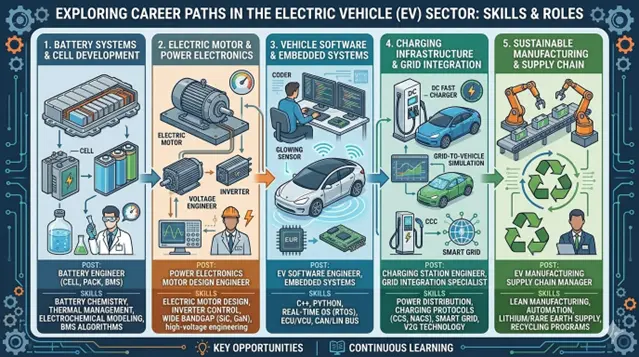
The booming EV business is offering numerous professional jobs to the graduates of engineering. Firms are seeking experts knowledgeable in the electric cars and infrastructure, such as the electric vehicle charging station network.
Electric vehicle manufacturing, battery technology, development of charging infrastructure, renewable energy integration, and smart grid technologies are some of the industries comprising the EV ecosystem. Since the switch towards electric cars is growing, engineers with expertise in EV systems and charging infrastructure are currently in high demand.
Interdisciplinary Learning
Engineering of electric cars combines several spheres of engineering. These are electrical engineering, mechanical engineering, electronics and control systems, energy systems engineering, and computer science with embedded systems.
EV labs provide students with real-world exposure to how these disciplines integrate in practice, helping them understand the complete EV ecosystem.
The Importance of Hands-On Learning in EV Education
As much as theoretical education is a requirement, engineering education becomes effective when students are able to apply concepts in practice in the real world.
Electric vehicle technology is complex and comprises a number of interacting systems. Reading these technologies in textbooks or lectures cannot make one get a complete grasp on the practical uses of these technologies.
Practical Understanding of EV Systems
Students who are in EV labs are able to see the interaction between the various components. They are able to measure motor efficiency, investigate battery performance as well as understand how power electronics manage energy flow in the vehicle.
Learning Charging Infrastructure
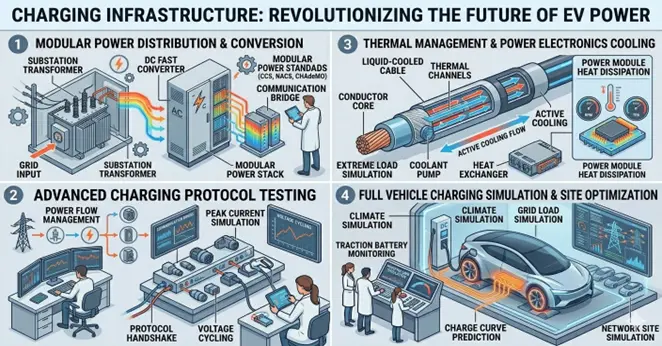
The knowledge of the functioning of an electric vehicle charging station is essential to the engineers involved in the EV ecosystem. Charging stations encompass the communication protocols, power management systems, safety standards, and grid connection.
The laboratory experiments will enable students to model the real-world charging situations and examine the way in which the charging infrastructure behaves with vehicles and power networks.
Problem-Solving Skills
Practical training helps the students to troubleshoot and create novel solutions. This skill would be necessary among engineers that will plan and support EV technologies in the field.
Electric Vehicle Charging Station Technology
One of the most significant aspects of electric mobility development is the increase in the number of electric vehicle charging stations.
The large-scale use of electric vehicles cannot be achieved without the availability and a stable system of charging networks.
EV laboratories enable the learners to learn the specifics of charging technologies.
Types of Charging Stations
Level 1 Charging
Level 1 charging utilizes normal household electric sockets and offers slow charging rates. Although convenient, it is mostly applied in residential charging.
Level 2 Charging
Level 2 charging stations have high voltages and charge faster. Such stations are usually located at home, workplace and in the parking lots.
DC Fast Charging
DC fast chargers offer high power DC electricity which is supplied directly to the vehicle battery and is therefore a rapid way of charging the battery. These charging devices are commonly placed at highways and business premises.
Students who are in the EV laboratories are able to study the effectiveness and performance of these charging systems.
Benefits of Electric Vehicle Labs for Engineering Students
Electric Vehicle Labs have a lot of benefits to a student in the engineering learning process.
Industry-Relevant Skills
Students obtain the practical understanding of the EV systems, battery management, motor control, and the charging infrastructure. Employers in the EV industry enjoy these skills.
Improved Career Opportunities
Individuals who have acquired knowledge in electric vehicles and electric vehicle charging station technologies can work in the automotive engineering, energy systems, and smart mobility sectors.
Research Opportunities
EV laboratories help in research and innovation when it comes to battery technology, charging efficiency and sustainable transportation solutions.
Innovation and Entrepreneurship
The learners who are involved in EV technologies can come up with new solutions, prototypes, and startup ideas concerning electric mobility.
Benefits of Electric Vehicle Labs for Universities
Another important advantage of building EV laboratories is the engineering institutions.
Modernizing Academic Programs
Establishing EV labs is one way of ensuring that the universities modernize their engineering programs, in order to align with emerging industry technologies.
Industry Collaboration
Most firms in the EV industry partner with universities in research and talent development.
Those institutions that have EV labs will be more able to attract the partnership and funding of industry leaders.
Supporting Sustainability Goals
Environmental sustainability is highly associated with electric mobility. Universities can also help to decrease the emission of greenhouse gases in the world by facilitating the teaching of EV.
Conclusion
Electric mobility is transforming the transportation industry across the world. Electric cars have ceased to be the dream of tomorrow, they are quickly becoming the mode of transport in most regions across the globe.
Electric Vehicle Labs give the students hands-on experience of EV technology, such as motor, battery management, power, and electric vehicle charging station infrastructure. These laboratories span the divide between theory and practice in engineering.
Universities can equip students with skills in electric mobility by offering EV laboratories as part of their degrees to help them get ready to work in the fast-developing electric mobility industry. Meanwhile, these labs facilitate research, innovation, and academia-industry collaboration.
With the development of the EV ecosystem, professionals with electric vehicle technologies experience will be instrumental in creating a better, more sustainable future of transportation.
Electric Vehicle Labs are not only an educational tool but also a platform for developing the next generation of engineers who will lead the transition toward electric mobility.
FAQs
An Electric Vehicle (EV) lab is a dedicated training center, in which the students gain knowledge of electric vehicles, battery setup, motor control, power electronics, and electric vehicle charging station technologies via active experimentation.
EV labs offer a practical experience that assists students in learning about EV systems, charging infrastructure, and energy management to prepare them to work in the emerging electric vehicles field.
Students are taught about electric motors, battery management systems, power electronics, EV powertrains, and electric vehicle charging station infrastructure which is used to charge and control electric vehicles.
EV labs contribute in making the skilled engineers that have the ability to design, maintain and create technologies that are connected with electric vehicles and electric vehicle charging stations networks.
EV trained students are employed in the production of electric vehicles, battery technology, charge infrastructure development, renewable energy integration and smart grids.