




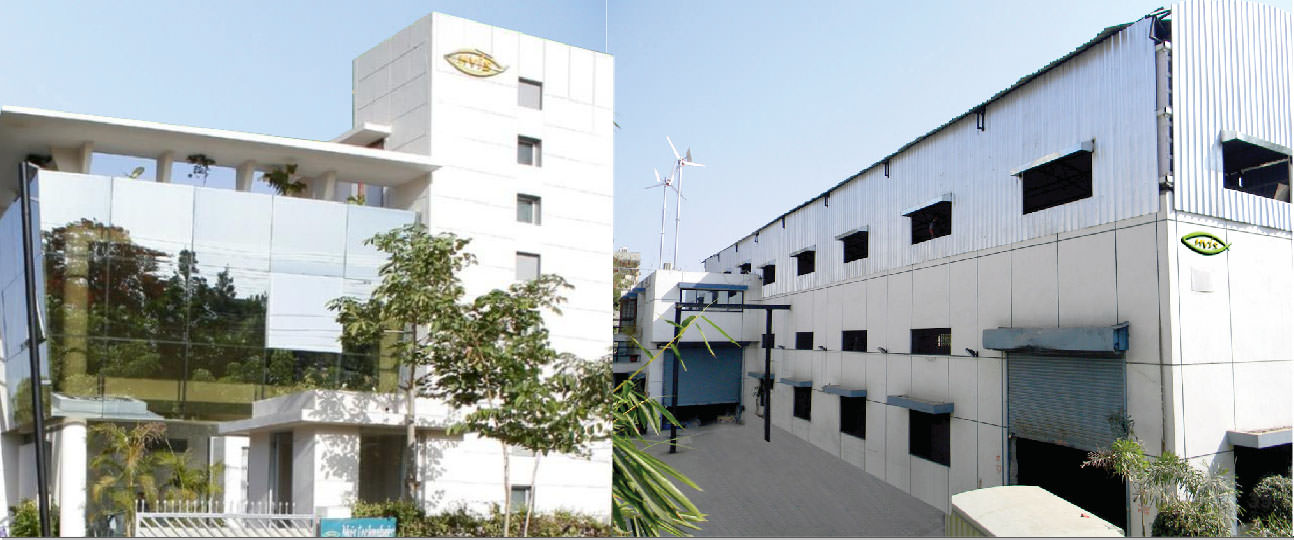
Head Office
141-A, Electronic complex, Pardesipura,Indore - 452010 India
Phone: +91 73899 00887 , +91 98932 70303
Email:info@nvistech.com
Toll Free
+91 73899 00887
Working Hours
We are happy to meet you during our working hours. Please make an appointment.
- Monday-Saturday: 9:00 AM - 5:30 PM (IST)
- Sunday: Closed
Head Office
141-A, Electronic complex, Pardesipura,Indore - 452010 India
Phone: +91 73899 00887 , +91 98932 70303
Email:info@nvistech.com
Toll Free
+91 73899 00887
We are happy to meet you during our working hours. Please make an appointment.
- Monday-Saturday: 9:00 AM - 5:30 PM (IST)
- Sunday: Closed
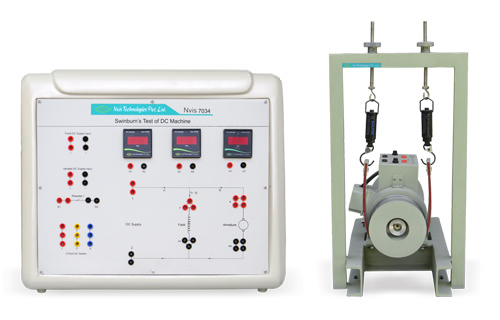
Swinburn`s Test of DC Machine
Nvis 7034
Product Description
Nvis 7034 Swinburne Test of DC Machine is a comprehensive training system designed for Electrical Engineering laboratories to help students understand the performance characteristics of DC machines. This setup enables learners to perform the Swinburne test of DC machines, a widely used indirect method for determining efficiency by separately measuring machine losses under no-load conditions.
The system provides a practical platform for conducting Swinburne’s test on DC motors, allowing users to estimate efficiency at different load conditions without actually loading the machine. Separate terminals for armature and field windings are brought out on a terminal box mounted on the machine for easy access and experimentation.
The training setup also includes external connection terminals for a rheostat and starter, enabling flexible operation and enhanced learning. Designed with safety, durability, and ease of use in mind, the system offers students a clear understanding of DC motor testing, loss calculation, and efficiency determination techniques.
Product Features
- Machine with Mechanical Loading Arrangement
- Provided with Digital Tachometer
- Machine with Class “B” Insulation
- Control board made of high-grade FRP material for enhanced user safety
- Heavy-duty base/channel construction
- Brake drum/pulley with heat suppression facility
- Equipped with supply indication lamps
- Designed in accordance with industry safety standards
- Diagrammatic representation for easy connections
- Online product tutorial for guided learning
Scope of Learning
- Perform the Swinburne test of DC machine and analyze its operating principles
- Conduct Swinburne’s test on DC motor to determine no-load losses
- Calculate constant and variable losses in a DC machine
- Predetermine efficiency at various load conditions without direct loading
- Study the performance characteristics of DC motors
- Understand the practical applications of indirect efficiency testing methods
Why Choose Nvis 7034 Swinburne Test of DC Machine?
Nvis 7034 is designed to provide a safe, practical, and effective learning experience for students and professionals studying DC machine performance and efficiency testing. The trainer combines robust construction with user-friendly features, making it an ideal solution for electrical laboratories and technical training institutes.
Why Choose This Training System?
- Specifically designed for conducting the Swinburne test of DC machine with ease and accuracy
- Enables practical understanding of Swinburne’s test on DC motor and efficiency determination methods
- Provides hands-on learning of DC machine losses and performance characteristics
- Equipped with a digital tachometer for precise speed measurement
- Features a high-grade FRP control panel for enhanced user safety
- Includes clear diagrammatic connections for simplified operation
- Built with a heavy-duty base and durable components for long service life
- Supports academic curriculum requirements for electrical engineering programs
- Comes with online product tutorials for guided learning and experimentation
- Ideal for engineering colleges, polytechnic institutes, vocational training centers, and research laboratories
FAQs
What is the Swinburne test of a DC machine?
The Swinburne test of a DC machine is an indirect method used to determine the efficiency of a DC shunt machine. It measures no-load losses and predicts efficiency at different load conditions without applying an actual mechanical load.
What is the purpose of conducting Swinburne’s test on DC motors?
Swinburne’s test on DC motors is conducted to calculate constant losses such as iron, friction, and windage losses. The test helps estimate the motor’s efficiency and performance at various loads in a simple and economical manner.
What are the advantages of the Swinburne test of DC machines?
The test requires less power, is easy to perform, minimizes wear on the machine, and allows efficiency prediction at different load conditions without the need for direct loading equipment.
Which type of DC machines can be tested using the Swinburne method?
The Swinburne method is primarily suitable for DC shunt machines and cumulatively compounded DC machines where no-load testing can accurately determine constant losses.
What learning outcomes does the Nvis 7034 Swinburne Test of DC Machine provide?
The Nvis 7034 trainer helps learners understand DC machine losses, efficiency calculations, no-load testing procedures, performance analysis, and the practical application of the Swinburne test in electrical engineering laboratories.
- Request Quote
- Technical Specification