






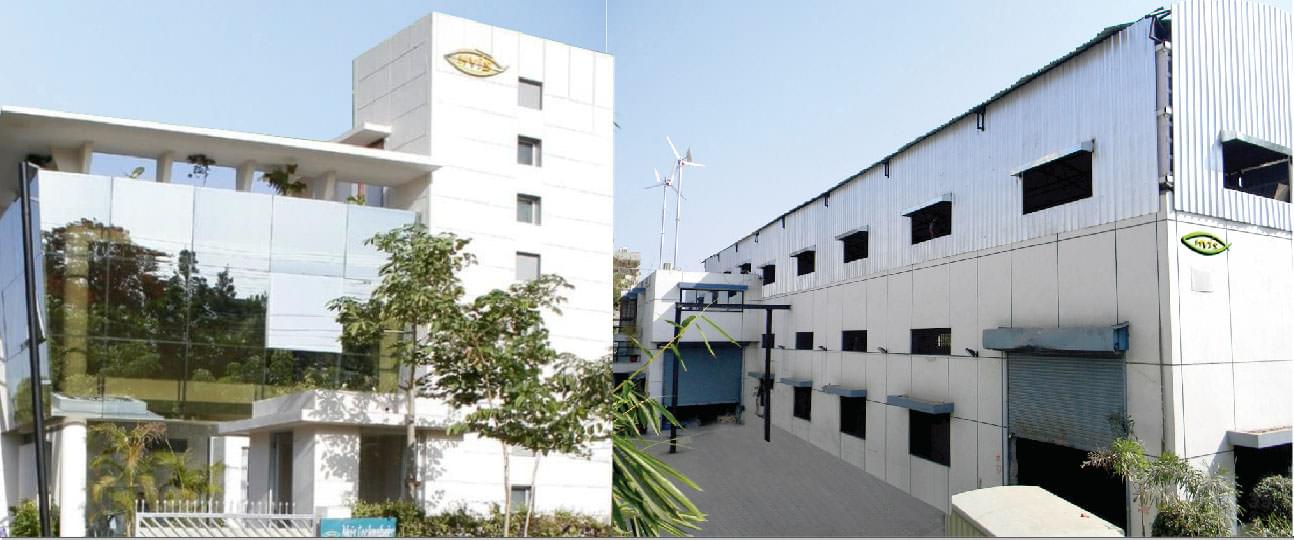
Head Office
141-A, Electronic complex, Pardesipura,Indore - 452010 India
Phone: +91 73899 00887 , +91 98932 70303
Email:info@nvistech.com
Toll Free
+91 73899 00887
Working Hours
We are happy to meet you during our working hours. Please make an appointment.
- Monday-Saturday: 9:00 AM - 5:30 PM (IST)
- Sunday: Closed
Head Office
141-A, Electronic complex, Pardesipura,Indore - 452010 India
Phone: +91 73899 00887 , +91 98932 70303
Email:info@nvistech.com
Toll Free
+91 73899 00887
We are happy to meet you during our working hours. Please make an appointment.
- Monday-Saturday: 9:00 AM - 5:30 PM (IST)
- Sunday: Closed
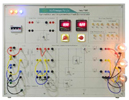
Symmetrical and Unsymmetrical Fault Demonstrator
Nvis 7065
Product Description
Nvis 7065 Symmetrical and Unsymmetrical Fault Demonstrator is a training system designed to explain the basic faults which can occur in a Transmission Line. The system helps students understand symmetrical and unsymmetrical faults in power systems and their impact on transmission networks. Using Three Phase step down transformers, the training product reinforces the knowledge of all the basic faults in the Transmission Line and corresponding sequence characteristics. It provides practical understanding of both symmetrical fault conditions and unsymmetrical fault conditions encountered in electrical power systems.
In addition to this, it also provides an opportunity to a student to use a wide variety of electrical components such as MCB, Selector Switch, Ammeter, Voltmeter, Three Phase Transformer, Indicating Lamps, Fuse etc.
This product along with the learning material represents almost all faults in Power System training course, including symmetrical and unsymmetrical fault analysis and the study of symmetrical faults and unsymmetrical faults under different operating conditions.
Product Features
- Fast response time
- High quality meters
- Test terminals provided to analyze the waveforms
- Line Voltage and Phase Voltage selection facility
- Designed by considering all the safety precautions
- Diagrammatic representation for the ease of connections
- Online product tutorial
Scope of Learning
- Line to Ground (L-G) Fault analysis of a Single Phase Transmission Line
- Single Line to Ground Fault (L-G) analysis of a Three Phase Transmission Line
- Line to Line Fault (L-L) analysis of Three Phase Transmission Line
- Double Line to Ground Fault (L-L-G) analysis of Three Phase Transmission Line
- Symmetrical L-L-L Fault analysis of a Three Phase Transmission Line
- Symmetrical L-L-L-G Fault analysis of Three Phase Transmission Line
The experiments enable learners to compare symmetrical faults and unsymmetrical faults, understand sequence networks, and analyze the behavior of various fault conditions in transmission systems.
Why Choose Nvis 7065 Symmetrical and Unsymmetrical Fault Demonstrator?
- Comprehensive Fault Analysis – Enables the study of both symmetrical and unsymmetrical faults commonly encountered in transmission lines and power systems.
- Hands-On Learning Experience – Provides practical exposure to fault conditions, helping students understand theoretical concepts through real-time experimentation.
- Covers Multiple Fault Types – Supports analysis of L-G, L-L, L-L-G, L-L-L, and L-L-L-G faults for a complete understanding of power system fault behavior.
- Industry-Relevant Training – Helps learners develop the knowledge required for power system protection, fault diagnosis, and electrical engineering applications.
- Built-In Safety Features – Designed with appropriate safety precautions to ensure secure operation in educational laboratories.
- Easy-to-Understand Layout – Features diagrammatic representations and clearly marked connections for simplified experimentation and faster learning.
- High-Quality Instrumentation – Equipped with reliable meters, test terminals, and switching facilities for accurate fault analysis.
- Ideal for Educational Laboratories – Suitable for electrical engineering colleges, universities, technical institutes, and power system training centers.
FAQs
What is an unsymmetrical fault?
An unsymmetrical fault is a fault in a three-phase power system that affects one or two phases instead of all three equally. Common types of unsymmetrical faults include single line-to-ground (L-G), line-to-line (L-L), and double line-to-ground (L-L-G) faults.
What is the difference between symmetrical and unsymmetrical faults?
A symmetrical fault affects all three phases equally and maintains system balance, while an unsymmetrical fault affects one or two phases, causing an unbalanced condition in the power system. Symmetrical faults are less common but more severe, whereas unsymmetrical faults occur more frequently in practice.
What is an unsymmetrical fault in a three-phase transmission line?
An unsymmetrical fault occurs when one or two phases are affected, causing the system to become unbalanced. Examples include line-to-ground (L-G), line-to-line (L-L), and double line-to-ground (L-L-G) faults.
Which fault analyses can be performed using the Symmetrical and Unsymmetrical Fault Demonstrator?
The demonstrator allows analysis of Line-to-Ground (L-G), Line-to-Line (L-L), Double Line-to-Ground (L-L-G), Symmetrical L-L-L, and Symmetrical L-L-L-G faults in transmission lines.
Why is fault analysis important in power system education?
Fault analysis helps students understand the behavior of electrical networks during abnormal conditions, evaluate system protection methods, and gain practical knowledge of transmission line faults and their effects on power system performance.
- Request Quote
- Technical Specification