





TL;DR
- This blog is for engineering students, freshers, and EV enthusiasts who want to understand the battery management system in EV, what it is, how it works, and why it matters for every electric vehicle on Indian roads today.
- BMS full form in EV is Battery Management System. It is the electronic brain that monitors and controls key parameters of an EV’s battery pack in real time.
- Without a BMS in EV, lithium ion batteries cannot operate safely. Overcharging, overheating, deep discharge, and cell imbalance can rapidly degrade battery performance and may lead to premature failure or safety hazards.
- BMS functions include state of charge estimation, cell balancing, thermal management, fault detection, and communication all working together to maximize battery life and driving range.
- BMS engineering is one of the rapidly growing specializations in India’s EV sector. Depending on skills, location, and employer, Senior Engineers…Rs. 20 to 40 LPA, while experienced specialists can earn significantly higher compensation.
Electric vehicles have quietly shifted from experimental curiosities to mainstream transportation across India. From Tata Nexon EV on highways to Ather 450X weaving through Bengaluru traffic, EVs are becoming a practical reality for millions. But behind every smooth acceleration and reliable charging session lies a piece of technology that rarely gets the attention it deserves: Battery Management System.
Understanding battery management systems in EV is essential for anyone entering the field of electric mobility, whether as an engineer, a researcher, or an informed buyer. This guide breaks down BMS full form in EV, explains how it works step by step, explores its critical functions, and connects technology to real opportunities in India’s booming EV industry.
Also Read,
- How Battery Management System Training Helps Students Understand EV Power Systems
- What Is a BLDC Motor? Working and Applications Guide
- Lead Acid vs Lithium Ion Battery: A Complete Comparison for Beginners
BMS Full Form in EV What Does It Actually Mean?
But first, let’s clarify what it is.
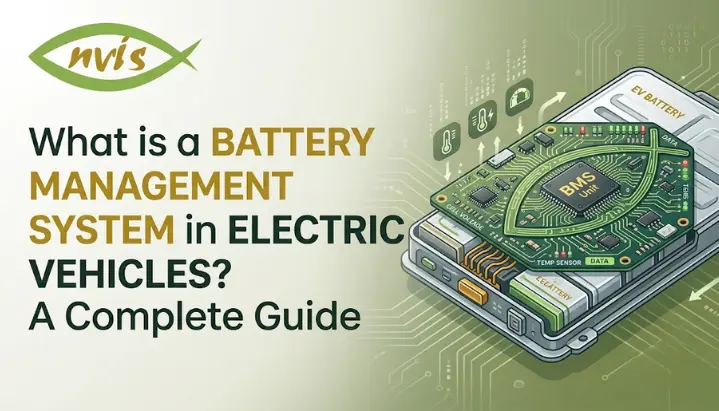
The full form of BMS in EV is Battery Management System. The title itself is a clear description of the work. A BMS is an electronic control unit that’s integrated into an electric vehicle’s battery pack. Its role is to constantly measure, process and manage key parameters such as voltage, current, temperature and state of charge (SoC) in real-time.
Consider BMS in EV as the body’s nervous system. BMS monitors your battery pack’s heart rate, temperature and oxygen to help keep things in balance, just like your nervous system does for your heart rate, temperature and oxygen levels. It monitors and detects issues prior to them becoming serious, adapts actions to maintain the health of the battery and reports critical data to the vehicle’s central computer.
The most costly and most performance critical part of the electric vehicle is the battery. The average EV battery pack can cost anywhere from Rs. 2 lakh to Rs. 10 lakh, depending on the vehicle segment and battery size. Managing a modern lithium ion battery pack safely and efficiently is not feasible without an intelligent control system like a BMS.
Why EVs Need a Battery Management System
To appreciate the necessity of BMS in EV, it is essential to get some insight into lithium ion batteries.
Lithium ion cells are far more sensitive and complex than conventional fuel storage systems. They are highly sensitive electrochemical systems that require precise control of temperature, voltage, and charge balance. Even small overvoltage conditions beyond a cell’s specified operating limit can permanently damage lithium-ion batteries and create safety risks; volts beyond its safe limit can cause permanent capacity loss and safety risks. If it discharges too deep, the material of the electrode will be permanently damaged. If it’s exposed to high temperatures over and over again, it will enter a state of thermal runaway, which is when the cell produces its own heat at a rate that exceeds its ability to dissipate it, and can result in fire.
A battery pack for an EV is not a battery cell. It’s hundreds, if not thousands, of individual cells, arranged in complex series and parallel patterns. Most passenger electric vehicles, including models such as the Tata Nexon EV, operate on battery packs with a nominal voltage of around 300–400 V. It takes dozens of cells in series each having to operate at a narrow voltage and temperature range.
If it weren’t for a BMS, there wouldn’t be any way to ensure this uniformity. If the weakest cell fails first, all the cells are electrically linked to each other and the failure of that cell would compromise performance and safety of the entire pack. The BMS does this by being like a watchdog that monitors each cell, every second, and takes corrective action as soon as something goes out of the parameters that are considered safe.
How a Battery Management System in EV Works
The concept of a BMS in EVs can be broken down into three parts: sensing, processing, and acting.
The first layer is the sense. BMS uses a network of sensors distributed throughout battery packs to collect real time data. The Voltage sensors continuously monitor the voltage of each individual cell with high precisio. The current sensors are located at the terminals of the battery and measure the amount of charge that is either flowing in or flowing out of the battery. Thermistors, typically, are installed at various locations throughout the battery module to measure the heat distribution. This data collection occurs ata is collected continuously at high speed to provide real-time battery monitoring, producing a stream of information and data about the battery’s condition.
Intelligence resides in processing. All the information from the sensors is fed to a microcontroller unit, which then performs calculations by running some algorithms to calculate the battery’s State of Charge (SoC), State of Health (SoH) and other derived parameters. SoC (SOC) is basically a percentage fuel gauge, indicating the amount of energy that is left in the battery. Long term health indicator (SoH) is a comparison of the battery’s current capacity to its initial capacity to determine aging. Processing also includes fault detection: Are there any cells with voltages outside of safe limits? Does the temperature have to go up quickly? Any electrical leakage to the chassis of the vehicle?
The output stage is acting. BMS communicates with different vehicle systems based on the information that is revealed through processing. The BMS may instruct the charger to reduce or stop charging when safety limits are reached. It could cause the cooling system to start. It can start a relay to protect the battery from the motor in case of emergency. It is also able to transmit essential information to the vehicle’s CAN (Controller Area Network) bus to the dashboard and motor controller, as well as to other electronic control units.
What makes a BMS in EV intelligent and essential is this loop of sense process act.
Core Functions of a Battery Management System in EV
Every BMS in electric vehicles whether in a budget e- rickshaw or a premium Tata Nexon EV performs a common set of core functions. Understanding these functions is the foundation for anyone studying EV engineering.
State of Charge (SoC) Estimation
SoC is the most visible output of BMS, represented as battery percentage on your dashboard. But estimating SoC accurately is technically complex. BMS uses methods like Coulomb counting, where it tracks every unit of charge flowing in and out, combined with voltage based correction algorithms to keep estimates accurate across varying temperatures and discharge rates. An inaccurate SoC reading doesn’t just inconvenience drivers, it can lead to unexpected battery cutoffs or over discharging, both of which shorten battery life.
State of Health (SoH) Monitoring
Every battery degrades over time. BMS tracks this degradation by comparing current charge capacity against original rated capacity. A battery at 80% SoH, for example, can only hold 80% of charge it held when new. This information is used to adjust driving range estimates and to flag when a battery needs service or replacement.
Cell Balancing
In a large battery pack, individual cells age and behave slightly differently due to manufacturing variations and different thermal exposure. Some cells charge faster, some discharge faster. If left unmanaged, these small differences compound over time; the pack’s usable capacity shrinks to that of the weakest cell.
Cell balancing is a BMS function that corrects this. It works through two approaches. Passive balancing dissipates energy from higher charged cells through resistors, essentially bleeding off excess until all cells reach the same voltage level. It is simpler but wastes energy as heat. Active balancing is more sophisticated; it transfers energy from stronger cells to weaker ones using electronic circuits, redistributing charge without wasting it. Some premium EVs employ advanced cell balancing strategies to improve battery performance and longevity.
Thermal Management
Temperature is the single biggest enemy of battery longevity. Lithium ion batteries perform optimally between 20 and 40 degrees Celsius. Below this range, chemical reactions slow down, reducing available power and charging speed. Above this range, degradation accelerates and thermal runaway risk increases.
BMS monitors temperature at multiple points across the pack and responds dynamically. In cold conditions, particularly relevant in North Indian winters, BMS can activate battery heaters to warm cells before charging or driving. In hot conditions which is most of India for most of the year BMS activates liquid cooling circuits or fans to keep temperatures in safe zone. Ather 450X is specifically recognized for its thermal management optimization suited to Indian summer conditions, where ambient temperatures regularly exceed 40 degrees Celsius.
Battery Protection
Protection is BMS’s safety responsibility. It continuously guards against overvoltage, undervoltage, overcurrent, over temperature, under temperature, and short circuit conditions. When any parameter crosses its safe threshold, BMS responds immediately, reducing current limits, activating cooling, sending alerts, or in worst case scenarios, disconnecting battery packs from all circuits using high voltage relays to prevent fire or explosion.
Communication and Data Logging
BMS does not operate in isolation. It communicates with the vehicle’s other control units through CAN bus, sharing battery status, available power, charging limits, and fault codes. It also logs historical data of charge and discharge cycles, temperature extremes, fault events which is invaluable for diagnostics, warranty assessment, and over the air (OTA) software updates. Modern EVs use logged battery data and advanced software algorithms to improve SoH estimation and optimize battery performance over time.
Battery Management System in EV India’s Context
BMS development faces specific challenges in India that are often more severe than in many other regions.
India experiences a wide range of climatic conditions, from extreme summer heat in some regions to sub-zero winter temperatures in mountainous areas. The temperature in the summer in Rajasthan is above 45°C and in the winter it is below freezing in the Himalayas. Coastal areas such as Mumbai and Chennai can cause moisture problems with battery electronics. Road surface condition is extremely variable, providing conditions of vibration and shock which standard BMS designs from Europe or America may not have been designed for.
The challenges have compelled Indian EV makers to innovate and tailor BMS technology to the Indian context. Tata Motors has invested significantly in localized battery and EV technology development for Indian operating conditions, including advanced battery monitoring systems and OTA update capabilities. Ola S1 Pro has cell level battery data and real-time alerts for consumers in the app, offering unprecedented clarity into the health of the battery.
The Indian regulatory landscape has also directly influenced the BMS requirements. In the wake of EV fire incidents from 2022, the government has put in place AIS 156 standard, which specifies particular measures for battery safety, such as thermal runaway warning systems, safeguards, and testing procedures. EV battery systems covered under applicable Indian regulations are required to comply with safety standards such as AIS-156. Further, the FAME II scheme has encouraged domestic manufacturing and R&D in battery and BMS technologies. Indian companies such as Log9 Materials, Exide Industries, Amara Raja, and Tata AutoComp have expanded their investments in battery and BMS technologies to develop competitive indigenous platforms.
Industry reports indicate strong growth in India’s EV battery and BMS market, driven by increasing EV adoption and local manufacturing initiatives. From importing BMS components, India is now developing its own IP and industry activity around indigenous BMS development and patent filings has increased in recent years, with major filers like Log9 and Reliance driving this trend.
Challenges in Developing Advanced BMS Systems
Designing a reliable BMS that performs safely under all operating conditions is one of the most demanding engineering challenges in the EV industry.
The effect of temperature, aging and usage in BMS development is accurately estimating State of Charge (SoC) and State of Health (SoH). Because battery behaviour changes with temperature, aging, and usage, developing reliable estimation algorithms requires extensive testing and continuous refinement. The effect of temperature, aging and usage on the behavior of batteries is non linear. Developing accurate SoC and SoH estimation algorithms is one of the biggest challenges in BMS design. Battery behaviour changes with temperature, aging, and usage patterns, requiring extensive testing and continuous software refinement. This highlights why software quality is just as important as hardware quality in modern BMS systems. Highlighting the benefits and risks of connected BMS architectures.
In Indian conditions, robust cooling solutions are needed to achieve energy efficiency and effectiveness in thermal management. Cooling systems use battery power to operate and thus consume range directly. Constantly, engineers have to weigh the insulation of thermal protection against energy consumption.
As BMS systems become more connected and communicate via cloud, cybersecurity is emerging as an increasing threat. A system that could, in theory, be compromised is a connected BMS that is capable of receiving OTA updates. The compliance to ISO/SAE 21434 for automobiles’ cybersecurity is now turning into a common requirement.
Another major challenge is supply chain dependency. Since many critical BMS components are still imported, such as Analog Front End (AFE) ICs, measurement chips, and microcontrollers, this adds to the price volatility and availability concerns for Indian manufacturers.
Career Opportunities in BMS Engineering for Indian Students
BMS engineering is one of the most challenging and lucrative professions in the Indian EV industry. This is an area to consider studying if you are a student from the electrical, electronics, mechanical or mechatronics engineering field.
The roles directly related to BMS at EV are BMS Design Engineer (building hardware and embedded software for battery management), BMS Validation Engineer (test BMS under simulated and real world conditions), Battery Systems Engineer (integrating BMS with the rest of the EV powertrain) and Battery Data Analyst (analysing logged BMS data to enhance battery models and algorithms).
The gross entry salary of freshers in BMS Engineering companies in India, Tier 1 Companies, and EV Startup companies starts at Rs. 4 to 7 LPA. The salary of mid level professionals holding BMS specialization is Rs. 10 to 18 LPA. Senior Engineers with expertise in functional safety, SoC algorithm development, and battery research and development are commanding Rs. 20 to 40 LPA and higher for leadership. BMS and power electronics are among the most sought-after specializations in India’s growing EV industry due to increasing demand for battery and powertrain expertise.
Top companies hiring BMS engineers include Tata Motors, Mahindra Electric, Ola Electric, Ather Energy, Bosch India, Continental Automotive, Log9 Materials, Exide Industries, Amara Raja and Vecmocon. The top 5 primary job hubs for jobs in the EV sector are Bengaluru, Pune, Chennai, Delhi NCR and Hyderabad.
Employers seek specific technical skills in BMS, such as proficiency in embedded C and Python for algorithm development, knowledge of CAN and UART communication protocols, understanding of lithium ion electrochemistry, knowledge of functional safety standards (ISO 26262, AIS 156) and experience using simulation software (MATLAB/Simulink) for battery modelling. A project of the students around a small scale BMS on a lithium ion cell pack using an arduino or stm32 microcontroller is a good starting point to learn basic hands on skills.
ASDC (Automotive Skills Development Council) certified courses, as well as AICTE recognized EV programs, and specialized BMS courses (provided by institutes such as DIYguru’s eMobility Academy) have good recognition from Tier 1 suppliers and OEMs in India. There are other institutes that are actively providing EV and battery technology programs at IIT Madras, IIT Delhi, and IISc Bengaluru, which also offer good academic background for BMS research positions.
Conclusion
EV battery management system is technology that makes electric mobility safe, reliable and practical. If there was no BMS in EV, the lithium ion batteries would not be able to be used in any serious application. An EV can confidently charge and ride out thousands of cycles and years of service because the system can monitor all the cells in real-time, estimate SOH, balance all cell differences, control thermal conditions, and protect against electrical faults.
In India, where the transformation towards EVs is gaining momentum with the support of the FAME II incentive program and local companies are developing competitive products on the international market, BMS technology is emerging as a strategic area of genuine importance. It is not only about building EVs, but also about building indigenous BMS platforms built for Indian climate, roads and usage.
BMS is a multidisciplinary field that combines embedded systems, power electronics, electrochemistry, and data science, making it an excellent career path for engineering students. Students can begin with the basics of lithium ion battery chemistry, develop small BMS projects, pursue industry-recognized certifications, and prepare for one of the most important technical roles in India’s clean energy future.
FAQs
BMS full form in EV is Battery Management System. It is an electronic control unit embedded in an electric vehicle’s battery pack that monitors voltage, current, temperature, and state of charge in real time to ensure safe and efficient battery operation.
Without a battery management system in EV, lithium ion cells cannot be safely operated. BMS prevents overcharging, deep discharge, overheating, and cell imbalance conditions that would rapidly degrade or destroy a battery. It is a system that makes large format EV batteries both safe and long lasting.
State of Charge (SoC) is the real time energy level of a battery, similar to a fuel gauge, expressed as a percentage. State of Health (SoH) is a long term metric comparing battery’s current capacity to its original capacity, indicating how much battery has aged over its service life.
Cell balancing is a BMS function that ensures all individual cells in a battery pack maintain an equal state of charge. It prevents stronger cells from overcharging while weaker cells underperform. Passive balancing dissipates energy as heat; active balancing redistributes energy between cells, improving efficiency and battery longevity.
Among popular Indian EVs, Tata Nexon EV features an AI driven BMS with OTA update capability. Ather 450X is recognized for advanced thermal management suited to Indian summer conditions. Ola S1 Pro offers app based cell level monitoring and real time alerts. Mahindra XUV400 includes battery management features designed to optimize performance and driving range.
BMS engineering offers roles including BMS Design Engineer, BMS Validation Engineer, Battery Systems Engineer, and Battery Data Analyst. Employers include Tata Motors, Ather Energy, Ola Electric, Mahindra, Bosch India, and Log9 Materials. Freshers typically start at Rs. 4 to 7 LPA, with experienced specialists earning Rs. 20 to 40 LPA in senior roles.