







TL;DR
- This blog is for engineering students, freshers, and tech learners who want to understand what a lithium ion battery is, how it powers electric vehicles, and why this technology is at the center of India’s clean mobility transformation.
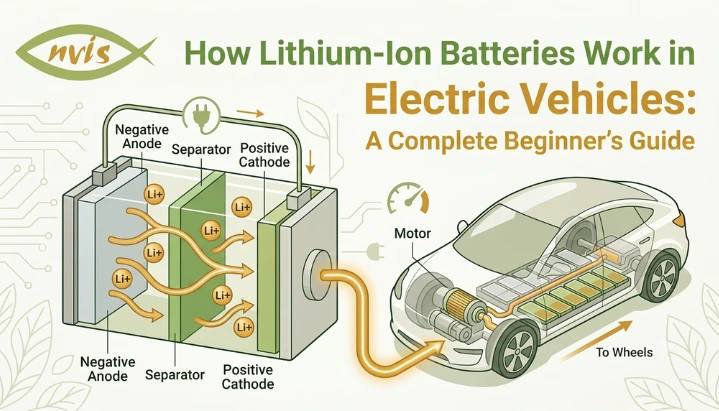
- A lithium ion battery stores energy as chemical potential and converts it to electrical energy by moving lithium ions between two electrodes, a process that is clean, efficient, and highly repeatable.
- EV lithium ion batteries are not single cells but large packs made of hundreds to thousands of individual cells arranged in series and parallel, managed by a Battery Management System to deliver safe, reliable power.
- Battery chemistry matters. LFP (Lithium Iron Phosphate) is dominating India’s EV market due to its lower cost, superior thermal stability, and longer cycle life, while NMC offers higher energy density and longer driving range for premium EVs.
- Battery engineering is one of the fastest-growing and highest-paying technical specialisations in India’s EV sector, and students from electrical, mechanical, and electronics backgrounds are all well-positioned to enter this field.
Also Read,
- Working Principle of PMSM Motor: A Complete Guide for Engineering Students
- Working Principle of Electric Vehicle Explained Guide
- Components of Electric Vehicle: A Beginner’s Complete Guide