• Nvis Technology
  • Nvis Technology
  • Nvis Technology
  • Nvis Technology
  • Nvis Technology
  • Nvis Technology
Nvis Technology

Head Office

141-A, Electronic complex, Pardesipura,Indore - 452010 India

Phone: +91 73899 00887 , +91 98932 70303

Email:info@nvistech.com

Request a Quote

Looking for a quality and affordable builder for your next project?


    Nvis Technology

    Toll Free

    +91 73899 00887

    We are happy to meet you during our working hours. Please make an appointment.

    • Monday-Saturday: 9:00 AM - 5:30 PM (IST)
    • Sunday: Closed

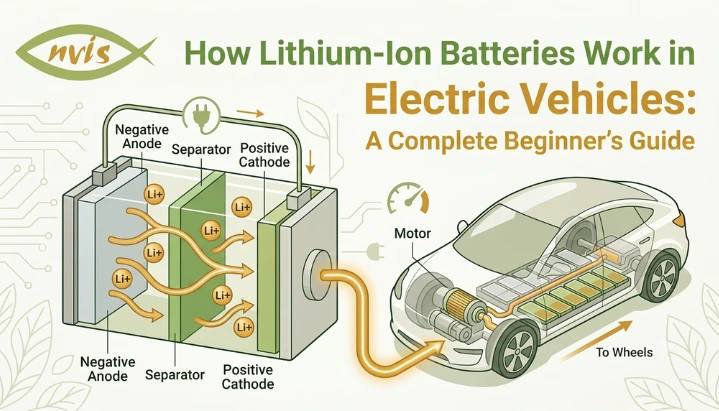
    How Lithium-Ion Batteries Work in Electric Vehicles: A Complete Beginner’s Guide

    TL;DR

    • This blog is for engineering students, freshers, and tech learners who want to understand what a lithium ion battery is, how it powers electric vehicles, and why this technology is at the center of India’s clean mobility transformation.
    • A lithium ion battery stores energy as chemical potential and converts it to electrical energy by moving lithium ions between two electrodes, a process that is clean, efficient, and highly repeatable.
    • EV lithium ion batteries are not single cells but large packs made of hundreds to thousands of individual cells arranged in series and parallel, managed by a Battery Management System to deliver safe, reliable power.
    • Battery chemistry matters. LFP (Lithium Iron Phosphate) is dominating India’s EV market due to its lower cost, superior thermal stability, and longer cycle life, while NMC offers higher energy density and longer driving range for premium EVs.
    • Battery engineering is one of the fastest-growing and highest-paying technical specialisations in India’s EV sector, and students from electrical, mechanical, and electronics backgrounds are all well-positioned to enter this field.
    Every electric vehicle on the road today from Tata Nexon EV cruising on Delhi highways to Ather 450X navigating Bengaluru traffic runs on the same fundamental technology: lithium ion battery. Understanding what a lithium ion battery is and how it works is not just an academic exercise. It is the foundation of every career in EV engineering, every design decision in clean mobility, and every policy debate about India’s energy future. This guide walks you through a complete picture from basic chemistry inside a single cell to how thousands of those cells come together in an EV battery pack, to why different battery chemistries suit different driving conditions, and what this all means for India’s rapidly growing electric vehicle ecosystem.

    Also Read,

    What Is a Lithium Ion Battery?

    Before understanding EV batteries, it helps to understand the underlying battery technology. A lithium ion battery is a rechargeable battery that stores and releases energy through the movement of lithium ions between two electrodes. Unlike internal combustion engines, it does not burn fuel or produce exhaust gases. Instead, it relies on controlled electrochemical reactions to provide quiet, efficient, and clean energy storage and delivery. The key to this technology is lithium itself. Lithium, the most electrochemically active alkali metal, is the lightest of all the metals on the periodic table, and gives up its outermost electron readily. Low weight, high electrochemical potential makes lithium an ideal battery building material for high energy density batteries .A lithium ion battery can typically store about 150 to 300 watt-hours of energy per kilogram, compared to around 30 to 50 watt-hours per kilogram for conventional lead-acid batteries. This energy density is the reason for the replacement of the lead-acid batteries in consumer electronics, and why lithium ion batteries are used to power EV battery packs for EVs, scooters and buses.

    Four Core Components of a Lithium Ion Battery

    Every lithium ion battery whether inside your smartphone or a 40 kWh EV battery pack is built from four essential components. These components work together to store and release electrical energy through a controlled chemical process.

    Cathode Positive Electrode

    The positive electrode of a battery is called cathode. The use of a material in the cathode is also the most critical factor in the character of a battery, that is, its energy density, thermal stability, cost and cycle life. On the cathode side of EV lithium ion batteries, the three most popular compounds are lithium iron phosphate (LFP), lithium nickel manganese cobalt oxide (NMC), and lithium nickel cobalt aluminum oxide (NCA). There are different proportions of properties in each chemistry. LFP has less energy density, but is more thermally stable and has a longer service life. Greater energy density (more driving range) but more careful thermal management with NMC. The selection of the cathode material is the most critical one that the battery designer has to make. During discharge, lithium ions move from the anode to the cathode through the electrolyte, while electrons flow through the external circuit to power the vehicle.

    Anode Negative Electrode

    Anode is a negative electrode and acts as a lithium storage site during charging. In almost all present EV lithium ion batteries, the anode is fabricated of graphite, which is a layered carbon-based material that contains a structure capable of fitting lithium ions in between the layers, known as intercalation. In charging, the lithium ions pass from the cathode, through the electrolyte, and into the graphite anode where they become stored. During discharge, lithium ions move from the anode to the cathode through the electrolyte, while electrons flow through the external circuit to power the motor. Today it is the industry standard, but research is actively underway on silicon-graphite blend anodes that could greatly increase the amount of lithium that can be stored in each anode, and thus the energy density without adding weight.  

    Electrolyte Ion Highway

    The electrolyte is the medium through which lithium ions travel between two electrodes. In current EV lithium ion batteries, electrolyte is typically a liquid made from lithium salts dissolved in an organic solvent. This liquid allows ions to move freely between cathode and anode while not conducting electrons meaning electrons must take an external circuit route, which is what creates usable electrical current. The electrolyte is a critical determinant of a battery’s operating temperature range, charging speed, and safety characteristics. It must remain stable across a wide voltage window and resist breaking down under thermal and electrochemical stresses of EV operation. One of the key reasons liquid electrolytes are a safety concern  in battery fires is that many organic solvents are flammable which is why next-generation solid-state batteries aim to replace liquid electrolyte with a solid ceramic or polymer material.

    Separator Safety Barrier

    A separator is a thin, porous membrane placed between cathode and anode. Its job is simple but critical: prevent two electrodes from making direct contact (which would cause a short circuit) while allowing lithium ions to pass through its pores. One important safety feature of modern separators is that their pores close at high temperatures. If a cell begins to overheat, this automatic pore-closing shuts down ion transport and acts as an internal thermal fuse, helping prevent runaway heating from escalating into a fire.

    How Does a Lithium Ion Battery Work? Charging and Discharging Explained

    Now that four components are clear, the working principle of a lithium ion battery becomes straightforward to understand. Everything revolves around movement of lithium ions between cathode and anode back and forth, charge after charge.

    Discharging: How Battery Powers Motor

    When you turn on an electric vehicle and press the accelerator, the battery begins discharging. Here is what happens inside each cell at that moment. Lithium ions, which were stored in graphite anode during previous charge, begin migrating through electrolyte toward cathode. As these positively charged ions travel across, they leave behind electrons in anode. Those electrons cannot travel through the electrolyte because the electrolyte is electronically insulating, while the separator prevents direct contact between the electrodes. Instead, they flow out through external circuits through the vehicle’s power electronics, to the electric motor, and back to the cathode. This electron flow is electrical current that drives the motor. The process continues until lithium ions have largely migrated back to the cathode, at which point the battery is discharged and the state of charge is low.

    Charging: Storing Energy Back in Battery

    When you plug an EV into a charger, the process reverses exactly. charger supplies external voltage that pushes lithium ions from cathode, through electrolyte, and back into graphite anode for storage. Electrons are simultaneously driven from cathode to anode through an external circuit by the charger’s voltage. This reversibility is what makes lithium ion batteries rechargeable. Electrochemical reactions at both electrodes are designed to be reversible hundreds to thousands of times without significant structural damage though gradual degradation does occur with each cycle, which is why batteries slowly lose capacity over years of use.

    Regenerative Braking: Recovering Energy in Motion

    Electric vehicles have one significant advantage over conventional brakes: they can recover kinetic energy instead of wasting it as heat. When you lift off the accelerator or apply brakes in an EV, the motor switches to generator mode. The vehicle’s motion drives the motor to generate electricity, which flows back into the battery pack charging it slightly with energy that would otherwise be lost as brake heat. This regenerative braking is managed by EV’s power electronics and coordinated with the battery management system to ensure safe, efficient energy recovery.

    From Single Cell to EV Battery Pack Understanding Architecture

    One of the misconceptions is that the EV consists of one large battery. In fact, an EV lithium ion battery pack consists of multiple individual cells connected to a precisely designed battery architecture that is organized into a layered hierarchy that ensures the desired voltage, capacity and safety margins for driving the vehicle. Most lithium-ion cells have a nominal voltage between approximately 3.2V and 3.7V depending on the chemistry of the cell. This is not enough for a motor controller which works on 300-800 volts. The answer is to string many cells together each cell with its voltage added to the rest. Cells in parallel: Same voltage, greater total current capacity and energy storage. A module is a collection of cells that are bundled together with structural and monitoring systems. A battery pack comprising a thermal management system, high-voltage connectors, electrical protection devices, and a protective casing is then created from multiple modules. For example, Tata Nexon EV is based on a 30-40 kWh battery pack as per the battery variant. The Ather 450X electric scooter has a lesser 2.9 to 3.7 kWh pack that is better suited for city use. Both are lithium ion batteries scaled to vastly different applications. BMS is an important piece that controls the pack voltage, temperature, provides cell balancing, and protects cell voltage from over-charge, over-discharge and thermal extremes. The BMS is a layer of intelligence that is needed to operate large-format batteries in conjunction with the EV lithium ion battery pack.

    Types of Lithium Ion Battery Chemistries Used in EVs

    Not all lithium ion batteries are the same. chemistry of cathode material creates significant differences in performance, safety, cost, and suitability for different applications. Understanding major chemistry types is essential for anyone studying EV engineering.

    NMC Lithium Nickel Manganese Cobalt Oxide

    NMC is one of most widely used chemistries in passenger EVs globally. Its cathode blends nickel, manganese, and cobalt in varying ratios most common being NMC 811 (80% nickel, 10% manganese, 10% cobalt) and NMC 622. Higher nickel content means more energy density and greater driving range, which is why NMC remains the chemistry of choice for premium EVs where range is the primary selling point. The trade-off is that nickel-rich NMC chemistries are more thermally sensitive and require sophisticated cooling systems to remain safe under fast charging or aggressive driving. They are also more expensive, partly because cobalt is a relatively rare and geographically concentrated material with complex supply chain ethics.

    LFP Lithium Iron Phosphate

    LFP uses lithium iron phosphate as cathode material, iron being one of most abundant metals on Earth. This chemistry has a lower energy density than NMC, meaning a larger and heavier pack is needed to achieve the same range. But LFP makes up for this with significant advantages that are especially relevant for India’s EV market. LFP is thermally stable up to around 250 to 270 degrees Celsius before any risk of thermal runaway significantly higher than nickel-rich chemistries. This makes LFP batteries considerably safer, which directly addresses one of biggest consumer concerns about EV adoption in India following fire incidents in 2022. LFP also offers a much longer cycle life typically 3,000 to 6,000 full charge-discharge cycles versus 1,000 to 2,000 for NMC and costs roughly 30% less to manufacture. These advantages have made LFP dominant chemistry for India’s EV market. Tata Motors uses LFP cells in popular models such as the Nexon EV and Tiago EV. Tata Punch EV uses a 40 kWh LFP pack specifically chosen for mass-market affordability and safety. LFP batteries have become one of the dominant EV chemistries globally, and their adoption in India is expected to remain particularly strong given the country’s price sensitivity, high ambient temperatures, and longer expected vehicle ownership periods.  NCA Lithium Nickel Cobalt Aluminum Oxide NCA was the chemistry that Tesla used in many of its early models, particularly in cylindrical 18650 and 2170 cell formats. NCA delivers very high energy density, enabling long ranges that make Tesla’s vehicles stand apart. It achieves this through a high nickel content, with aluminum added for structural stability. However, NCA has lower thermal stability than LFP and remains primarily used in certain long-range EV applications, while many manufacturers are increasingly adopting NMC and LFP chemistries depending on performance and cost requirements.

    Indian EV Battery Landscape What You Need to Know

    India’s battery ecosystem is evolving rapidly, and local operating conditions are strongly influencing battery technology choices. One important factor shaping battery adoption in India is the country’s demanding operating environment. Summer temperatures are extremely high and above 40 degree Celsius all across the country in most of the states and above 45 degree Celsius in states of Rajasthan, Gujarat and Maharashtra. High ambient temperatures cause more degradation of the batteries and the probability of thermal events in the nickel-rich chemistries. LFP chemistry is one of the reasons for its strong traction in India as compared to other countries around the world because of its high thermal stability characteristics. The annual demand for lithium ion batteries in India is expected to grow from 3 GWh in 2020 to nearly 260 GWh in 2030 – a staggering 100-fold rise in the next decade. The technology of the battery is the largest cost of an electric vehicle (EV) (40-50%) and the single largest factor in EV pricing and affordability. The government has declared batteries as a national priority. The scheme for the manufacturing of Advanced Chemistry Cell (ACC) is Production Linked Incentive (PLI) with an objective of building 50 GWh of domestic manufacturing of cell. In India, several companies like Tata Group, Reliance Industries and Exide Energy Solutions will be setting up large-scale battery manufacturing facilities. India has also discovered 5.9 million tonnes of lithium reserves in the Reasi district of Jammu & Kashmir, which could significantly reduce its dependence on lithium imports in the future, but commercial extraction could take several years depending on exploration, environmental approvals, infrastructure development, and economic viability. The supply chain problem is, at the present time, a very real problem. While the majority of the cathode active materials, separator membranes and electrolyte salts for the Indian EV batteries are still being imported, the main source is China, Japan and South Korea. Domestic companies such as Epsilon Advanced Materials (Telangana, Karnataka) and Himadri Specialty Chemicals are trying to develop their Indian manufacturing capacity for cathodes and anodes, but it will take several years for such capability to be established.

    Challenges Facing EV Lithium Ion Battery Technology

    As much as knowing about what they can do, it’s crucial to know what they can’t do – particularly for students who might be developing the next generation of solutions. The most hazardous problem is “thermal runaway.” If a lithium ion cell is damaged, overcharged, or exposed to excessive heat, exothermic reactions can trigger a self-reinforcing increase in temperature known as thermal runaway, potentially leading to fire or explosion. This is mainly because of the EV fire incidents, which prompted the changes in the AIS-156 safety standard in India in 2022. Thermal management is an ongoing research and engineering issue; some of the latest BMS designs, ceramic coated separators and using LFP chemistry are countermeasures. Consumers’ challenges of charging speed and range anxiety are linked. Fast charging charges in a large amount of energy within short periods of time, thus creating heat and stress for the cell structure. The next challenge for battery engineers is to get the battery charged faster, while at the same time not having to sacrifice cycle life. Frequent fast charging can cause degradation of batteries more quickly than slower charging, especially if fast charging takes place at high temperatures or when multiple fast charges occur at high speeds. All lithium ion batteries will deteriorate over time from cycle life and long term degradation. Over time, battery degradation reduces available capacity and driving range. For example, a vehicle that originally delivers 300 km of range may offer noticeably less range after several years of use, depending on operating conditions and battery chemistry.Managing battery degradation will remain an ongoing engineering and user-education challenge. if it can be addressed with intelligent BMS algorithms and user behaviour, and through thermal control. With the increasing penetration of EVs in India, battery packs are starting to reach their end-of-life, and recycling and second-life applications are gaining significance. While a battery incapable of powering a vehicle at performance is no longer fit for use as a vehicle power source, it still has 70-80% of its original capacity – more than enough for stationary grid storage use. The next big engineering and policy challenge in India’s EV ecosystem is building a reverse supply chain to recycle batteries and utilize them for second-life applications.

    Career Opportunities in Lithium Ion Battery Engineering for Students

    If you are studying electrical, electronics, mechanical, or materials engineering in India right now, lithium ion battery for EV domain is one of most direct routes into a high-growth, high-impact career. Battery Technology Engineer is among the fastest-growing and highly sought-after roles in India’s EV sector. Work involves evaluating cell chemistries (LFP, NMC, NCA), designing and validating battery packs, developing thermal management systems, and ensuring compliance with safety standards like AIS-156, AIS-038, and UN ECE R100. According to industry data, Battery engineering roles often command a salary premium due to growing demand and a shortage of specialized talent, reflecting genuine scarcity of qualified talent. The career pathway includes working on the lab testing side as a Battery Research Associate, then as a Battery Systems Engineer for pack development and BMS integration, and finally as a Battery Technology Specialist and Chief Battery Technologist for innovation in gigafactory scale. Compensation varies significantly based on company, location, specialization, and experience, but battery engineering roles generally offer competitive salaries due to strong industry demand. Advanced R&D and functional safety roles may exceed ₹35 LPA depending on expertise and responsibilities. Employers seek candidates with proficiency in electrochemistry basics, thermal management system design, battery modeling using MATLAB/Simulink, battery modeling algorithm development in Python or C, CAD skills for pack structural design and understanding of safety standards and testing procedures. Students who have done the fundamental coursework in engineering along with doing some projects (even small scale lithium ion pack projects with BMS controller) and get an internship from companies like Tata AutoComp, Log9 Materials, Exicom, Ather Energy or Amara Raja are well equipped to get into this field. Active efforts are being made to establish battery engineering teams by companies like Tata Motors, Mahindra Electric, Ola Electric, Ather Energy, Bosch India, Exide Energy Solutions, Log9 Materials, Reliance Industries (New Energy) and joint ventures being set up around India’s upcoming gigafactories. Bengaluru, Pune, Chennai and Delhi NCR corridor are primary hiring hubs. The programs with accreditation from ASDC (Automotive Skills Development Council), NSDC and AICTE have good recognition among the automotive employers in India for both certification and structured learning. IIT Madras offers courses on EV and battery technologies, IIT Delhi has similar courses and IISc Bengaluru is a research centre for battery materials and energy storage.

    Conclusion

    A lithium ion battery is not just a component inside an electric vehicle. It is technology reshaping how India moves and how Indian engineers, entrepreneurs, and policymakers think about energy security, clean transportation, and industrial competitiveness. Understanding how a lithium ion battery works from movement of ions between cathode and anode, to architecture of a full EV pack, to differences between LFP and NMC chemistry gives you the foundation to engage meaningfully with every conversation in EV space. Whether you are designing battery packs, developing BMS algorithms, writing policy briefs, or simply evaluating your next vehicle purchase, this knowledge matters. India’s lithium ion battery market continues to grow rapidly, supported by government initiatives such as FAME and PLI programs, domestic manufacturing investments, and rising EV adoption. PLI for Advanced Chemistry Cells, domestic gigafactory investments, and the sheer scale of EV adoption that is already underway. The engineering talent gap in battery technology is real and it represents an open door for students who are willing to build deep expertise now. Start with first principles. Build a small project with lithium ion cells and a BMS board. Follow what Tata Agratas, Reliance, and Log9 are building. Understand why India is shifting to LFP. And position yourself for one of the most consequential engineering specializations of the next decade.

    FAQs

    Tags: Lithium-Ion Batteries Work

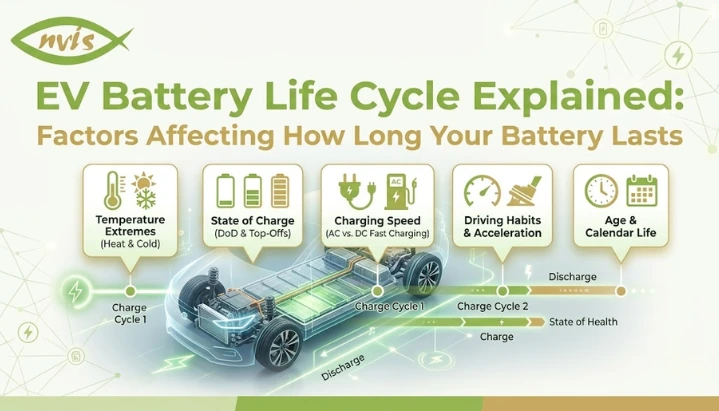
    EV Battery Life Cycle Explained: Factors Affecting How Long Your Battery Lasts

    TL;DR

    • This blog is for engineering students, EV owners, and technology learners in India who want to understand EV battery life cycle, what battery cycle life means, what degrades it, and how to make a battery last longer.
    • Battery cycle life is the number of complete charge-discharge cycles a battery can deliver before its capacity drops to 80% of its original value. This number varies widely by chemistry, temperature, and how the battery is used.
    • Four biggest factors that shorten EV battery cycle life are heat, deep discharging, frequent fast charging, and calendar aging and all four are manageable with the right habits and vehicle technology.
    • LFP chemistry outlasts NMC in cycle count terms by a significant margin (3,000 to 6,000 cycles versus 1,000 to 2,000), which is a major reason Indian EV makers like Tata Motors have shifted to LFP for their mainstream models.
    • When an EV battery drops below 70 to 80% of its original capacity, it is not dead; it still holds strong potential for second-life applications in grid storage, solar backup, and stationary energy systems.

    Each time you charge an electric vehicle, something happens inside the battery pack. Electrons and lithium ions are constantly moving within the battery, and with every charge cycle a small amount of degradation occurs. All batteries have a finite lifespan. The difference between a battery that maintains a strong charge for 12 years and a battery that noticeably drops in charge over the course of four years can be attributed to a few understood engineering and behavioral principles.

    EV Battery Life Cycle is no longer a concern limited to battery engineers. It is of critical importance to all EV buyers who consider buying a Tata Nexon EV vs an Ather 450X, students who are interested in pursuing careers in electric battery technology and all the fleet operators who are trying to calculate the total cost of ownership of electric buses or three wheelers. This guide will tell you what battery cycle life really is, what makes it go bad, how India’s operating conditions impact battery cycle life and how you as an EV owner, engineer or researcher can maximize the usefulness of an EV battery.

    Also read 

    What Is EV Battery Cycle Life?

    The term cycle life might sound technical, but it can be easily understood if you know what exactly a cycle represents.

    One charge cycle is considered to be the discharge of and complete recharge of 100% of the battery’s usable capacity. It doesn’t have to be one session in particular. If you use around 40% of the battery each day and recharge it, it would take approximately 2.5 days to complete one full charge cycle. Math does not happen per trip, but rather through time.

    A battery cycle life is the number of complete cycles that a battery can withstand until the capacity drops to 80% of the battery’s rated capacity. The industry benchmark for determining “end of first life” for an EV battery is 80%. The battery is not dead at this point, but there is a noticeable reduction in range that will have a major impact on driving.

    If you want to compare the numbers, then a lithium-ion NMC battery in a typical passenger EV can last for as many as 1,000 to 2,000 full cycles before it reaches the 80% mark. Under the same conditions, the life of an LFP (Lithium Iron Phosphate) battery, which is also gaining popularity in the Indian EV market, is between 3000 and 6000 cycles. In the case of an EV owner driving one whole cycle per day on average, the NMC pack can end its first life in 3-5 years of heavy use, whilst the LFP pack can last for 8-16 years. In reality, with partial cycles being the norm, these are much longer.

    However, cycle life alone does not tell the full story. But in actual use, an EV battery’s life cycle depends on a combination of variables temperature, charging patterns, depth of discharge and chemistry  that can greatly impact degradation clocks.

    Two Forms of Battery Degradation

    Before exploring what causes degradation, it helps to know that degradation happens in two distinct ways and both are always happening simultaneously, even when a vehicle is parked.

    Cycle Aging

    Cycle aging is degradation caused directly by repeated charging and discharging of the battery. As the lithium ions move from cathode to anode, and back, small changes occur in the structure of the electrodes. As electrolyte reacts with the surface of the anode during charging, a growing layer called Solid Electrolyte Interphase (SEI) is formed on the surface of the graphite anode. This SEI layer, which is essential for the battery to function, becomes thicker through charge and discharge cycles, which eventually removes some of the active lithium from the battery permanently and causes the internal resistance to rise.

    Lithium ion repeated insertion/extraction into/from the electrode material gradually distorts the crystal structure of the electrode material in cathode. This is one reason NMC batteries generally have lower cycle life than LFP batteries, whose iron phosphate crystal structure is inherently more stable and resistant to long-term structural degradation.

    Over many charge-discharge cycles, the battery gradually loses capacity and experiences increased internal resistance, which is most noticeable as the battery holds less energy after each thousand cycles, and the gradual increase in internal resistance causes the battery to deliver power less efficiently, making performance feel weaker under heavy loads. Under hot-load conditions as it loses maximum power.

    Calendar Aging

    Calendar aging is degradation that happens simply because time passes, regardless of how much battery is used. Even an EV sitting in a garage with a full charge will degrade due to constant electrochemical activity at electrode-electrolyte interface.

    The primary driver of calendar aging is the state of charge (SoC) at which a battery is stored combined with the temperature at which it rests. A battery stored at 100% SoC in a hot environment degrades measurably faster than one stored at 50% SoC in a cool space. This is why EV manufacturers typically recommend not leaving vehicles plugged in at 100% for extended periods, and why parking in shaded areas or covered parking is particularly beneficial in Indian summers.

    Together, cycle aging and calendar aging define the total life cycle of an EV battery. key insight is that both processes respond to the same root variables: temperature, state of charge, and discharge depth.

    Key Factors That Affect EV Battery Cycle Life

    No single variable controls EV battery degradation in isolation. The life cycle of an EV battery is a product of how several factors interact over years of use. Understanding each one gives you tools to manage them intelligently.

    Temperature Biggest Threat to Cycle Life

    Temperature is one of the most consistent and significant factors impacting battery life. Lithium-ion batteries perform best between 20 and 40 °C. High and low exposures for extended periods increase calendar aging and cycle aging.

    The higher the temperature, the faster the electrochemical reactions at the cell surfaces, which leads to faster SEI layer growth and the consumption rate of active lithium in parasitic side reactions. Beyond 45℃, the rate of capacity loss increases significantly. This is especially a problem in India, where in summer, ambient temperature in Rajasthan, Gujarat and Madhya Pradesh is regularly above 45°C and vehicles are kept outside for long periods.

    Low temperatures are another problem. Cold has a huge impact on slowing lithium ion movement in the electrolyte, which means less power and charging speed. Worse yet, however, charging at lower temperatures, particularly at high rates, can lead to the formation of metallic lithium on the surface of the anode (lithium plating) in place of the intercalation of clean lithium. Lithium plating is an irreversible loss of active lithium capacity and is permanent. Plating can reduce the charging speed of EVs especially in low temperatures, and the BMS will do its best to avoid plating.

    Thermal management (usually a liquid cooling circuit in four-wheelers and forced air cooling in scooters) is a key factor in the efficiency of real-world battery life, especially in India’s climate.

    Depth of Discharge How Low You Go

    Depth of Discharge (DoD) is the percentage of the battery’s capacity used in each charging cycle. A 100% DoD cycle involves fully discharging the battery from full to empty, and then recharging it back to full. 50% DoD cycle will involve using half of the battery charge during each discharge session.

    DoD and cycle life are strongly and non-linearly related. Batteries discharged shallowly, survive many more cycles than batteries discharged deeply repeatedly. Laboratory studies show that shallow cycling can significantly increase cycle life, whereas batteries repeatedly cycled at 80–100% DoD may reach the 80% capacity threshold after only 500–1,000 cycles.

    That’s why EVs don’t ever allow you to use 0% to 100% of the nominal battery capacity. Battery Management System has room at either end and a protected floor below 0%, and a ceiling above 100%, so that the battery is always in a shallower DoD than it appears. In reality this means that most users who do not push their battery to extremes will experience better real world cycle life than a rated specification.

    Shallow cycling is generally beneficial for battery life and is common among Indian urban commuters, who charge from home mainly at night and seldom let their batteries drop below 20% battery health.

    Charging Speed Fast Charging Trade-off

    One of the hot debates on EV battery longevity is fast charging. 20-30 minutes charging with a DC fast charger is comparable to what you can achieve in a few hours charging from an AC Level 2 home charger convenience is real. The downside is that faster charging places greater stress on the battery.

    The principle of fast charging is to charge a far greater current into the battery within a short period of time. This fast charging rate in battery terms is known as C-rate and creates more heat at the electrode surfaces and causes more lithium ions to be pushed into the graphite anode during the fast charging than slow charging does. The possibility of incomplete lithium insertion increases under high C-rate, leading to an increased risk of lithium plating, especially at low temperatures or when the battery is already partially charged.

    Studies indicate that frequent DC fast charging from a low state of charge (SoC) to 100% is more stressful than slow charging. Several studies have shown that frequent ultra-fast charging can accelerate degradation compared with slower AC charging, although the impact varies by battery design and operating conditions when compared to home charging at the same total energy throughput. The reason your EV may take longer to charge than the fast charger’s maximum charging rate indicates is because the BMS is likely to restrict the flow of current from the fast charger so as not to put excessive stress on the battery.

    In case of LFP batteries, the fast charging is much less damaging because the crystal structure of the cathode material is much more stable. This is another aspect of LFP Chemistry which is practically beneficial for Indian EV users when they go long-distance journeys and depend on public fast charging stations.

    A general rule that comes from battery science is simple: Slow level 2 AC charging at home for everyday driving; fast DC charging on long trips where time really counts.

    State of Charge Storage Idle Risk

    Even when the car is parked, electrochemical reactions continue inside the battery. If a battery is held at a very high or very low SOC for a long time without cycling, degradation will still occur.

    High SoC (e.g. charging battery to 100 per cent or close to it overnight for days at a time) keeps the cathode in a chemically stressed high voltage state. With high SoC storage for a longer period of time, the rate of electrolyte oxidation at the cathode surface will accelerate and the capacity fade rate in NMC chemistry will increase. Very low SoC storage can cause copper dissolution and increase the risk of internal short circuits if cell voltage falls too low in severe cases resulting in copper dissolution and internal short circuit risks.

    Battery engineers suggest that a SoC of approximately 40 to 60% is the best range for storing batteries for a long time. Maintaining 80% charge level for most NMC-based EVs is a good balance for everyday driving, avoiding the extremes of 20% and 100%. Unlike NMC chemistry, which is more sensitive to being charged to 100%, Many manufacturers recommend periodically charging LFP batteries to 100% to improve state-of-charge calibration, though daily charging recommendations vary by vehicle model to improve state-of-charge calibration, though daily charging recommendations vary by vehicle with LFP packs because the upper voltage limit of LFP is lower and less stressful than NMC.

    EV Battery Cycle Life in India A Different Challenge

    India presents a unique combination of conditions that affect the life cycle of an EV battery in ways that differ from European or North American markets. Understanding this context is important for students, engineers, and policy researchers working in India’s EV space.

    Thermal is the most important one. During summers the temperature in most parts of India goes above 40°C and in Jaipur, Ahmedabad and Indo-Gangetic plains reaches above 45°C frequently. These are exactly the temperatures where nickel-rich NMC chemistry fails to cycle as well as it should, and needs additional liquid cooling to achieve good cycle life. This attribute of LFP chemistry offers significantly better thermal stability than NMC chemistry, makes it highly tolerant for the ambient heat conditions in India, a major reason for its supremacy as chemistry for Indian EVs.

    This is evident from a comparison of EV models available in India. Models based on the NMC chemistry, such as the MG ZS EV and the Mahindra XUV400, depend on the use of an active liquid cooling system to get to their rated cycle life in Indian conditions. Real-world data from LFP-equipped EVs generally shows low degradation during the first few years of ownership, though long-term performance varies by usage conditions in India, especially in hot climates. LFP-based batteries such as BYD’s Blade Battery are widely recognized for their thermal stability and suitability for hot-climate operation.contributing to strong performance in Indian operating conditions.

    Yet another contributing factor in India is traffic congestion. The thermal load of the battery from stop-and-go driving is higher than on the highway, and it results in more regenerative braking cycles. Urban EVs in cities such as Mumbai/ Delhi have more partial cycles per day as compared to the EVs used mostly on highways which is good for cycle life but comes with a challenge in the thermal management space.

    India’s warranty standards are reflective of this reality. The majority of EV manufacturers in India provide warranties that last anywhere from 8 years to 1,60,000 km to 2,00,000 km with a minimum capacity retention of 70 to 80% during the warranty period. Tata Motors has taken the extra step with the Curvv EV and Nexon EV 45 kWh, which is a testament to the confidence it has in the performance of LFP chemistry in Indian conditions as it offers a lifetime battery warranty for eligible first private owners, subject to manufacturer terms and conditions.

    How Battery Management System Protects Cycle Life

    Battery Management System is not just a monitoring tool it is the primary mechanism through which EV manufacturers protect EV battery life cycle in real-world operation.

    Every BMS enforces operational boundaries that prevent most damaging behaviors from occurring. It sets a charge ceiling below the battery’s physical maximum, ensuring cells are never stressed at highest voltage states. It sets a discharge floor above true empty, preventing deep discharge damage that would otherwise shorten cycle life dramatically. It adjusts maximum charging current based on real-time temperature readings, slowing down DC fast charging in cold weather to prevent lithium plating, and capping charge power in high-heat conditions to prevent thermal acceleration of SEI growth.

    Modern BMS systems also implement cell balancing ensuring that every individual cell in a pack remains at the same state of charge. Over time, cells develop slight performance differences due to manufacturing variation and non-uniform temperature exposure within the pack. Without balancing, the weakest cell limits the entire pack’s performance, and the rest of cells are either overcharged or undercharged relative to their individual capacities. Balancing extends usable pack life by ensuring no single cell becomes a bottleneck.

    OTA (Over-the-Air) software updates have added a new dimension to BMS capability. Manufacturers like Tata Motors and Ather Energy now push BMS algorithm improvements directly to vehicles in the field, refining SoC estimation accuracy and adjusting thermal management parameters based on accumulated fleet data. This means the BMS protecting your battery in year five may be significantly smarter than the version originally shipped with the vehicle.

    What Happens at End of First Life Second Life and Recycling

    When the SoH of a battery is at 70-80% level, it is no longer optimal for an EV, since the latter demands minimum performance levels based on the range expected. However it is not totally useless.

    A retired EV battery has a considerable amount of energy storage left and can be used for stationary energy storage for 10-15 years at 70-80% of its original capacity. Second-life battery applications is the idea and it’s an emerging area of significance to India’s circular economy.

    Depending on chemistry and remaining SoH, second-life applications may help recover part of a battery’s residual value, potentially reducing overall ownership costs.

    In India, startups such as LOHUM Cleantech, Attero, Nunam and BatX Energies are developing businesses in the field of second life batteries with the support of India’s Battery Waste Management Rules 2022, which have established Extended Producer Responsibility (EPR) frameworks, mandating OEMs and battery manufacturers to collect and process end-of-life batteries. India’s lithium-ion battery recycling volumes are growing rapidly as more EV batteries approach end-of-life, creating significant opportunities for recyclers and material recovery companies with the increasing number of first-generation EVs reaching their battery replacement stage.

    Once batteries can no longer be reused, valuable material is recovered within the lithium, cobalt, nickel, manganese and copper of batteries. Cells are chemically dissolved in recycling processes such as hydrometallurgy, with recovery rates of 95% or more, in order to be used for producing new cells. This completes the EV battery life cycle, enabling the recycling of end-of-life batteries into raw material for future EV batteries.

    Practical Tips to Extend EV Battery Cycle Life

    Knowing the science behind battery degradation is very much the knowledge that leads to actionable habits that prolong EV battery life. These suggestions are valid for EV owners in India only for thermal and usage context.

    For everyday use, maintain 20-80% state of charge. In the case of NMC batteries, it’s the one behavioral change that has the biggest impact on battery life. Within this medium range, full charge doesn’t cause high voltage stress or deep discharge causes low voltage damage. Regularly charging NMC batteries to 100% generally accelerates long-term degradation compared with limiting daily charging to lower levels. Many manufacturers recommend periodically charging LFP batteries to 100% for calibration purposes, although daily charging recommendations vary by vehicle model, because the nominal voltage is much lower, resulting in much lower stress during charging to 100%.

    Opt for home Level 2 charging over DC fast charging for daily use. AC charging is slower, less intensive, produces less heat and provides BMS with sufficient time to balance cells during the charging process. Avoid using a DC fast charger if it isn’t a long highway trip.

    During the hot season in India, park in the shade or under a cover. One of the quickest ways of calendar aging is to subject the battery to thermal stress, particularly at high SoC. A battery which is fully charged (SoC-90%) in the summer of 48° in Jaipur will lose its capacity much more quickly than another battery at 50% SoC in a covered parking area.

    Don’t miss out on OTA software updates. BMS firmware updates are made regularly to enhance the accuracy of SoC estimates and optimize charging algorithms, while also adding in enhancements to the thermal management. Maintaining the software of a vehicle is among the simplest to most effective maintenance steps for the battery’s health.

    If your EV has a battery preconditioning feature, take advantage of it. Tata Nexon EV and BYD Atto 3 models come with a feature that allows the batteries to warm or cool them to an optimum temperature before charging, which is helpful before using a DC fast charger in winter or during extremely hot summer afternoons. The use of preconditioning decreases the risk of lithium plating in cold conditions and decreases heat-induced stress in hot conditions.

    Career Opportunities in EV Battery Lifecycle Engineering

    Battery lifecycle management and degradation analysis have created a new engineering specialization with promising job prospects in the booming EV sector in India.

    Battery Degradation Engineer roles focus on modelling the battery degradation according to various usage patterns, creating algorithms that measure remaining useful life (RUL) and testing these algorithms against actual fleet data. The Battery Validation and Test Engineer positions are geared towards the specification and testing of accelerated aging tests for cells and packs that are exposed to high temperatures, deep discharge cycles and fast charging stress to determine degradation characteristics prior to customer delivery.

    Second-life battery engineering is still a nascent field in which engineers evaluate used battery packs, classify them based on their remaining SoH, configure modules to be used in stationary applications, and develop testing protocols and safety standards for second-life systems. The battery recycling process engineering is also expanding, with battery recycling corporations increasing the capacity of their hydrometallurgical processing and recruiting chemical engineers and electrochemists who have experience in the battery sector.

    Employment skills needed for battery lifecycle positions include knowledge of electrochemistry fundamentals, Python or MATLAB programming skills, understanding of BMS data protocols (CAN bus, OBD-II), and experience with battery cycling equipment such as cyclers and impedance analyzers, including the ability to perform accelerated aging testing per IEC 62660 and AIS-156.

    The Battery Waste Management Rules, 2022 have brought about compliance requirements throughout the value chain, and thus, there is an increased demand for EPR (Extended Producer Responsibility) program management jobs for OEMs, battery manufacturers, and specialized battery recycling companies. With the rising adoption of EVs and strict end-of-life battery policies across the world, The global EV battery recycling market is expected to hit USD 25 billion by 2025 and reach nearly USD 88 billion by 2032, growing at a CAGR of more than 19%.

    Battery lifecycle is a truly interdisciplinary and future-proof domain, which Indian engineering students can specialize on given its mechanical, electrical, chemical engineering aspects.

    Conclusion

    EV battery life cycle is not a predetermined number that appears on a spec sheet. It is a dynamic result affected by chemistry, thermal conditions, charging behaviour, depth of discharge and quality of protection of the pack by Battery Management System. The knowledge of these factors can put EV owners in a position to meaningfully prolong the useful life of their battery, provide tools for engineers to design the next generation of EV batteries and provide a clear path forward of the most impactful technical challenges that still need to be resolved.

    The transition to LFP chemistry for EVs in the mainstream market is one of the biggest technology choices made in the last couple of years, in particular for India. In India, where the summers are hot, LFP’s longer cycle life, superior thermal stability and lower sensitivity to temperature make it much more predictable and promising to use the life of an EV battery in Indian conditions as compared to NMC chemistry without substantial investment in thermal management.

    The first life of a battery isn’t the end of the line. The expanding second-life battery ecosystem under the Battery Waste Management Rules, EPR and start-ups developing infrastructure for recycling makes it important for engineers involved with stationary battery storage as well as battery recycling specialists to understand battery lifecycle management.

    As a student interested in this area, get your feet wet and learn the basics: learn what cycle life is, learn about four major degradation factors, and develop technical expertise in battery testing, BMS data analysis, or electrochemical modeling. The demand for engineers who have the in-depth knowledge of EV battery life cycle, from initial charging to its second life and finally to recycled raw material is on a rise both in India and around the world and this will continue in the foreseeable future.

    FAQs

    EV battery cycle life is the number of complete charge-discharge cycles a lithium-ion battery can complete before its usable capacity falls to 80% of its original rated value. For NMC batteries used in most passenger EVs, typical cycle life is 1,000 to 2,000 full cycles. For LFP batteries, which are increasingly common in Indian EVs, cycle life is 3,000 to 6,000 full cycles. Real-world cycle life depends heavily on temperature, charging habits, and depth of discharge.

    In India, EV batteries typically last 8 to 12 years under real-world conditions, depending on chemistry, local climate, and charging behavior. Global estimates go up to 15 years in moderate climates, but India’s high summer temperatures can accelerate degradation in NMC batteries if thermal management is inadequate. Most Indian EV manufacturers offer battery warranties of 8 years or 1,60,000 to 2,00,000 km, guaranteeing at least 70 to 80% capacity retention during that period.

    Yes, but impact depends on frequency and conditions. Frequent DC fast charging generates additional heat and can accelerate battery degradation compared to slower AC charging, although the exact impact depends on battery chemistry, thermal management, and charging conditions. LFP batteries are considerably more tolerant of fast charging due to their more stable cathode chemistry. Using DC fast chargers occasionally for long trips while relying on Level 2 home charging daily is recommended practice for NMC battery owners.

    Cycle aging is degradation caused by charge-discharge cycles every time battery charges and discharges, small structural changes accumulate in electrode materials. Calendar aging is degradation that happens over time regardless of use, driven primarily by temperature and state of charge at which battery is stored. Both forms of aging always occur simultaneously, and both are accelerated by high temperatures and high states of charge during storage.

    When an EV battery drops to 70 to 80% of its original capacity and is no longer suitable for primary vehicle use, it enters a second life phase rather than being discarded. Second-life EV batteries are repurposed for stationary energy storage applications grid balancing, solar backup, telecom tower power, and home energy storage where lower capacity is not a constraint. In India, startups like LOHUM Cleantech, Attero, Nunam, and BatX are building second-life battery businesses. After second life, cells are recycled using hydrometallurgical or pyrometallurgical processes to recover lithium, cobalt, nickel, and other materials for reuse.

    most effective practices for extending EV battery life cycle in Indian conditions include: keeping daily charge between 20 and 80% for NMC batteries (LFP batteries can be charged to 100%); preferring AC Level 2 home charging over DC fast charging for daily use; parking in shade or covered parking to minimize heat exposure during summer; keeping software updated so BMS benefits from manufacturer improvements; and using battery preconditioning feature before DC fast charging sessions when available. Avoiding prolonged storage at high SoC in hot weather is especially important for Indian summers.

    Request a Callback

    Please enable JavaScript in your browser to complete this form.

    No spam. Just a quick call.